11 hr
Private Taj Mahal & Agra Luxury Day Tour from Delhi
- Private experience
- Personal attention
- Premium amenities
- Free cancellation
Luxury Taj Mahal Tour — Private Guides & Dawn Access
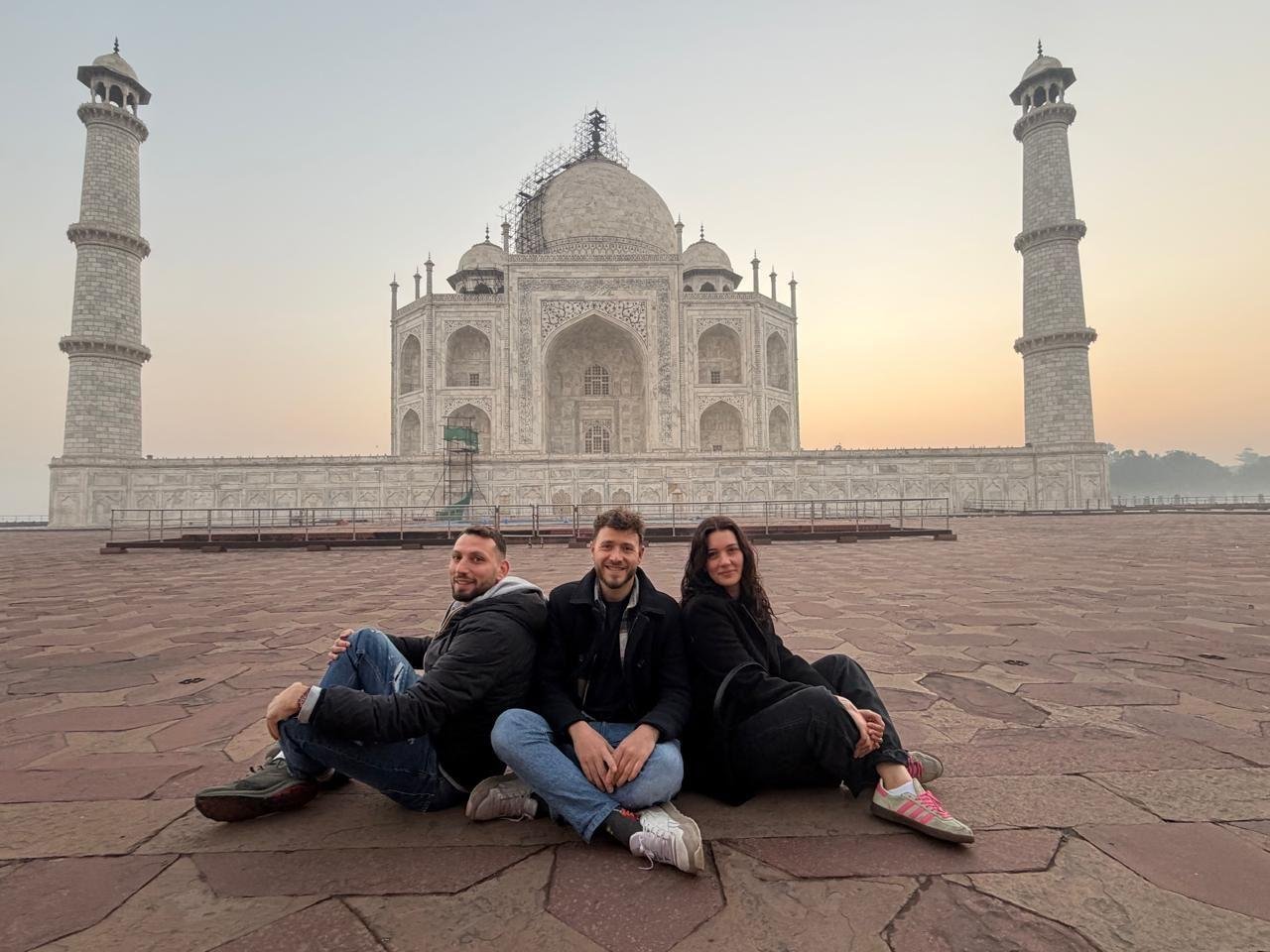
White marble at first light, the Yamuna still and waiting.
Compare fares, pick the fit — all bookings are mobile-voucher and eligible for free cancellation where shown.
11 hr
13 hr
10 hr
A luxury taj mahal tour begins with a simple ticketing decision: the standard complex entry, or that same entry plus the on-site mausoleum add-on that unlocks the inner chamber. Whether you join guided agra taj mahal tours or arrive independently for a skip-the-line taj mahal experience, understanding these two access layers matters more than any queue strategy.
| Complex Entry (Gardens & Platform) |
Top pick Complex + Mausoleum Access (Inner Chamber) |
|
|---|---|---|
| What it includes | Complex, gardens, reflecting pool, marble platform views | Everything in Complex Entry, plus entry to the inner tomb chamber and cenotaphs of Shah Jahan and Mumtaz Mahal |
| What it excludes | Mausoleum interior, cenotaph viewing | Photography inside the chamber (no flash, and often restricted entirely) |
| Where to buy it | ASI ticket counter or official portal at entry | Same counter, purchased as an add-on inside the complex before proceeding to the mausoleum |
| Who typically chooses it | Visitors focused on architecture and grounds, budget-conscious travelers | First-time visitors, those on a luxury taj mahal tour tour wanting the full monument experience |
| Base price (foreign adult) | 1,100 INR per person | 1,100 INR plus a separate on-site add-on charge |
| Access point | Main gates (East, West, South) | Entered from within the complex after base ticket validation |
| Best for | Quick visits, repeat visitors, tight schedules | First-timers wanting the complete luxury taj mahal tour tickets experience |
| See tickets & prices |
Verdict: First-time visitors on any agra taj mahal tour should budget for both the base entry and the mausoleum add-on, since skipping the inner chamber means missing the cenotaphs entirely.
Worth it for first-time foreign visitors
A luxury taj mahal tour starts from the 1,100 INR foreign-adult entry, and the mausoleum add-on runs extra, so budget beyond the base fee. What you get for that money is hard to match in Agra: a UNESCO World Heritage marble monument, the white-marble symmetry of Mughal architecture, and a 06:00–08:00 sunrise slot with softer light and thinner crowds. Compared with other Agra landmarks, the value density here is high — one entry buys a landmark most people cross continents to see once. The Agra Taj Mahal tour pays off for first-timers, photographers, and anyone valuing early quiet. It's weaker value if you arrive at midday heat, only have thirty rushed minutes, or resent paying foreign-tier pricing. For most travellers, well-timed luxury taj mahal tour tickets earn their cost through sheer significance rather than add-ons.
Bottom line: For a first visit, a well-timed luxury taj mahal tour tour is money well spent.
Hand-picked experiences loved by thousands of travelers
14 hours (approximately 12–14 hours including travel)
Free Cancellation
Chase the dawn at the Taj Mahal on a private 14-hour Agra day trip from Delhi.
10 hours
Free Cancellation
Turn a 10-hour layover into a luxury cultural escape — Taj Mahal, Agra Fort & a 5-star lunch.
2 days / 1 night
Free Cancellation
Witness the Taj Mahal at sunrise and sunset on a private 2-day luxury escape from Delhi.
Pass through metal detectors at the Western or Eastern Gate, then walk toward the Great Gate (Darwaza-i-Rauza)
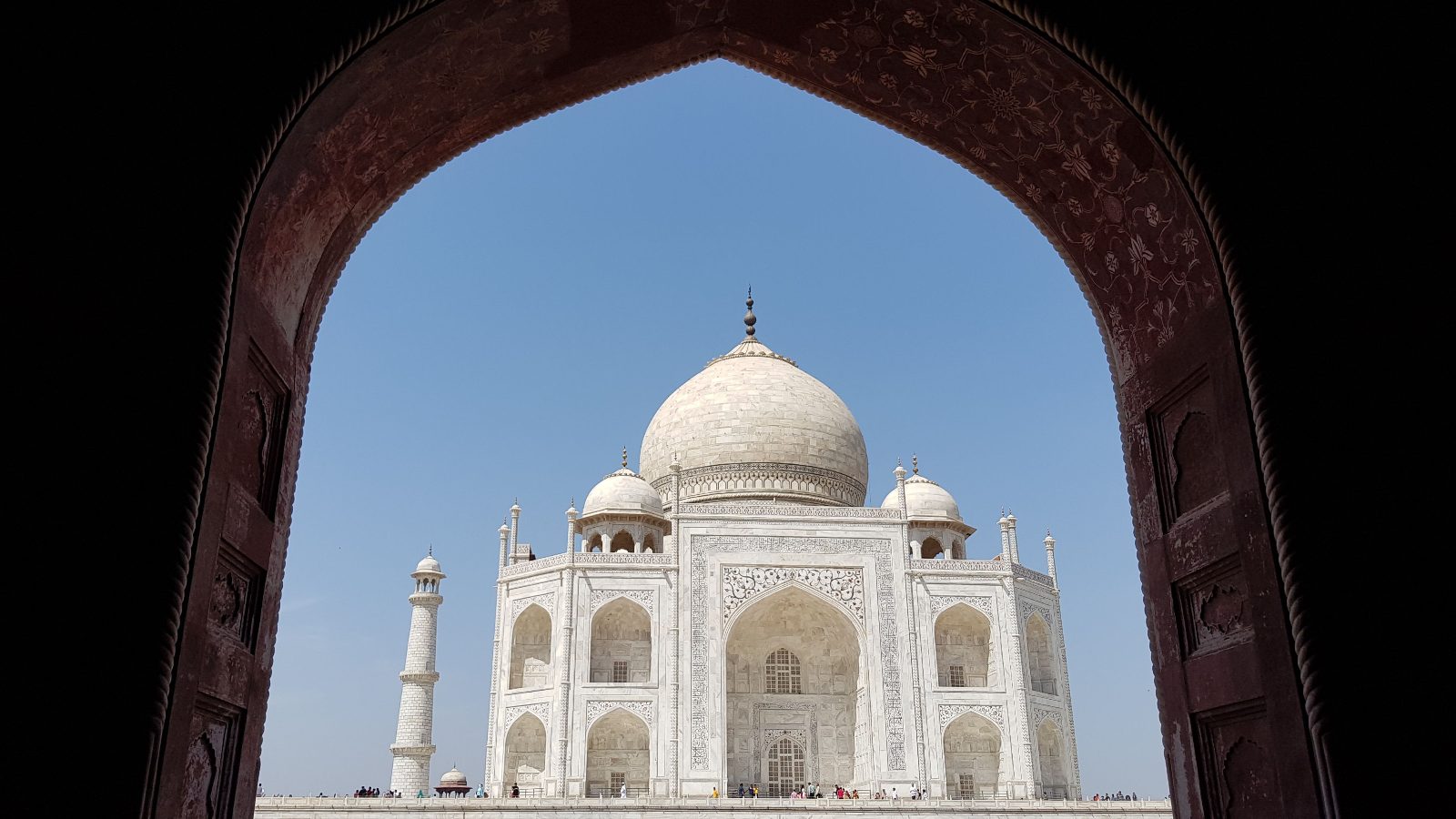
Frame the first full view of the mausoleum through the sandstone archway before descending into the Charbagh gardens
Circle the plinth to view the four minarets and inlaid facade up close, shoes removed or covered before stepping onto the marble
Enter the central chamber to see the cenotaphs of Shah Jahan and Mumtaz Mahal, photography not permitted inside
Walk to the red sandstone mosque on the western side and its mirror-image Jawab on the east
Finish at the rear terrace overlooking the Yamuna River for a quieter, less crowded vantage point
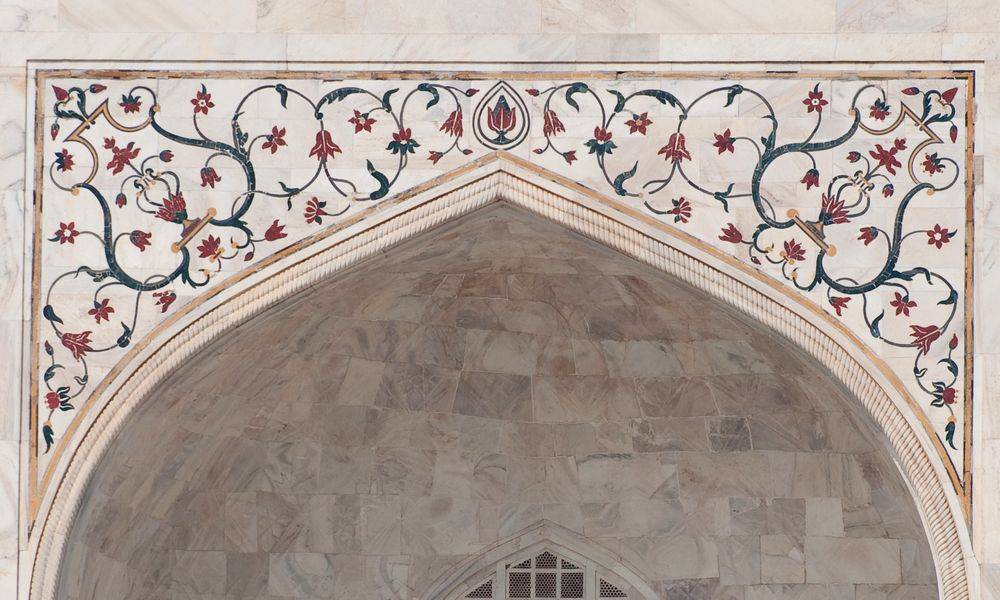
The central white marble structure rises 73 metres and houses the cenotaphs of Shah Jahan and Mumtaz Mahal beneath a double-shelled dome. Its facade is inlaid with semi-precious stones in a technique called pietra dura, using an estimated 28 types of stone sourced from as far as Afghanistan and Sri Lanka.
This monumental red sandstone entrance frames the visitor's first symmetrical view of the mausoleum and stands nearly 30 metres tall. Quranic verses in black marble calligraphy run along its arch, designed with lettering that appears uniform in size from the ground despite increasing in scale toward the top.
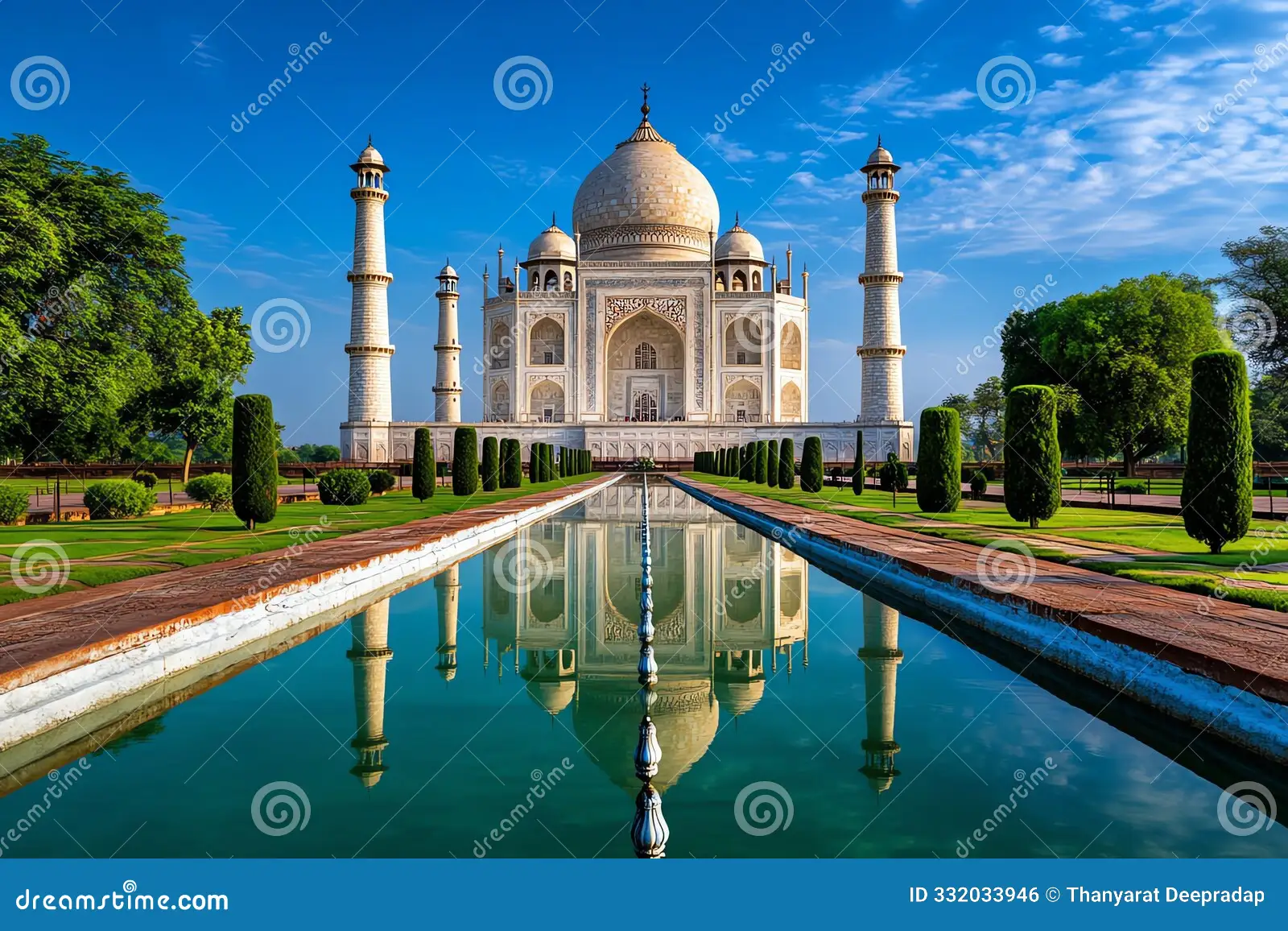
The formal quartered garden follows the Persian Charbagh layout, divided into four sections by raised marble walkways and a long reflecting pool. The design symbolizes the four rivers of paradise described in Islamic tradition.
Four freestanding minarets, each roughly 40 metres tall, mark the corners of the marble platform and were built slightly tilted outward. The outward lean was a deliberate engineering choice so that in the event of an earthquake, the towers would fall away from the central mausoleum rather than onto it.
A red sandstone mosque stands on the western side of the platform, mirrored on the eastern side by an identical structure called the Jawab, built purely for architectural symmetry since it faces away from Mecca. Both feature the same three-domed silhouette echoing the mausoleum's design.
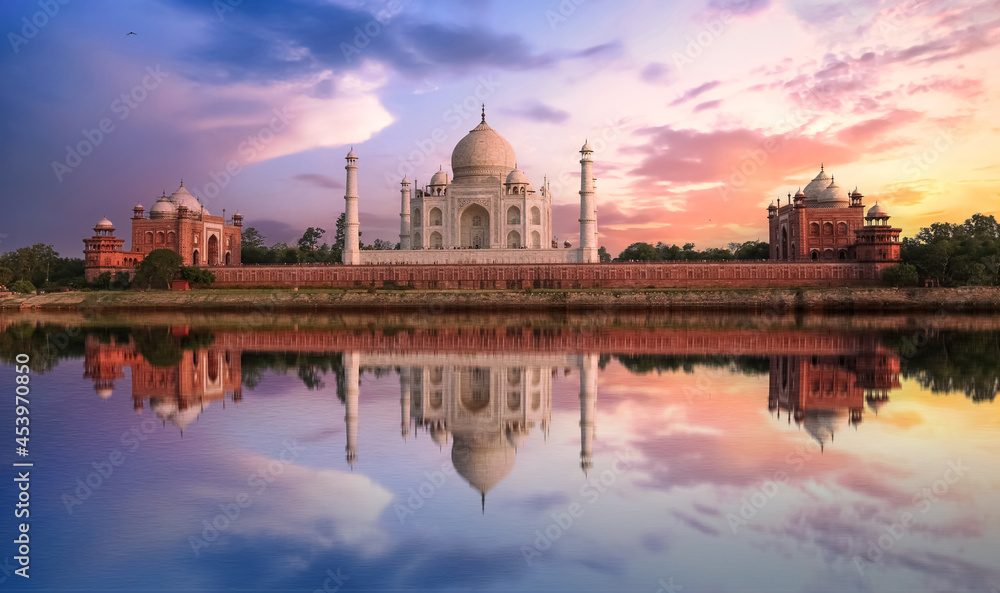
The rear terrace overlooks the Yamuna River and offers the platform's quietest vantage point, facing Mehtab Bagh garden on the opposite bank. Riverfront erosion concerns have made this stretch a focus of ongoing conservation monitoring by the Archaeological Survey of India.
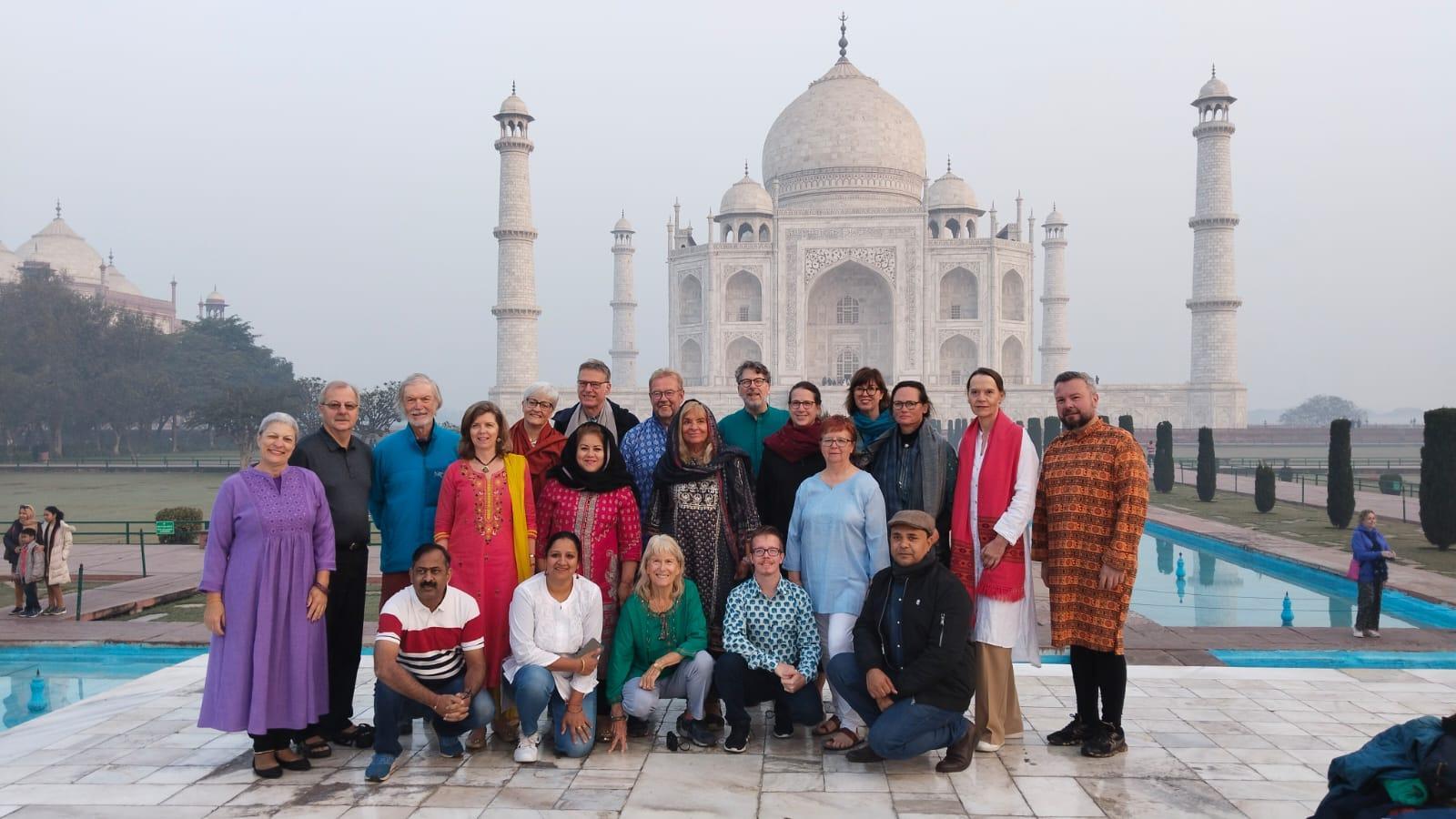
You arrive in the cool dark before the gates open at 06:00, and the best of the day is already yours in that first quiet window between 06:00 and 08:00 — softer light, lower heat, thinner crowds. Your guide meets you outside the eastern gate, and on a well-run luxury taj mahal tour you move through the entry checks without joining the long ticket line, foreign adult entry set at 1,100 INR per person. You pass beneath the red sandstone forecourt, then through the great gateway, where the monument appears framed like a picture hung deliberately at the end of the arch. You walk the central water channel slowly. The marble ahead turns from grey to rose to white as the sun lifts over the Yamuna. You pause at the raised platform, ease off your shoes or slip on the provided covers, and circle the plinth. Up close, you run your eye — not your fingers — over the inlaid flowers, each petal a separate cut of stone. You linger at the western side, where the river bends and the light holds longest. By mid-morning, as the crowds thicken and the heat climbs, you are already walking back toward the gate, the whole of the site behind you.
All the details about your upcoming adventure in one place
A luxury taj mahal tour brings you to the white marble mausoleum on the Yamuna riverbank, where inlaid pietra dura, calligraphed arches, and the reflecting pool set the scene for an unhurried private visit. Our luxury taj mahal tour tours pair a personal Mughal-heritage guide with skip-the-line Taj Mahal entry, so your time is spent on the monument's craftsmanship rather than the queue. This UNESCO World Heritage landmark rewards a calm pace, and a curated Agra Taj Mahal tour keeps groups small and comfortable throughout.
The Taj Mahal took roughly 22 years and some 20,000 artisans to complete, rising between 1632 and 1653 as a tomb for Mumtaz Mahal, the wife of the Mughal emperor Shah Jahan. A refined luxury taj mahal tour begins with this fact and lets it settle: the monument is not merely beautiful, it is grief rendered in translucent marble and semi-precious stone. The complex sits on the south bank of the Yamuna at Tajganj, its address a matter of record — Dharmapuri, Forest Colony, Agra, Uttar Pradesh 282001. The white marble was quarried at Makrana in Rajasthan and hauled overland by ox-cart and elephant. Into its surfaces master craftsmen set jasper, carnelian, lapis lazuli, and turquoise using pietra dura inlay, so that floral sprays appear to grow from the stone itself. The calligraphy framing the great south gate is scaled with subtle optical correction, the upper letters enlarged so that, read from below, every line appears the same height. Symmetry governs everything except one deliberate exception. The garden, a classic charbagh divided into four quarters by water channels, mirrors the Persian idea of paradise, while the four minarets tilt almost imperceptibly outward — an engineering insurance against collapse toward the tomb during an earthquake. The mausoleum's dome, nearly 35 metres high, is doubled: an inner shell for proportion within, an outer shell for silhouette against the sky. Why the place still commands attention in 2026 has less to do with scale than with intention. A UNESCO World Heritage Site since 1983, the Taj Mahal draws millions each year not for novelty but for the way its surfaces shift — pink at daybreak, white by noon, amber at dusk — a slow performance staged by light on stone. It remains, above all, a monument to a single relationship, and that human centre is what a thoughtful skip-the-line Taj Mahal visit is designed to protect. Agra itself, one of the great Mughal capitals, holds more than this one silhouette; the sandstone fort upstream and the tomb of Itmad-ud-Daulah across the river extend the story into a wider circuit of Agra landmarks. Yet the Taj holds the frame. Shah Jahan, deposed by his own son and confined in the Agra Fort, is said to have watched the tomb from a distance in his final years, and now lies buried beside Mumtaz within it — the one asymmetry in a building otherwise obsessed with balance. A well-composed luxury taj mahal tour honours that quiet imbalance rather than smoothing it away.
It is grief rendered in translucent marble and semi-precious stone.
There is no strict enforced dress code for a luxury Taj Mahal tour, but modest, loose-fitting clothing covering shoulders and knees is recommended out of respect for the site's mosque and mausoleum. Comfortable, closed-toe walking shoes are advisable since the marble platform and courtyards get hot and slippery, and shoe covers are provided free at the mausoleum entrance.
All visitors pass through airport-style metal detectors and bag scanning at the East, West or Southern gates before entering the complex. Large backpacks, suitcases and duffel bags are not permitted inside and must be left at the cloakroom facilities near the ticket counters, so a small clutch or crossbody bag is the practical choice for a luxury Taj Mahal tour.
Personal still cameras and smartphones are permitted throughout the gardens and on the marble platform, but tripods, drones and professional video rigs require special ASI permission arranged in advance. Photography is prohibited inside the main mausoleum chamber housing the cenotaphs of Shah Jahan and Mumtaz Mahal.
Children under 15 enter free with a guardian's ticket, and strollers are allowed in the gardens but not on the raised marble mausoleum platform, where stairs and slippery stone make prams impractical.
Wheelchairs are available free of charge at the ticket counters near the Western and Eastern gates, and ramps connect the entry paths to the main marble platform. The uneven sandstone pathways in the outer gardens and the platform's marble surface can still be challenging in a manual wheelchair without assistance, so travelling with a companion is recommended.
Outside food, chewing gum and tobacco products are not permitted inside the Taj Mahal complex, though sealed drinking water bottles are allowed through security. There are no cafes or restaurants inside the monument grounds itself, so any meal needs to happen before entry or after exiting through the gates.
Moderate crowds, arrive early
Popular with domestic groups
Closed for prayers, mosque only
Busiest day, book ahead
Family crowds by midday
Open 06:00–18:30 daily except Friday
location
Car · 3–3.5h from Delhi · Toll road, private taxi typical for luxury tours
A private car from Delhi takes roughly 3–3.5 hours via the Yamuna Expressway directly to Agra, with drop-off near the Western or Eastern Gate parking areas.
Public transport · 100 min train + 15 min transfer · Train fare plus local taxi
The Gatimaan Express and Shatabdi Express trains run from Delhi's Hazrat Nizamuddin station to Agra Cantt in around 100 minutes, followed by a 10–15 minute taxi or e-rickshaw to the gates.
Walk · 5–10 min · Included in shuttle ticket or free walk
Battery-operated shuttle buses or a short walk cover the final 500 metres from the parking areas to the ticket gates, since diesel vehicles are banned within this zone to protect the marble.
Taxi · 15–20 min · Low-cost, metered or fixed fare
E-rickshaws and battery-powered taxis run continuously between Agra Cantt railway station and the Taj Mahal gates.
Entrance tickets booked through the official ASI portal are non-refundable and non-transferable once issued, though date changes are sometimes permitted before the visit date via the same portal. A private luxury Taj Mahal tour booked through a tour operator typically allows free cancellation up to 24–48 hours before the scheduled visit, with the 1,100 INR foreign adult entrance fee refunded only if cancellation happens before the ticket is generated.
Recommended time
1.5-3 hours
A quick pass through the gardens and mausoleum viewpoints takes about 90 minutes, while a leisurely luxury taj mahal tour with mausoleum entry, unhurried photography, and time on the Diana Bench stretches closer to 3 hours. Add 20-30 minutes if you're visiting during a Saturday or Sunday, when domestic footfall thickens security lines at the gates. Subtract time only if you skip the inner mausoleum, since that queue is where most of the waiting happens regardless of arrival slot. Even with skip-the-line Taj Mahal tickets booked in advance, the mausoleum entry queue rarely disappears entirely once mid-morning arrives.
Crowd levels through the day
Weather · crowds · average price — dots go green to amber to red as each metric rises.
Daytime temperatures of roughly 15–25°C and clear skies make this the peak season for a luxury Taj Mahal tour, with the sharpest light for photography but the largest crowds, especially around New Year and Republic Day.
Daytime highs regularly exceed 40°C, so visits are best concentrated in the 06:00–08:00 opening window before the heat peaks; crowds thin noticeably by mid-morning.
Humid conditions with intermittent heavy rain bring the lowest visitor numbers of the year and unusually green gardens, though sudden downpours can shorten platform time.
Cooling temperatures and clearing monsoon skies create comfortable conditions with moderate crowds before the winter peak begins.
Western Gate tends to have shorter queues than Eastern Gate on weekends; check which gate your luxury Taj Mahal tour operator has arranged pickup near before arrival.
Cloakroom fees, shoe covers and battery-taxi fares from parking areas are typically cash-only in small denominations.
During the July–September monsoon window, use a waterproof phone pouch since sudden rain showers can occur without warning on the open marble platform.
Cloth shoe covers are handed out free at the mausoleum threshold; keep them on until you exit back onto the sandstone platform.
The monument is shut to general visitors every Friday for prayers, so a luxury Taj Mahal tour scheduling flexibility should avoid that day entirely.
Foreign and domestic visitors form different lines at the ticket checkpoints, which can affect wait times depending on the day.
The 1,100 INR foreign adult ticket is checked at both the outer gate and again near the mausoleum entrance, so keep it out rather than packed away.
Taj Mahal Western Gate, near Saheli Burj, Agra, Uttar Pradesh 282001
Main entry point for most guided luxury Taj Mahal tour groups, tickets and security screening here
Get directionsTaj Mahal Eastern Gate, Tajganj, Agra, Uttar Pradesh 282001
Alternate entry, often less congested than the Western Gate in early morning
Get directionsIn 1631, Mumtaz Mahal died at Burhanpur while giving birth to her fourteenth child. Her husband, the Mughal emperor Shah Jahan, was inconsolable. Court chronicles record his withdrawal from public life for a year. From that grief came the commission for a white marble mausoleum on the banks of the Yamuna at Agra. The story behind any luxury taj mahal tour begins with this loss. Construction started around 1632. It continued for roughly twenty-two years, concluding near 1653. The chief architect is traditionally named as Ustad Ahmad Lahauri. Thousands of artisans worked the site: calligraphers, stone-cutters, inlayers, and dome-builders. Materials arrived from across Asia. White marble came from Makrana in Rajasthan. Jasper travelled from Punjab, jade and crystal from China, turquoise from Tibet, and carnelian from Arabia. The pietra dura inlay set these stones into floral patterns across the cenotaph screens. Calligraphic panels of Quranic verse frame the great arched entrance, tapering upward so the script reads evenly from below. The complex is more than the tomb. It includes a mosque, a mirror-image guesthouse, a charbagh garden divided by watercourses, and a red sandstone gateway. Shah Jahan intended the whole as a unified vision of paradise. Later Mughal history was less kind. In 1658 his son Aurangzeb deposed and imprisoned him in Agra Fort, from where he reportedly viewed the mausoleum until his death in 1666. He was interred beside Mumtaz Mahal. Decline followed the empire's fall. By the late eighteenth century the gardens were neglected and precious stones had been prised from the walls. British colonial administration brought restoration. Under Viceroy Lord Curzon, a major programme between 1899 and 1908 repaired the structure and reworked the gardens along more formal European lines. A brass lamp Curzon commissioned still hangs in the tomb chamber. Wartime scaffolding later disguised the dome as protection against air raids. A well-planned Agra Taj Mahal tour today follows centuries of such intervention. UNESCO inscribed the monument as a World Heritage Site in 1983, recognising it among the world's great Mughal landmarks. Modern skip-the-line Taj Mahal access channels vast daily crowds through the sandstone gate. Visitors weighing luxury taj mahal tour tickets are, in effect, buying entry to a four-hundred-year-old act of mourning rendered in stone.
Mumtaz Mahal dies at Burhanpur, prompting Shah Jahan's commission.
Construction begins on the Yamuna riverbank at Agra.
The mausoleum and surrounding complex reach completion.
Aurangzeb deposes and imprisons Shah Jahan in Agra Fort.
Shah Jahan dies and is buried beside Mumtaz Mahal.
Lord Curzon oversees major colonial-era restoration works.
UNESCO inscribes the Taj Mahal as a World Heritage Site.
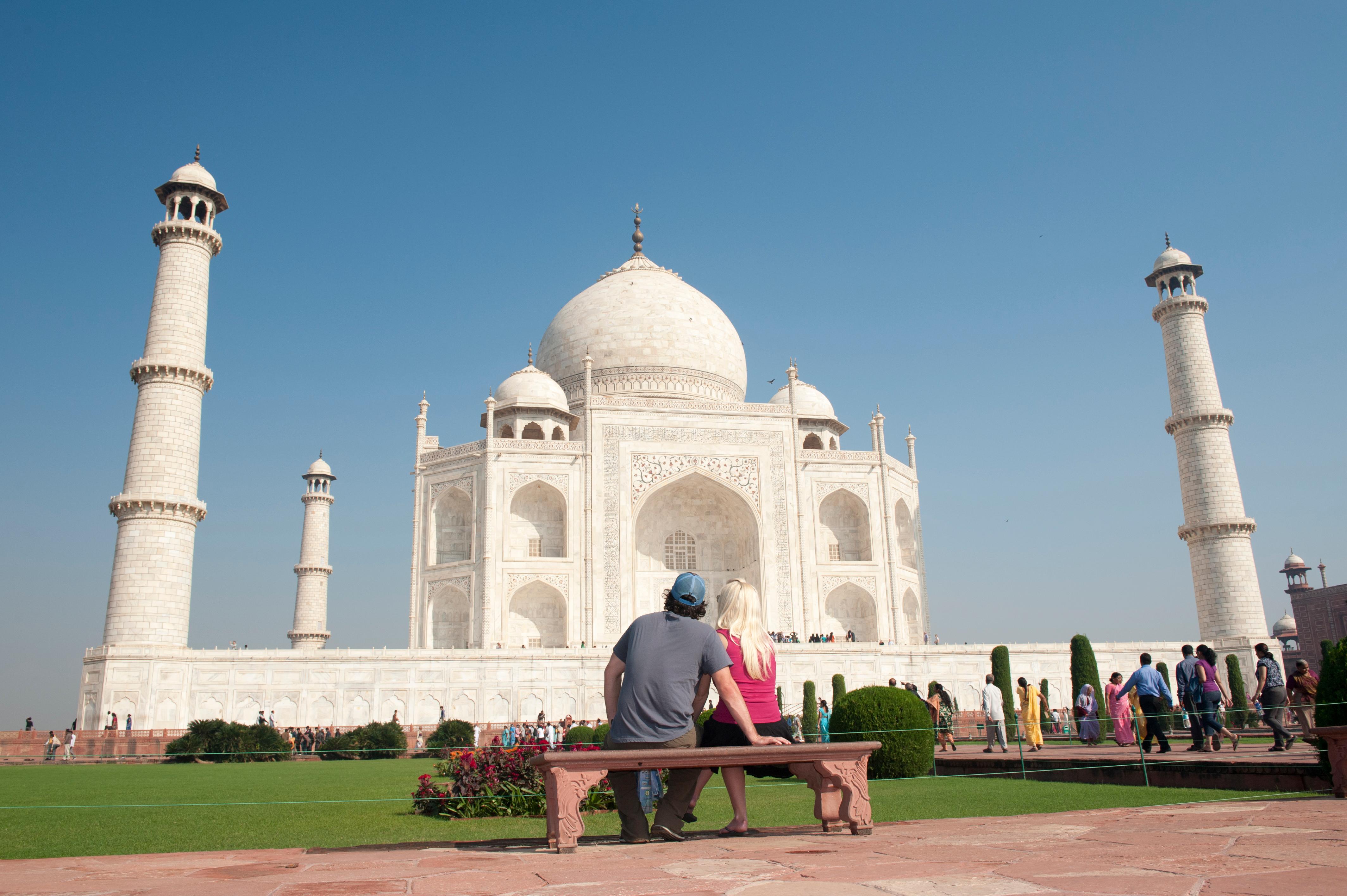
Also called the Princess Diana Bench or VIP Bench, this low marble seat sits front and center on the raised platform facing the reflecting pool, with the mausoleum framed directly behind. Expect a short queue since it is the most requested shot in the complex, and tripods are not permitted on the main platform. A private guide booked through a luxury taj mahal tour can often help you time this shot between tour-group waves.
Stand at the center of the long reflecting pool just past the Great Gate for the classic mirror-image composition, with the dome and minarets doubled in the still water. Early morning calm gives the sharpest reflection before foot traffic and breeze disturb the surface.
The Darwaza-i-Rauza, or Great Gate, forms a natural arch that frames the distant mausoleum as a glowing rectangle of white marble; step back into the gate's inner archway for the silhouette-and-frame effect. This works well both entering at dawn and looking back toward the gate from the garden.
From either corner of the raised marble platform, a diagonal angle lines up one minaret in the foreground with the dome receding behind it, avoiding the crowd clustered at center-front. It is one of the few platform vantage points that still reads as an original composition among visitor photos.
Across the Yamuna River on the monument's northern axis, this moonlight garden gives an unobstructed rear view of the Taj with the river in the foreground, ideal for sunset panoramas and silhouette shots as the marble shifts from white to rose. Tripods are generally allowed here for personal use, unlike inside the main complex, though a barbed-wire line keeps visitors back from the water's edge.
A luxury taj mahal tour with children means managing a mile of walking, heat, and queues before anyone even sees the marble, so a bit of pacing strategy goes a long way. Kids tend to do best when the walk from parking is broken into short, engaging stages rather than one long trudge.
Cars stop about a kilometre from the entrance, so use the free battery bus or golf cart included with foreign tickets rather than making young children walk the full distance in Agra heat.
Temperatures climb fast after mid-morning, so aim for the 06:00–08:00 arrival window, dress kids in light layers and hats, and carry a refillable water bottle since filtered water is available inside.
Security screening and the walk to the mausoleum platform involve real waiting, so bring a small distraction like a spotting game for domes and minarets to keep kids occupied without needing electronics.
Split the morning into short legs: cart ride, gate, gardens, platform, rather than expecting kids to sightsee non-stop; a shaded rest by the reflecting pools resets energy before the walk back.
If combining this with a wider Agra landmarks tour, schedule the Taj first while kids are freshest, then save lower-energy stops like markets for the afternoon heat.
There is no food service inside the monument itself, so a luxury taj mahal tour usually pairs the visit with a meal in Tajganj, the village hugging the East and West Gates, where rooftop terraces and simple cafés both compete for Taj views.
On a rooftop about 600m from the monument, this all-day restaurant serves Indian, Chinese, and continental dishes alongside a pool deck; go for sunrise or sunset when the Taj view is clearest, since midday can feel warm and busy.
A long-running vegetarian spot on Miyan Nazir Road with a 360-degree rooftop overlooking the Taj; thalis and sweets are the draw, and the terrace fills up around sunset when everyone wants photos with the domes behind them.
A tiny, tourist-favorite hole-in-the-wall running since 1978, best for an easy pre- or post-visit breakfast of puri-cholley or a banana lassi; expect a wait at peak breakfast hours.
A stylish terrace serving North Indian, Continental, and wood-fired pizza with Taj views; better suited to a relaxed lunch or dinner than a quick stop, and busiest in the evening.
Real experiences from real travelers
We booked a luxury taj mahal tour so we could enter right at gate opening, and standing in the empty forecourt as the marble turned from grey to pink was the highlight of our India trip. The white stone genuinely changes color with the light, softer than any photo suggests. Our guide kept us ahead of the tour groups the whole morning.
The Agra Taj Mahal tour we chose came with a private car from our hotel and an art historian guide who read the Persian calligraphy aloud. Hearing the story of the inlay work while standing on the marble plinth beat wandering alone with a guidebook. Bring water, even in May the plinth radiates heat by nine.
Even in July the early light is soft and the crowds are thinner if you arrive first. The luxury taj mahal tour tickets our operator arranged skipped the main ticket queue completely, which saved close to an hour in the heat. The reflection in the long water channel was perfectly still before the wind picked up.
One of the Agra landmarks I most wanted to see and it delivered, though by mid-morning the plinth was shoulder to shoulder. Our skip-the-line Taj Mahal entry helped but the site itself gets busy fast. Go at opening, not after breakfast.
Photographs flatten it, in person the dome towers over you and the four minarets lean outward almost imperceptibly. Our luxury taj mahal tour included the Mehtab Bagh viewpoint across the Yamuna at sunset, which very few visitors bother with. Golden light on the rear facade with the river in front was quiet and uncrowded.
We visited in February and low mist hung over the Charbagh gardens as the sun came up, giving the mausoleum a floating quality. The guide on our private Agra Taj Mahal tour pointed out how the semi-precious stones catch light differently through the day. Comfortable walking shoes matter, the red sandstone forecourt is large.
Hotel pickup, chilled towels in the car, and a guide waiting at the gate. The luxury taj mahal tour tours in Agra are worth it if you want the logistics handled so you can focus on the monument. We spent a slow two hours and never felt rushed.
The air was crisp and the sky a hard blue, which made the white marble almost luminous. I would have liked more time at the calligraphy panels but our schedule was tight. Still one of the great Agra landmarks and the inlay up close is finer than any image conveys.
Standing barefoot on the warm marble as the late sun hit the dome is something I keep thinking about. Our guide timed the luxury taj mahal tour so we finished at the western minaret just as the light went amber. The socks-over-shoes covers they provided saved us from the hot stone.
We took the earliest slot and had a full fifteen minutes near the reflecting pool almost alone. The luxury taj mahal tour tour we booked included a knowledgeable guide who explained the perfect symmetry of the garden layout. By the time we left the forecourt was filling, so the early start truly paid off.
Everything you need to know for your journey
The Taj Mahal is open from 06:00 to 18:30 on days it operates, giving ample daylight hours to explore the gardens, platform and mausoleum at an unhurried pace.
Yes, the Taj Mahal is closed to general visitors every Friday for prayers at the on-site mosque, so plan any luxury Taj Mahal tour tour around the other six days of the week.
The entrance fee for foreign adult visitors is 1,100 INR per person, which covers general access but excludes entry to the main mausoleum chamber.
Large backpacks and suitcases are not permitted past the security checkpoints and must be left at the cloakroom near the gates, so carry only a small bag through the metal detectors.
No, photography is prohibited inside the central mausoleum chamber housing the cenotaphs, though it is permitted throughout the gardens and on the marble platform outside.
Arriving between 06:00 and 08:00 gives cooler temperatures, softer light for photos, and noticeably smaller crowds compared to midday, making it the ideal window for a skip-the-line Taj Mahal visit.
There is no formal enforced dress code, though modest clothing covering shoulders and knees is recommended, along with comfortable shoes for the marble platform.
Outside food and drinks other than sealed water bottles are not allowed inside the complex, and there are no cafes within the monument grounds itself.
Most travelers reach Agra from Delhi by the Gatimaan Express or Shatabdi Express train in around 100 minutes, or by private car in roughly 3–3.5 hours via the Yamuna Expressway.
Yes, children under 15 enter free, though strollers are limited to the garden areas since the marble platform involves stairs and uneven surfaces.
Private tour bookings typically allow free cancellation 24–48 hours ahead, while the official 1,100 INR entrance ticket itself is generally non-refundable once issued.
Agra Fort, Mehtab Bagh, and Itmad-ud-Daulah (the Baby Taj) are all within a 20-minute drive and pair naturally with a half-day or full-day Agra landmarks itinerary.
A red sandstone Mughal fortress and UNESCO World Heritage Site where Shah Jahan was imprisoned by his son with a view of the Taj Mahal across the river. Its Khas Mahal and Sheesh Mahal palaces showcase similar marble inlay artistry.
A moonlight garden directly across the Yamuna River offering a symmetrical, crowd-free view of the Taj Mahal's rear facade at sunset.
Known as the Baby Taj, this marble tomb built for a Mughal noble is considered a precursor to the Taj Mahal's inlay style.
A large 17th-century mosque near Agra Fort built by Shah Jahan's daughter, notable for its red sandstone and marble striping.
A forested buffer park with birdwatching trails offering distant, tree-framed views of the Taj Mahal's minarets.
Rooms and the rooftop terrace offer direct, unobstructed views of the Taj Mahal roughly 600 metres away, popular with luxury Taj Mahal tour guests.
A large heritage-style resort with Mughal garden landscaping and multiple pools within a short drive of the monument.
The cluster of guesthouses and mid-range hotels immediately surrounding the Taj Mahal's south gate, convenient for early sunrise entry.
A modern business hotel option slightly further from the monument with easy access to the Delhi-Agra expressway.
Join thousands of happy travelers who have discovered this incredible experience
Book Your Experience Now