
Oct-Mar (peak)
This is the core sightseeing season named in seasonal guidance, with clear light through most of it; book morning slots with a buffer in late December and January, when river fog can delay visibility until mid-morning.
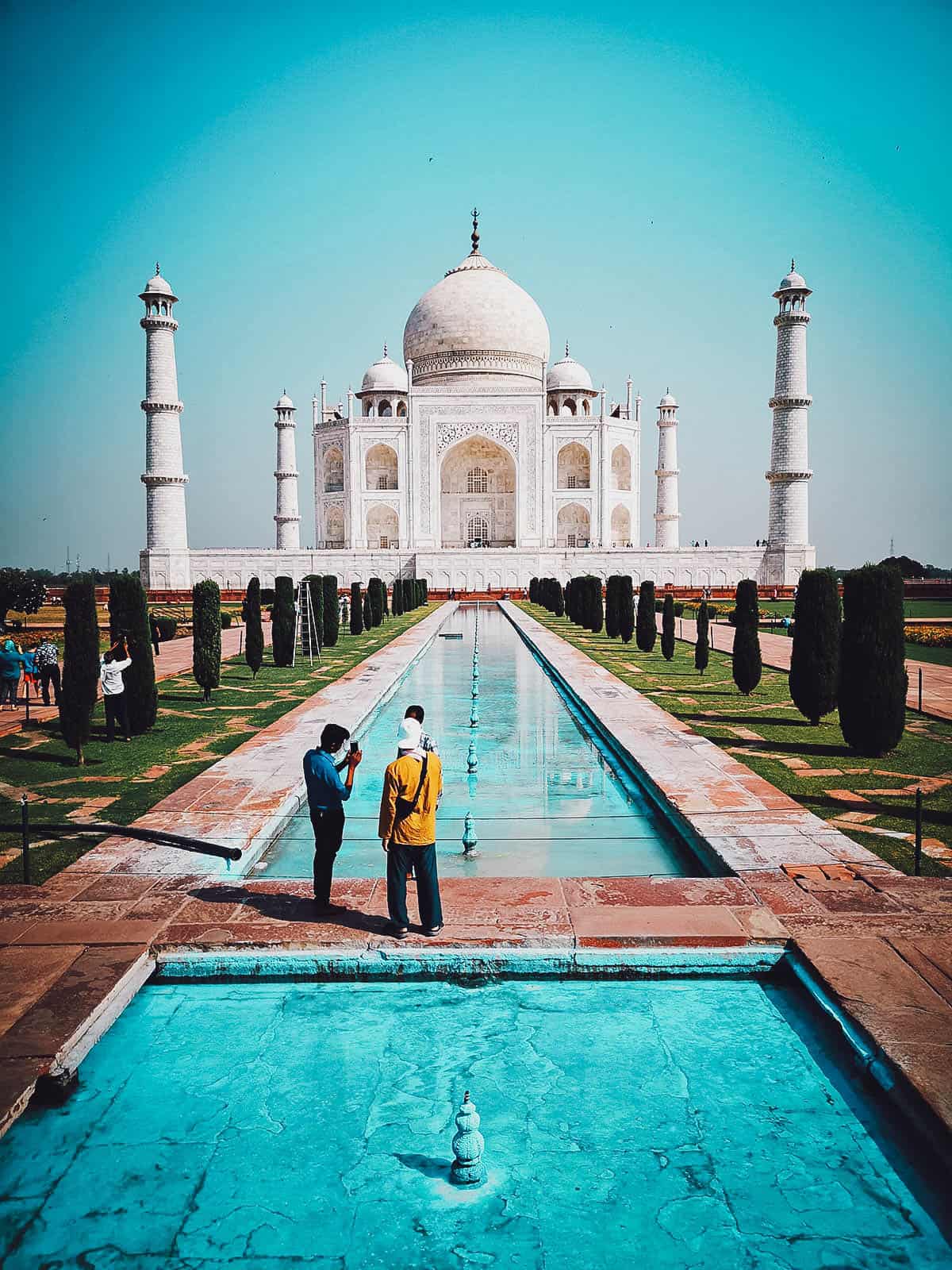
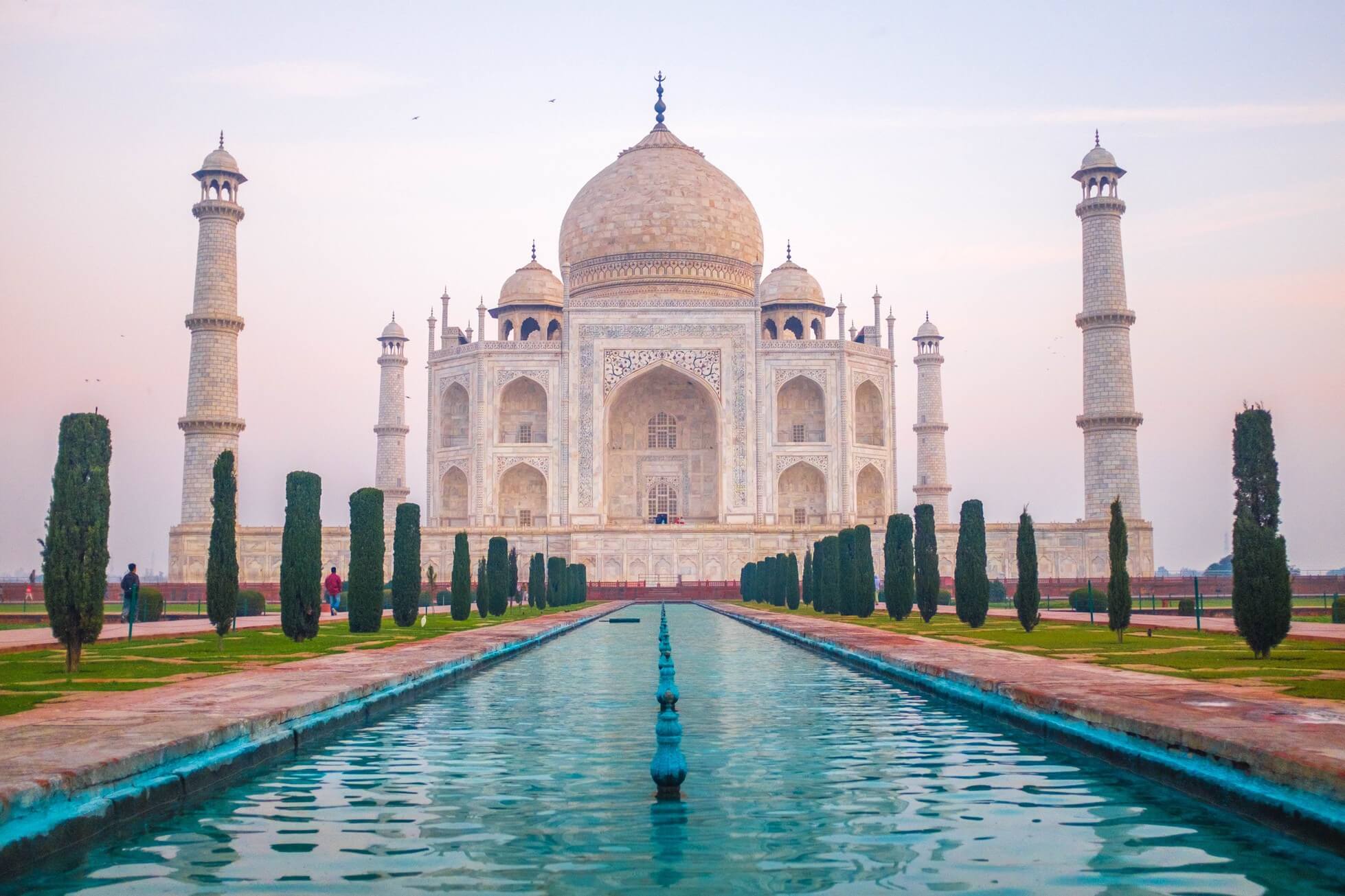
A symmetrical white-marble monument in Agra, ringed by charbagh gardens, the Great Gate and the river beyond.
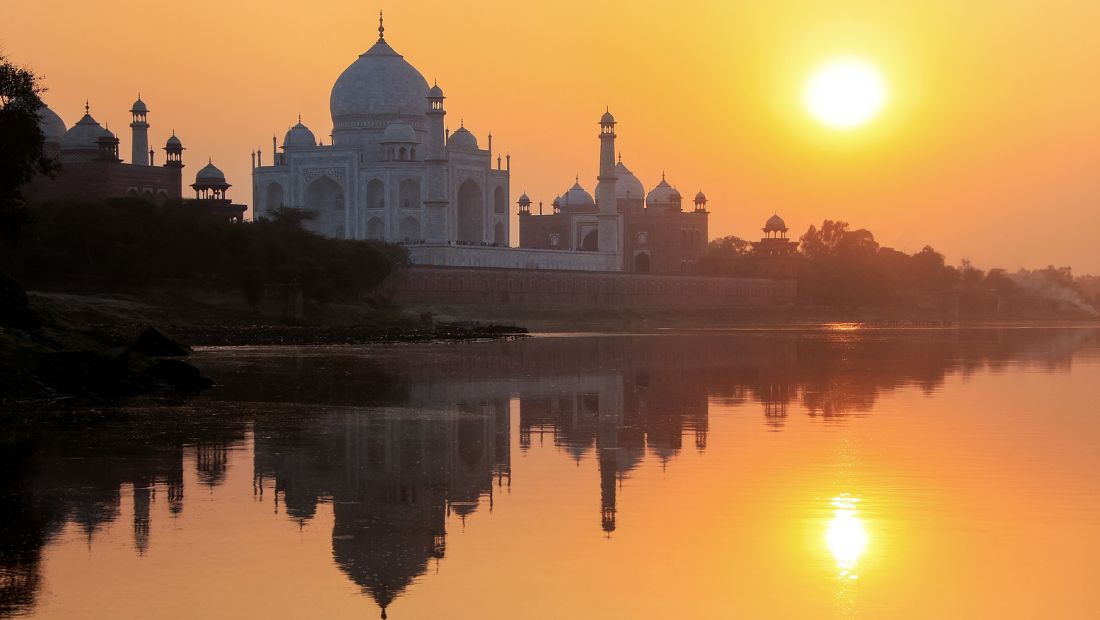
Explore AttractionsThe Taj Mahal is not white. Its Makrana marble shifts through the day, blushing pink at first light, blazing under noon, then cooling to amber as the sun leaves the Yamuna. This chromatic drift is the first thing that surprises visitors who arrive expecting a fixed, postcard object.
The monument is alive to the sky above it.
Shah Jahan commissioned the mausoleum in 1632 for Mumtaz Mahal, and the work absorbed craftsmen from across the empire and beyond for the better part of two decades. What they built was less a single tomb than a designed universe. The charbagh gardens divide into quarters echoing paradise. The red sandstone Great Gate compresses the approach so the marble arrives as a revelation. The reflecting pool doubles the dome. The four minarets lean fractionally outward, a precaution against earthquakes that also perfects the eye's sense of balance. Even the mosque and its mirror-image jawab exist as much for symmetry as for function. Securing Taj Mahal Tickets is the practical beginning, but the design was made to be walked slowly, decoded gradually.
Today the complex sits at the heart of how the wider region presents itself. It anchors the classic pairing with Agra Fort, the sandstone stronghold from which Shah Jahan reportedly gazed at his creation in his final years. It draws travellers on Taj Mahal Tickets tours that begin in Delhi and return by nightfall, and others who linger for a Taj Mahal sunrise experience when the marble is coolest and the crowds thinnest. Photographers arrange sessions along the garden axis. A Taj Mahal Tickets tour by rail delivers visitors straight into Agra's Mughal circuit. However one arrives, the monument remains the fixed point around which the itineraries orbit.
The destination suits a particular kind of traveller: those drawn to craftsmanship over spectacle, to the pietra dura inlay where lapis, carnelian and jasper form flowers no larger than a fingertip. It rewards patience. The Persian calligraphy framing the entrance grows subtly larger toward the top so it reads evenly from below, an optical courtesy eight centuries in the refining of Islamic architecture. Booking Taj Mahal Tickets tickets in advance is what turns a rushed pilgrimage into an unhurried study. The Taj Mahal repays the visitor who treats it not as a checkbox but as a text, dense with intention, that continues to be read on the banks of a slow river in northern India.
“The Taj Mahal is not white; its marble shifts through the day, blushing at first light, blazing at noon, cooling to amber at dusk.”
The mausoleum's flawless bilateral symmetry, from minarets to garden axis, defines its enduring reputation among the world's landmarks.
Marble shifts tone from pink at sunrise to white at noon and gold at dusk, rewarding visitors who choose their hour with care.
Semi-precious stones inlaid into the marble form floral patterns that reveal themselves only up close along the tomb walls.
Every route to the Taj Mahal shapes what you see and how it feels, so this collection sorts the ways in rather than the sights themselves. Choose by light, pace, and starting point: a dawn visit reads differently from a lamplit one, a private guide differently from a train arrival. Each page below covers one distinct experience, from Delhi day trips to combined fort itineraries and dedicated photography sessions, letting you match the mausoleum to the kind of trip you actually want.
Night Tour
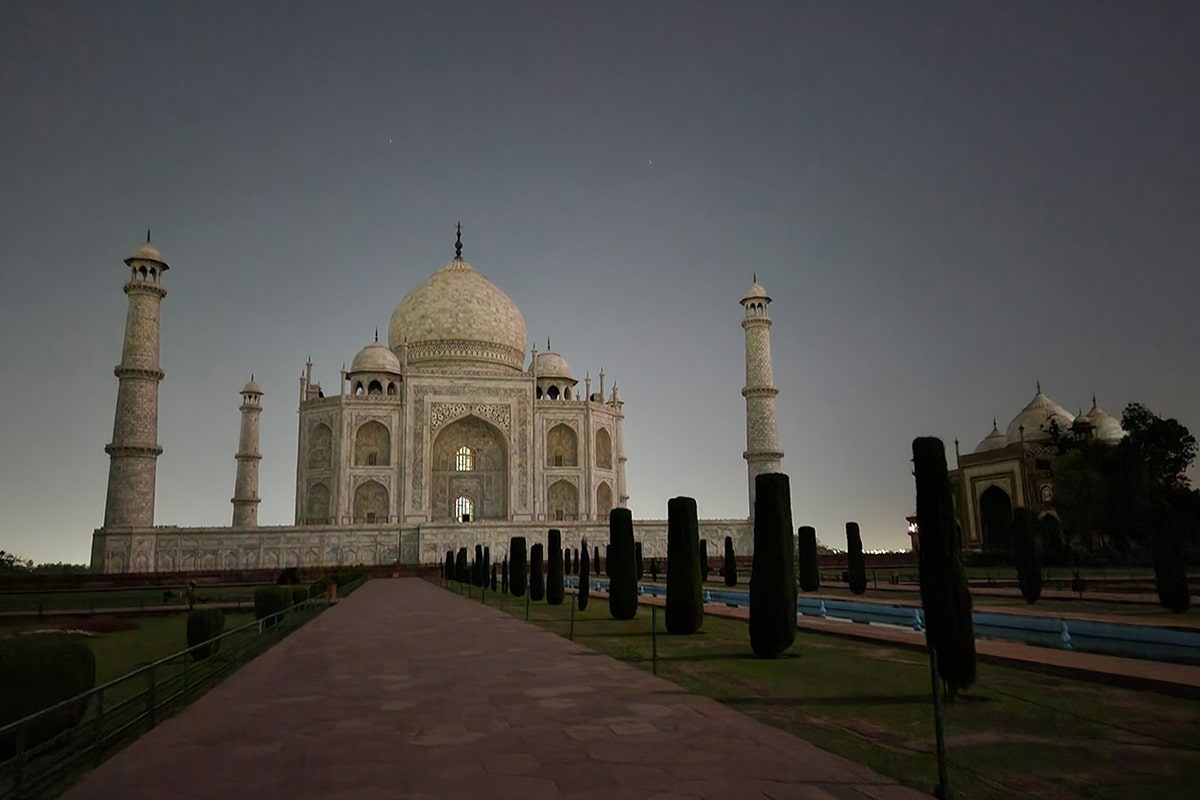
Restricted full-moon-window viewings where the white marble catches lamplight and lunar glow, a limited-capacity experience distinct from any daytime visit to the same grounds.
Photography
Sessions with a positioned photographer working the classic reflecting-pool angles and side-garden frames, coordinated around crowd flow to capture clean shots of the mausoleum.
Combo Tour
One itinerary linking the mausoleum with the red-sandstone fort across the river, where Shah Jahan viewed the Taj from his marble quarters.
Train Tour
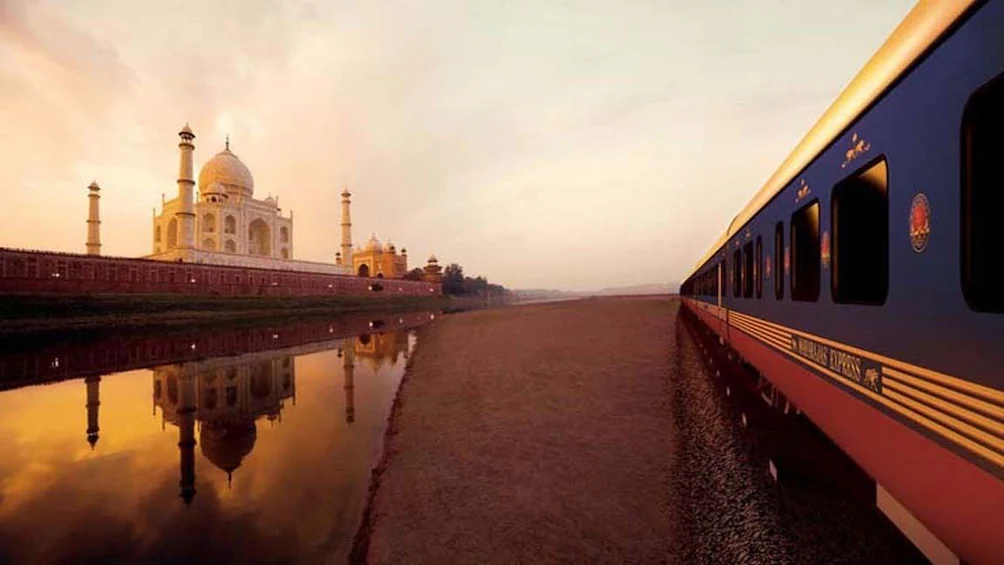
Rail-based day trips using the fast Agra connection, swapping road congestion for a fixed-schedule ride and a station-to-monument guided plan.
Private Tour
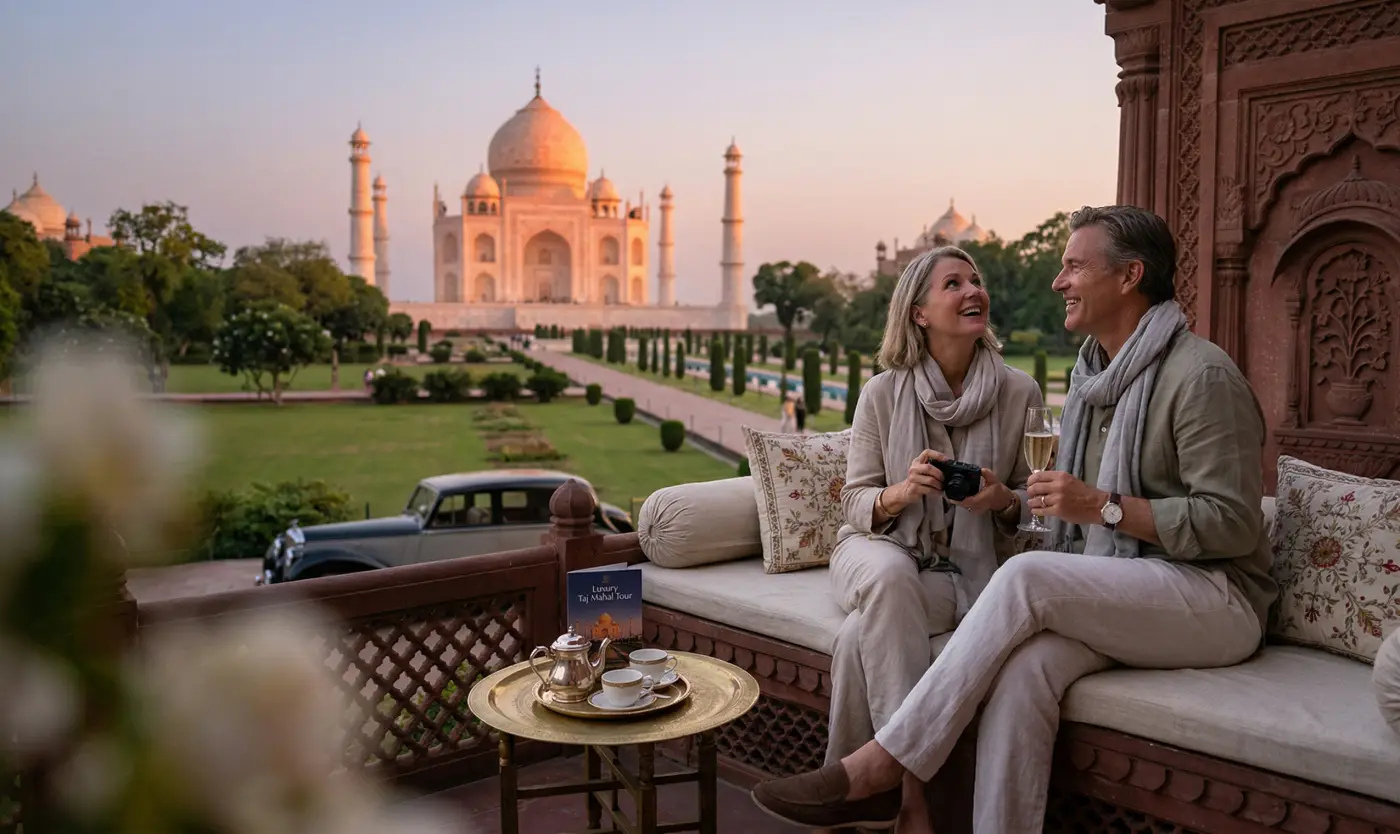
Solo-party outings with a dedicated guide and driver, pacing set to you, ideal for detailed marble inlay study and quieter movement through the complex.
Sunrise Tour
Early-gate entry catching first light shift the marble from pink to gold, with thinner crowds than midday and the coolest air for outdoor walking.
Day Tour
Round-trip runs pairing highway transfer with a guided monument walk, built for travelers basing in the capital who want the mausoleum in a single long day without an overnight.
Agra rewards early risers and tight sequencing. These plans scale from a single sunrise visit to a three-day loop covering the Taj, Agra Fort, and Fatehpur Sikri, ordered so you never backtrack across the city. Pick the length that fits your schedule and slot the site pages where they anchor each day.
Enter at first light for soft color on the marble and thinner crowds; budget two hours inside for the mausoleum, gardens, and mosque before the day heats up.
View guideIf you are basing in Delhi rather than Agra, the round trip pairs sunrise with an afternoon departure; plan roughly a full day door to door.
View guideOn the five nights around the full moon, a separate timed session lets you see the marble under moonlight; book ahead as slots are limited.
View guidePair a return morning at the Taj with Agra Fort's sandstone ramparts and palaces; the combined visit runs half a day with the two sites a short hop apart.
View guideRest and refuel midday before the sunset stop; keep the afternoon light for the garden across the river.
Cross to the riverside garden directly behind the Taj for a rear view as the sun sets; arrive 45 minutes early for the best light and a clear sightline.
Reaching Agra by train frees the car for the Fatehpur Sikri excursion; time your arrival to start the day-trip early.
View guideExplore the abandoned Mughal capital 40 km west, including the palace complex and Buland Darwaza; allow two to three hours on site.
Close the trip with a last look from a riverside vantage before departing; keep it short if catching an evening train or flight.
The Taj complex itself is walkable once you arrive, but reaching it means combining a short metro or rickshaw hop with a walk from a no-vehicle perimeter that keeps cars away from the monument.
Local auto-rickshaws are the standard way to reach any of the three visitor gates (East, West, and South) from hotels in Taj Ganj or from Agra Cantt station. Drivers wait at fixed stands near each gate, and fares are set per ride rather than metered.
Prepaid taxi counters at Agra Cantt railway station and the airport offer fixed-rate cars into the gate area, useful for groups or luggage. Cars cannot enter the restricted zone around the monument, so drivers drop passengers at the designated parking a short walk or shuttle ride from the gates.
The Agra Metro's Yellow Line, opened in March 2024, runs underground between Agra Fort (Mankameshwar) station and Taj Mahal station, cutting straight through road traffic. It's the fastest link if your hotel or train arrival point is near one of those two stops.
Petrol and diesel vehicles are banned within roughly 500 meters of the Taj Mahal, so the final stretch from parking to any of the three gates is on foot, by battery-powered golf cart, or by e-rickshaw. Each gate (East, West, South) has its own drop-off point and security screening line.
From the airport: Agra Airport (Kheria) links to the center by prepaid taxi in 20-30 minutes for ₹300-500, while travelers arriving via Delhi Indira Gandhi International, the nearest major hub, face a 3-4 hour taxi or car transfer to Agra costing ₹2,500-4,500 one-way.
October through March is the strongest window for Taj Mahal tickets, with cool, dry air and clear skies for outdoor sightseeing, though December-January mornings bring fog worth building slack into a booking. Whatever the month, Friday is a hard no: the monument closes to general visitors for mosque prayers, so tickets should never be dated for that day.
This is the core sightseeing season named in seasonal guidance, with clear light through most of it; book morning slots with a buffer in late December and January, when river fog can delay visibility until mid-morning.
Heat dominates planning here, with afternoons largely unworkable for outdoor time and sudden dust storms adding a further wrinkle, so tickets are best timed for first entry.
Rain showers alternate with clear stretches, and the lighter crowds plus moody skies make this a trade-off season: less certainty on any single day, less competition for a good view.
The Taj Mahal closes to sightseeing every Friday for Jumu'ah prayers at the on-site mosque, a fixed constraint independent of month, so no ticket should ever be booked for that day.
Three destinations pair naturally with Agra sightseeing, each doable as a half-day or full-day loop without an overnight stay. All lie within roughly two hours of the city, making them easy add-ons around a Taj Mahal visit.
Akbar's abandoned red-sandstone capital holds the Buland Darwaza gateway and the Jama Masjid courtyard, both intact since the 16th century and close enough to combine with an Agra morning.
The twin pilgrimage towns tied to Krishna's birth and childhood draw a steady flow of devotees to riverside temples and ghats, offering a religious counterpoint to Agra's Mughal monuments.
This UNESCO-listed wetland reserve shelters hundreds of resident and migratory bird species and is best explored slowly by cycle rickshaw or on foot, a change of pace from monument-hopping.
Agra's food identity leans savory-sweet: a Mughlai legacy of kebabs and biryani sits alongside a market culture built around one candied vegetable and a fried breakfast bread. Most of it is found within walking distance of Sadar Bazaar and Kinari Bazaar rather than in formal dining rooms.
The original Panchhi Petha outlet in Sadar Bazaar sells the translucent ash-gourd sweet in plain, kesar, and angoori versions; look for the Atam Market, Naulakha Crossing branch to avoid copycats trading on the name.
A puffed, urad-dal-stuffed fried bread ladled with spicy potato curry and curd, served in leaf bowls at Deviram Sweets & Restaurant in Pratap Pura, a breakfast queue that starts before 9am.
A narrow lane of sweet shops and snack stalls behind Jama Masjid selling chole bhature, rabri, and dalmoth alongside Mughlai staples; browse it on foot after breakfast rather than by rickshaw.
A Sadar Bazaar biryani and kebab counter serving Lucknowi-style chicken biryani, shami and galawati kebabs, and mutton korma, popular with locals for a sit-down lunch.
Grilled boti and seekh kebabs sold from tandoor stalls scattered through Sadar Bazaar and Kinari Bazaar in the evening, best eaten hot off the grill rather than reheated.
The main street-food strip near Agra Cantt, with its Chaat Gali lane dedicated to pani puri, aloo tikki, and dahi bhalla alongside petha and dalmoth vendors.
Agra rewards a step past the main monument with a handful of sites tied directly to its story, each verified and easy to reach on the same riverbank.
A Mughal charbagh garden aligned with the Taj Mahal's axis across the river, built before the Taj but later renovated by Shah Jahan as a viewing garden. Its riverside platform gives an unobstructed, uncrowded look at the monument's marble at sunset.
Built by Nur Jahan for her father between 1622 and 1628, this tomb was the first Mughal structure done entirely in white marble with pietra dura stone inlay, the techniques later refined in the Taj Mahal itself. Its jali screens and floral inlay work reward a slower look than its small footprint suggests.
Built around 1635 for Afzal Khan Shirazi, a scholar and prime minister under Shah Jahan, this tomb is covered in glazed tile mosaics imported from China rather than the marble inlay used nearby. Much of the tilework has faded or fallen away, but the surviving sections of blue and turquoise pattern are distinct from anything else on the riverfront.
Pick a base by proximity trade-off: staying inside Taj Ganj puts you steps from the monument but in narrow, touristy lanes, while Fatehabad Road or Sadar trade a short ride for more room and quiet.
Dense lanes of guesthouses and rooftop cafes wrapped around the South Gate, suited to travelers who want to roll out of bed and be at the ticket line, and who don't mind narrow streets and persistent touristy sales pitches.
Agra's main hotel corridor, running south of the monument with international chains and five-star properties offering pools and rooftop Taj views, fitting travelers who want comfort and space over minute-by-minute proximity.
A pedestrian-only stretch near the East Gate with a smaller, calmer set of hotels and homestays, well suited to travelers prioritizing an easy sunrise walk without the density of Taj Ganj.
Agra's commercial center between the Taj and Agra Fort, with markets and a wider dining scene, better suited to travelers who want to split time evenly between the Fort, old city bazaars, and the Taj rather than staying glued to one monument.
Beyond the magnificent marble mausoleum itself, the surrounding area features historical Mughal forts, beautiful riverfront gardens like Mehtab Bagh, vibrant local markets, and nearby architectural wonders like Fatehpur Sikri.
Consider your personal interests and schedule. History and architecture enthusiasts should prioritize Agra Fort and the Tomb of I'timad-ud-Daulah, while nature lovers and photographers might prefer spending time at Mehtab Bagh for stunning sunset views.
The most comfortable time to visit is during the cooler months from October to March. For the Taj Mahal specifically, arriving at sunrise offers the most magical lighting and comfortable weather for exploration.
It is highly recommended to book your entry tickets online in advance to skip the notoriously long queues at the ticket counters. Look out for digital tickets that can be scanned directly from your mobile device.
Yes, the main Taj Mahal complex and Agra Fort offer wheelchair accessibility and are excellent for families. However, some older monuments may feature uneven paths and steep steps, so comfortable walking shoes are essential.
Battery-operated rickshaws and golf carts are popular, eco-friendly options near the Taj Mahal due to pollution restrictions. For visiting further sites like Fatehpur Sikri, hiring a private, air-conditioned taxi for the day is the most convenient choice.
While a single overarching city pass is rare, visitors can often find bundled tour packages from authorized sellers that include guided access to the Taj Mahal, Agra Fort, and Mehtab Bagh, saving you both time and money.
Arrive at the gates just before sunrise to be among the first inside. Avoid visiting on weekends or public holidays if possible. Please note that the Taj Mahal is closed to general tourists on Fridays for prayers.
Choose from amazing attractions and create unforgettable memories in this beautiful city
Book Your Experience Now