4 hr 30 min
Taj Mahal Professional Photoshoot & Guided Tour
- Expert local guide
- Small group
- Skip-the-line access
- Free cancellation
Taj Mahal Photoshoot — Sunrise Sessions & Guided Entry
White marble at first light, one frame at a time
Compare fares, pick the fit — all bookings are mobile-voucher and eligible for free cancellation where shown.
4 hr 30 min
3 hr
10 hr
Booking a taj mahal photoshoot starts with one gate decision: standard garden entry, or garden entry plus the ₹200 mausoleum add-on. Both begin with the same 1,100 INR foreign adult ticket, but the interior add-on changes what your camera can actually capture inside the marble chamber.
| Garden Entry (Base Ticket) |
Top pick Garden + Mausoleum (Interior Add-on) |
|
|---|---|---|
| What it includes | Gardens, reflecting pool, exterior views, museum | Adds inner mausoleum chamber access |
| Interior mausoleum access | — | ✓ marble cenotaphs, inlay work up close |
| Photography scope | Exterior facades, symmetry shots, garden reflections | Interior pietra dura detail, no tripods inside |
| Price | 1,100 INR foreign adult entry | 1,100 INR + 200 INR mausoleum add-on |
| Who it suits | Casual visitors focused on classic exterior compositions | Photographers wanting interior architectural detail |
| See tickets & prices |
Verdict: Most first-time visitors on an Agra Taj Mahal tour should add the 200 INR mausoleum ticket alongside standard tajmahalphotoshoot tours booking, since the interior is where the finest inlay detail sits.
Worth it at sunrise, skippable at midday
A taj mahal photoshoot at the base fee of 1,100 INR (plus the optional 200 INR mausoleum add-on) buys you soft sunrise light raking across white Makrana marble, the pietra dura inlay glowing, and the reflecting pool holding a clean mirror image before the frame fills with people. For that price against a UNESCO heritage wonder of Mughal architecture, the value math favors going. It pays off cleanly for first-time visitors and anyone chasing the mirror shot, since the light and the empty foreground are the whole product. It pays off less if you arrive at noon, when haze flattens the marble and crowds swallow every angle. Skip-the-line entry and guided taj mahal photoshoot tours cost more but protect the narrow good-light window. The 200 INR add-on only matters if you want interior detail; the exterior frames carry most of the reward on their own.
Bottom line: Book the taj mahal photoshoot tickets, arrive at dawn, and the fee pays for itself in one frame.
Hand-picked experiences loved by thousands of travelers
3–12 hours (depending on pickup location)
Free Cancellation
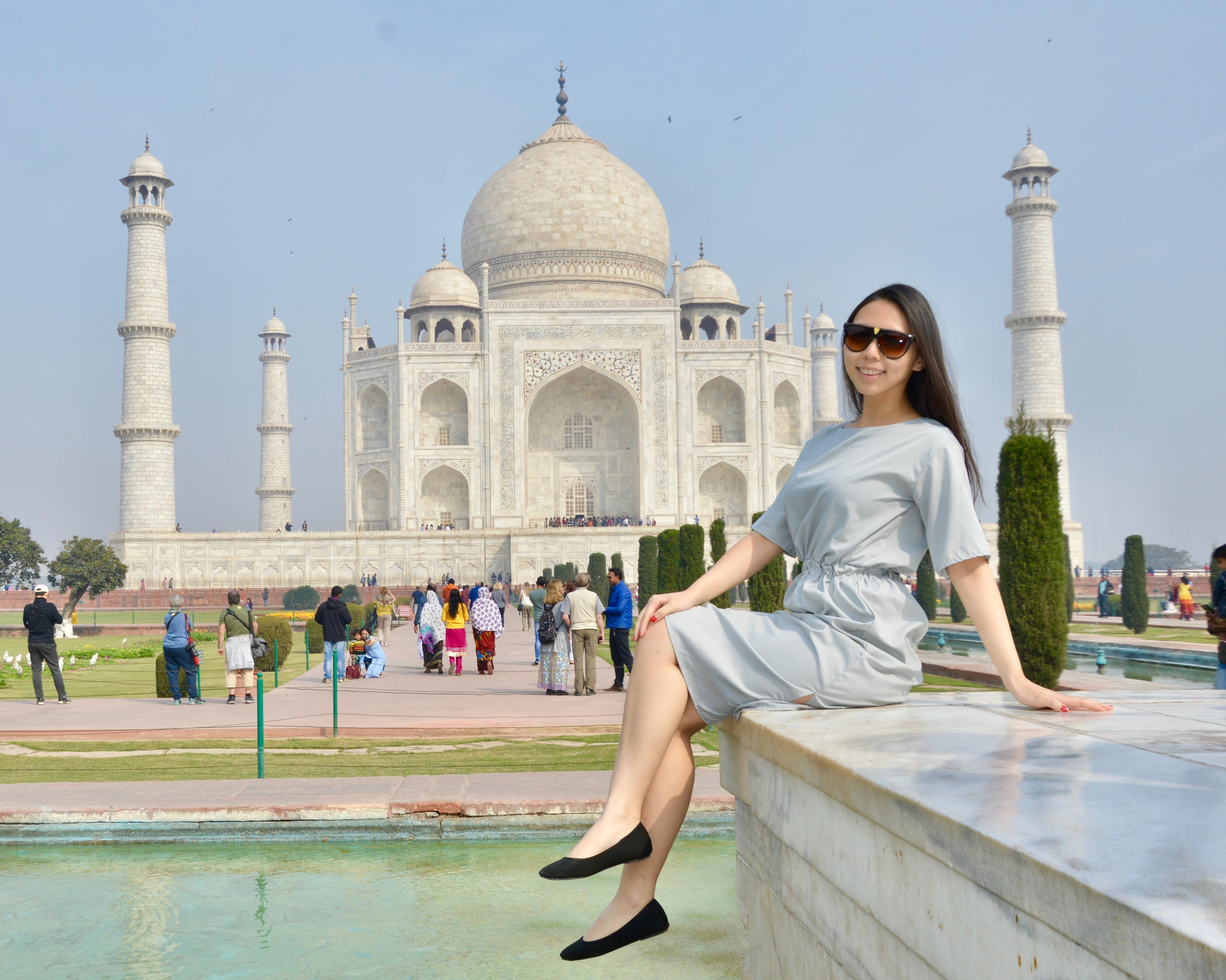
Witness the Taj Mahal at dawn, strike a pose with a pro photographer, and take home printed memories.
3 hours
Free Cancellation
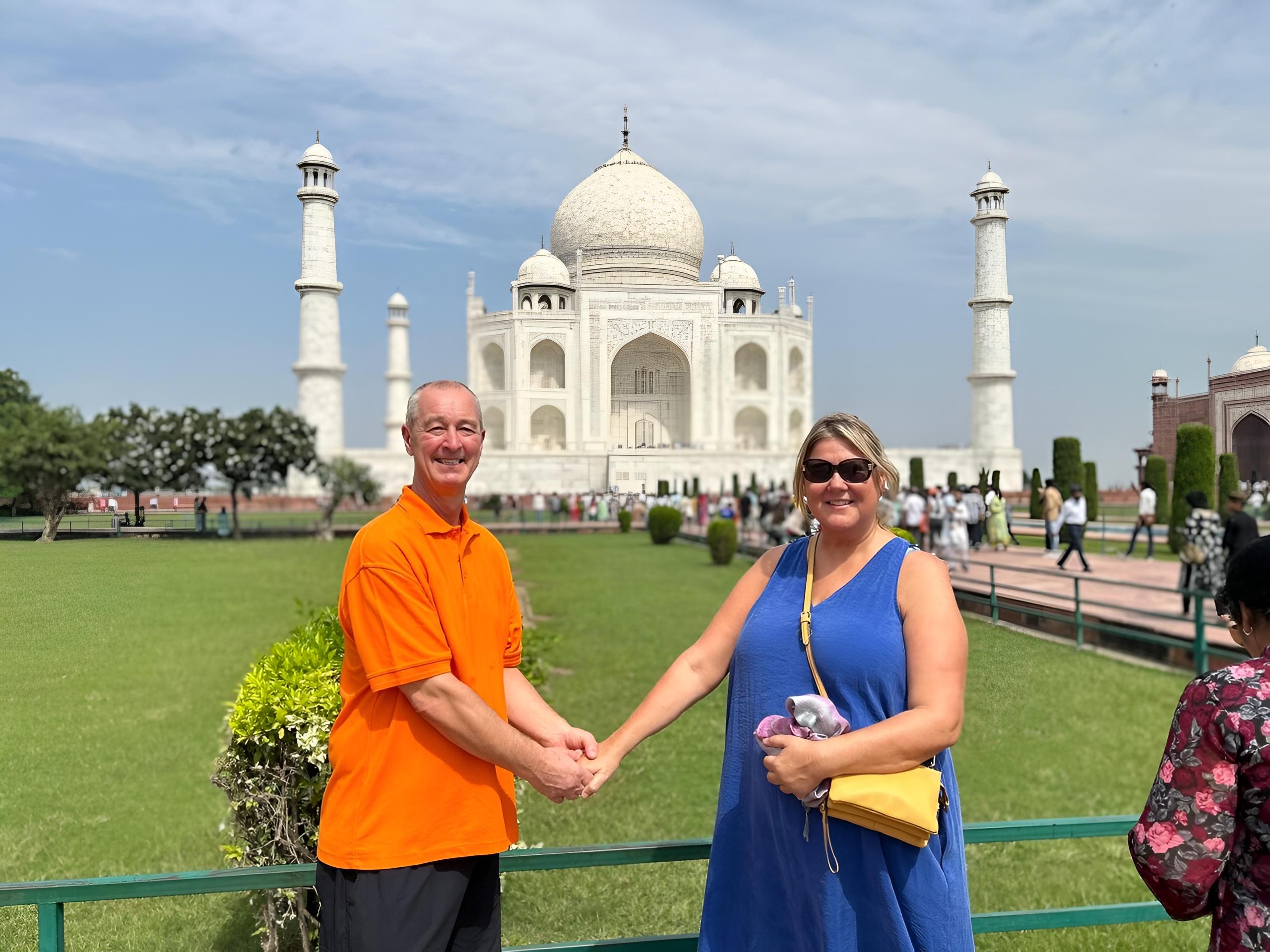
Breeze past the queues and explore the Taj Mahal with a knowledgeable local guide in just 3 hours.
3 hours
Free Cancellation
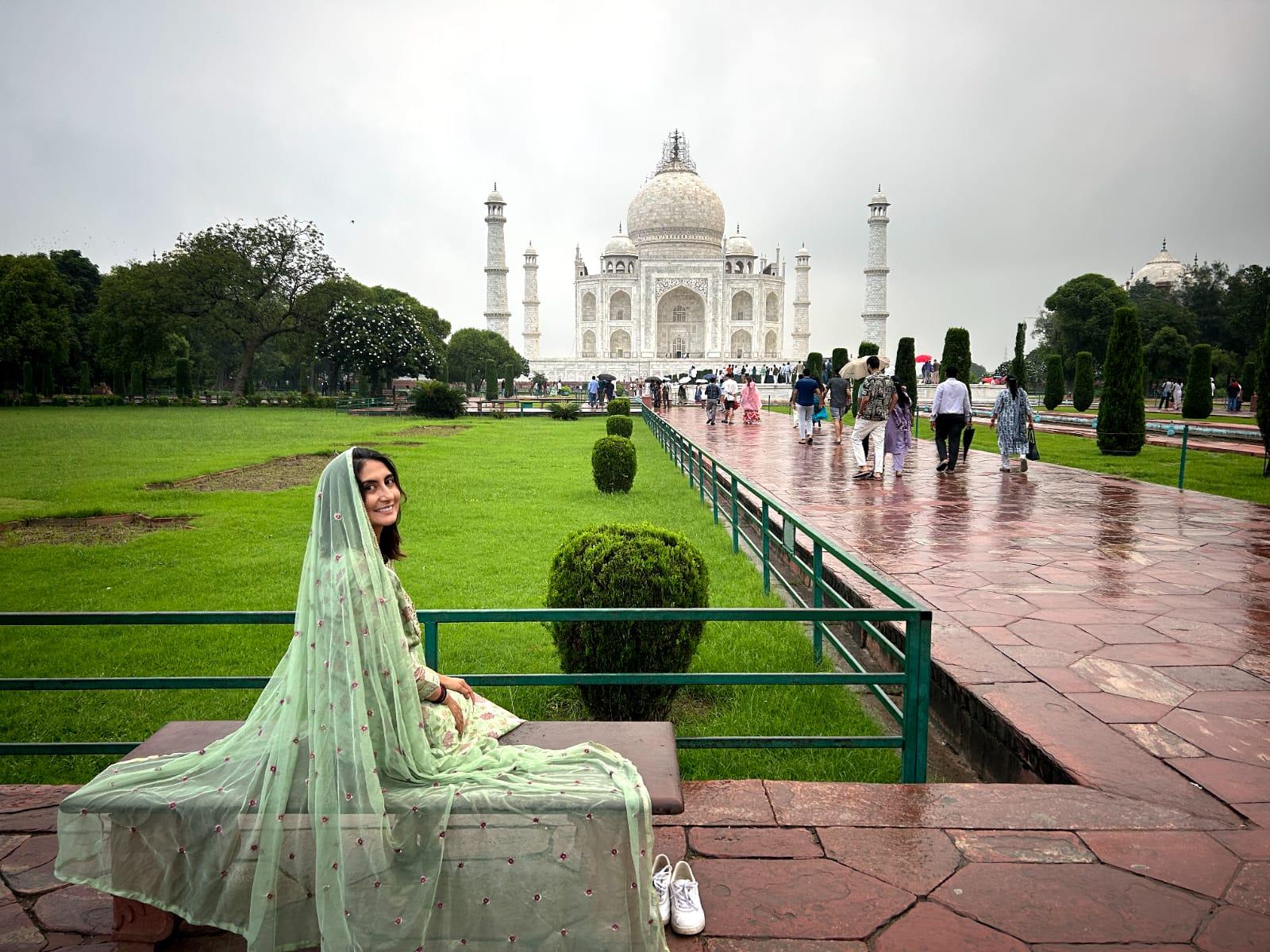
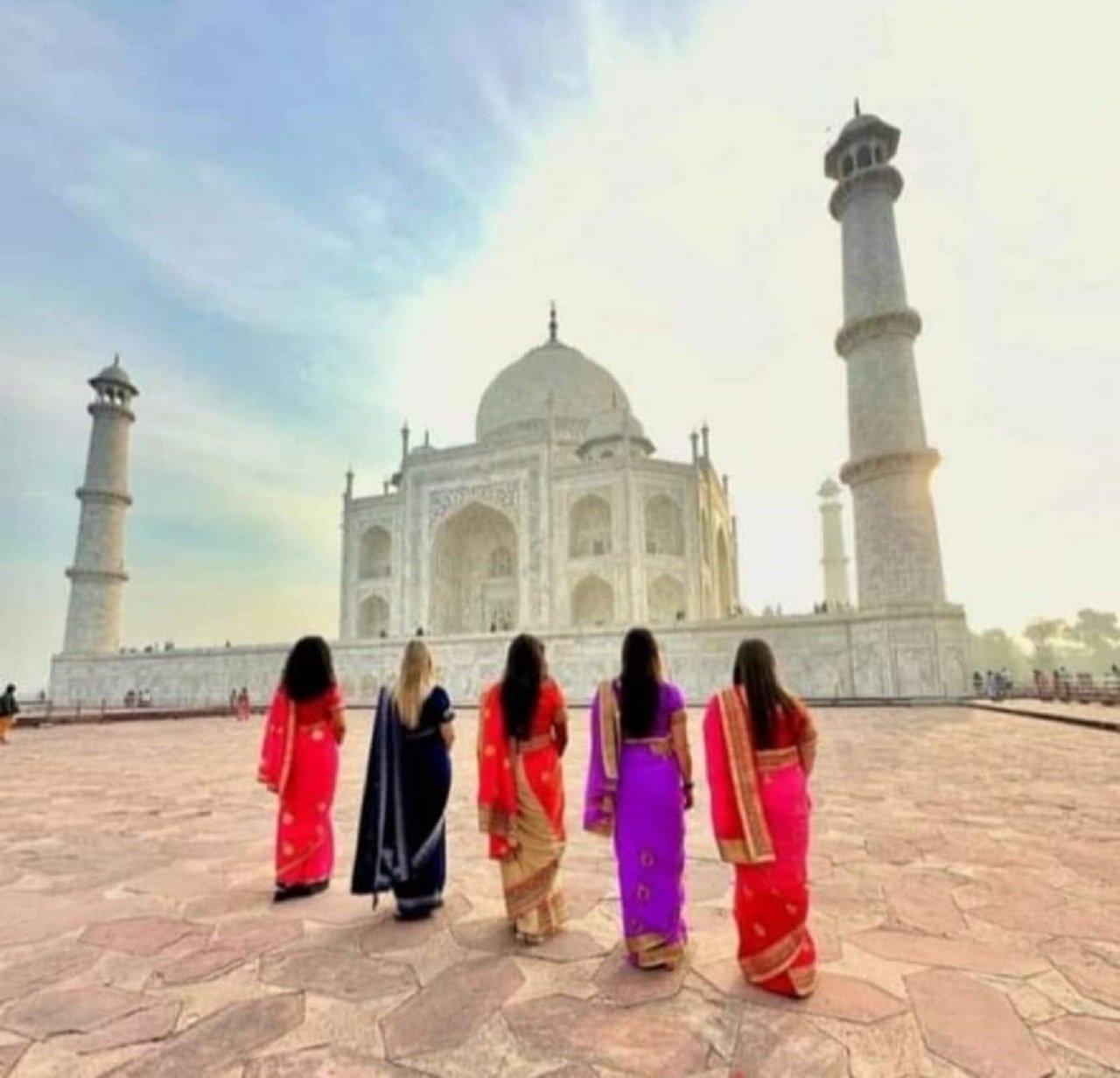
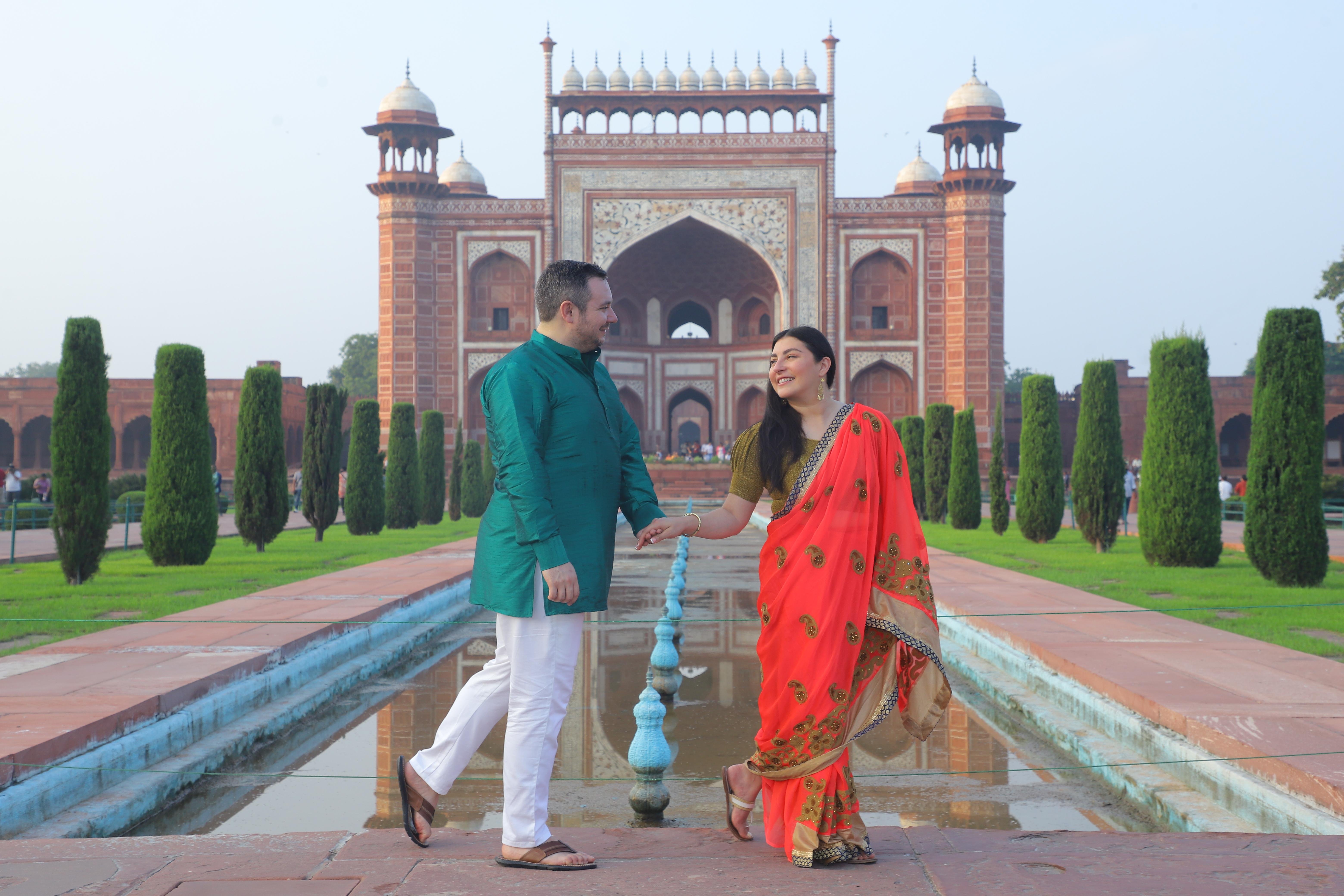
Explore the Taj Mahal in traditional Indian attire with skip-the-line entry, expert guiding & hotel transfers.
Clear security and collect shoe covers at the Eastern or Western Gate before heading toward the main entrance.
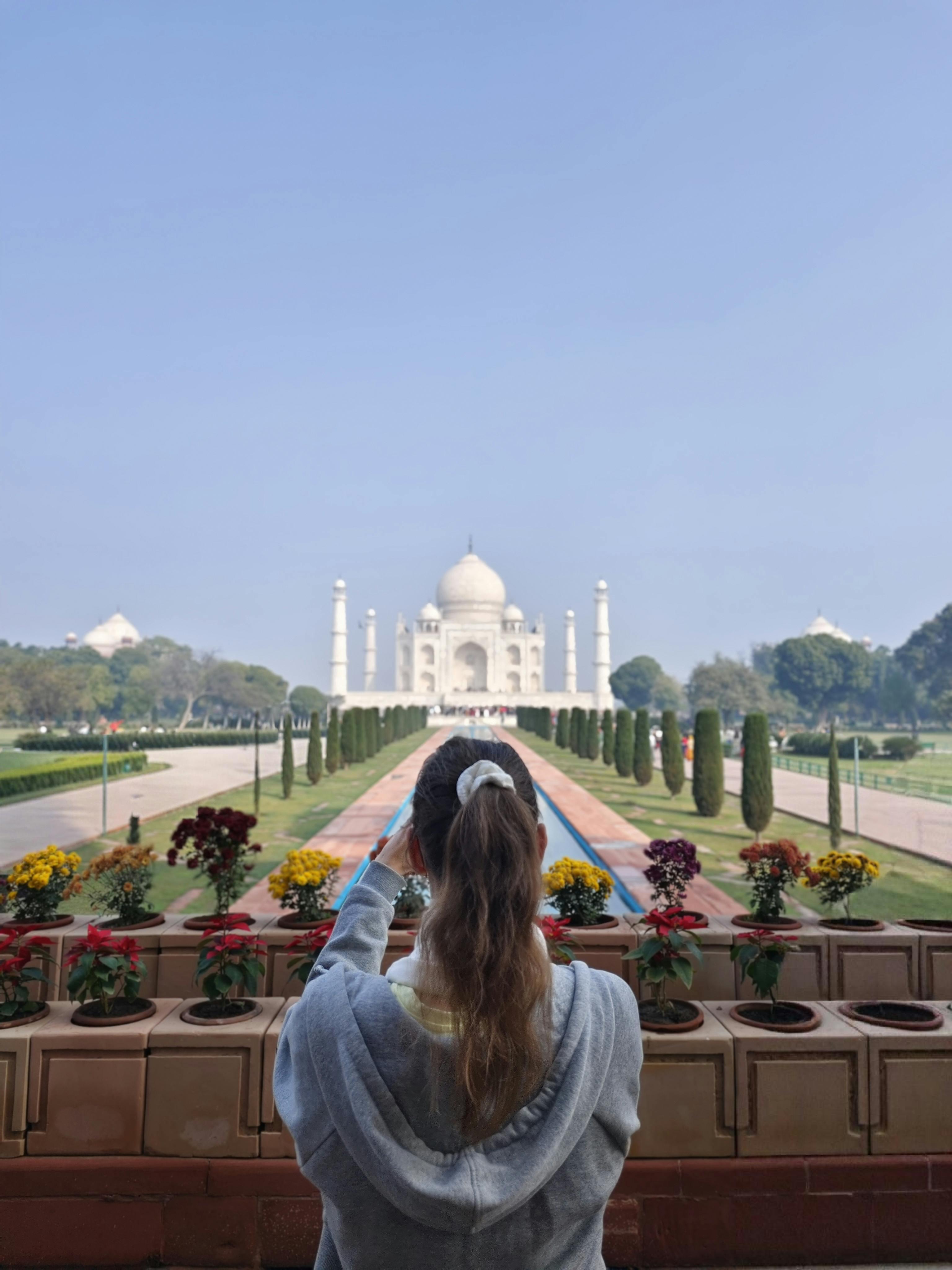
Follow the symmetrical Mughal gardens and reflecting pool toward the marble platform, pausing at the classic bench viewpoint.
Remove shoes or use shoe covers to walk onto the raised platform surrounding the mausoleum.
Circle the exterior to see the inlaid pietra dura marble and the four minarets up close.
Visit the cenotaphs of Shah Jahan and Mumtaz Mahal with the optional INR 200 add-on ticket.
Retrace through the gardens to the exit gate and reclaim any checked bags.
The white marble tomb built by Shah Jahan houses the cenotaphs of Mumtaz Mahal and Shah Jahan himself, though the actual burial chamber lies below. Its central dome rises roughly 35 meters and is flanked by four smaller chattris.
Each of the four 40-meter marble minarets at the corners of the platform was built slightly tilted outward, an engineering choice meant to protect the mausoleum if the towers ever collapsed. They frame nearly every classic photograph of the monument.
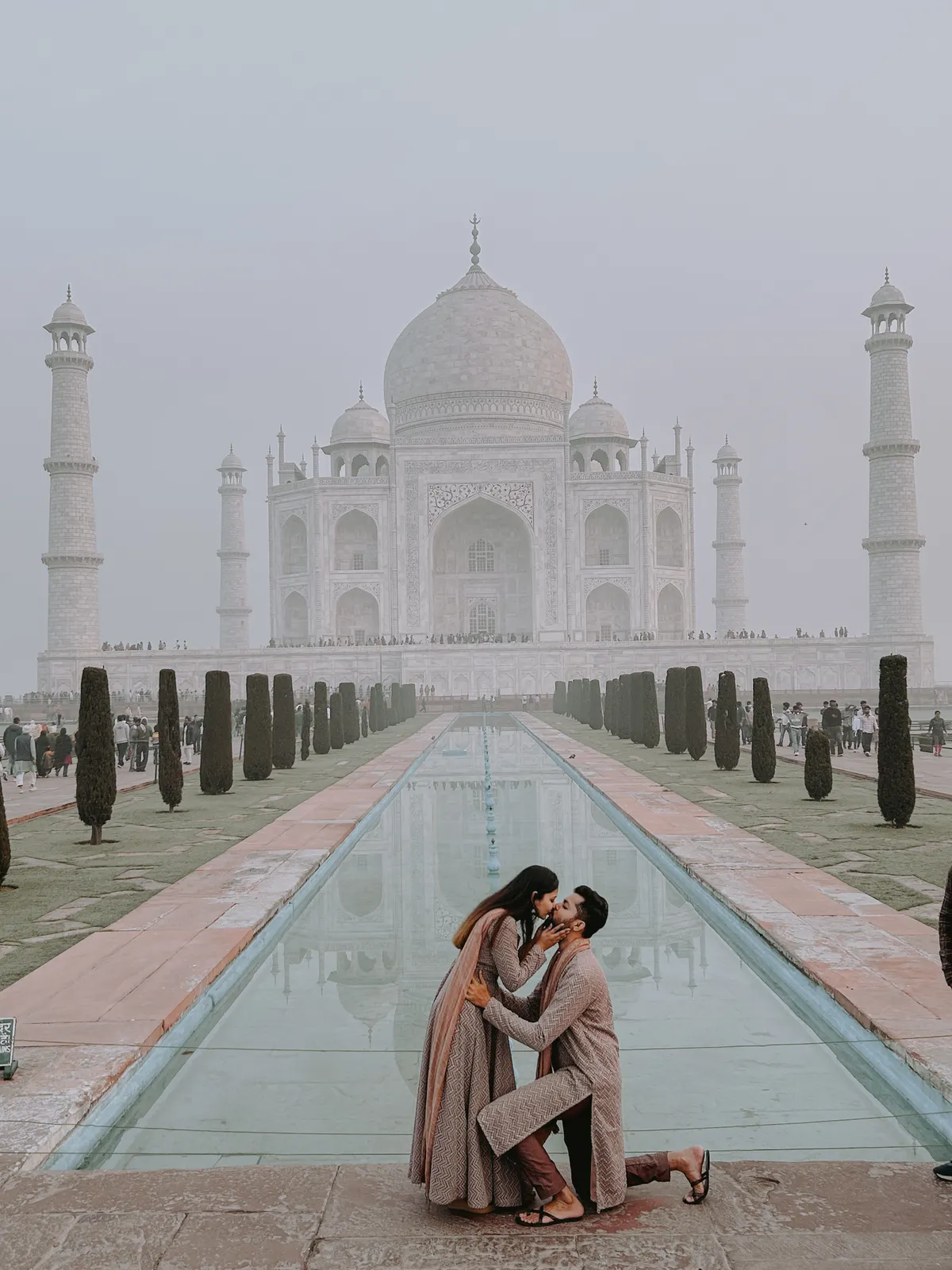
This quartered Persian-style garden, divided by raised walkways and a long reflecting pool, was designed so the mausoleum appears to float above the water's surface. The layout follows a strict symmetry rooted in Mughal paradise-garden tradition.
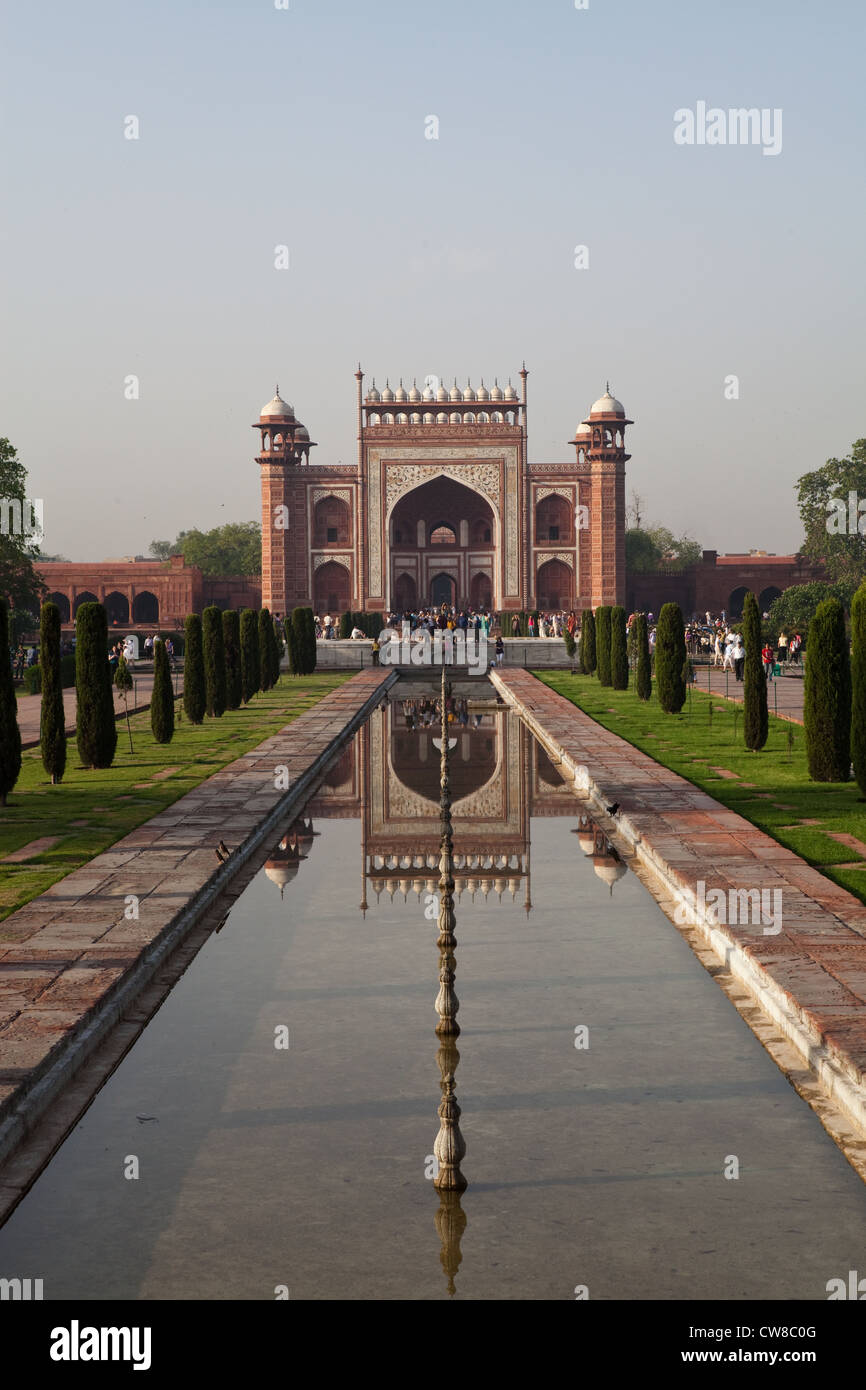
This red sandstone entrance gate features an arched iwan inscribed with Quranic calligraphy that appears uniform in size from the ground despite the letters growing larger toward the top. It serves as the formal threshold before the white marble complex comes into view.
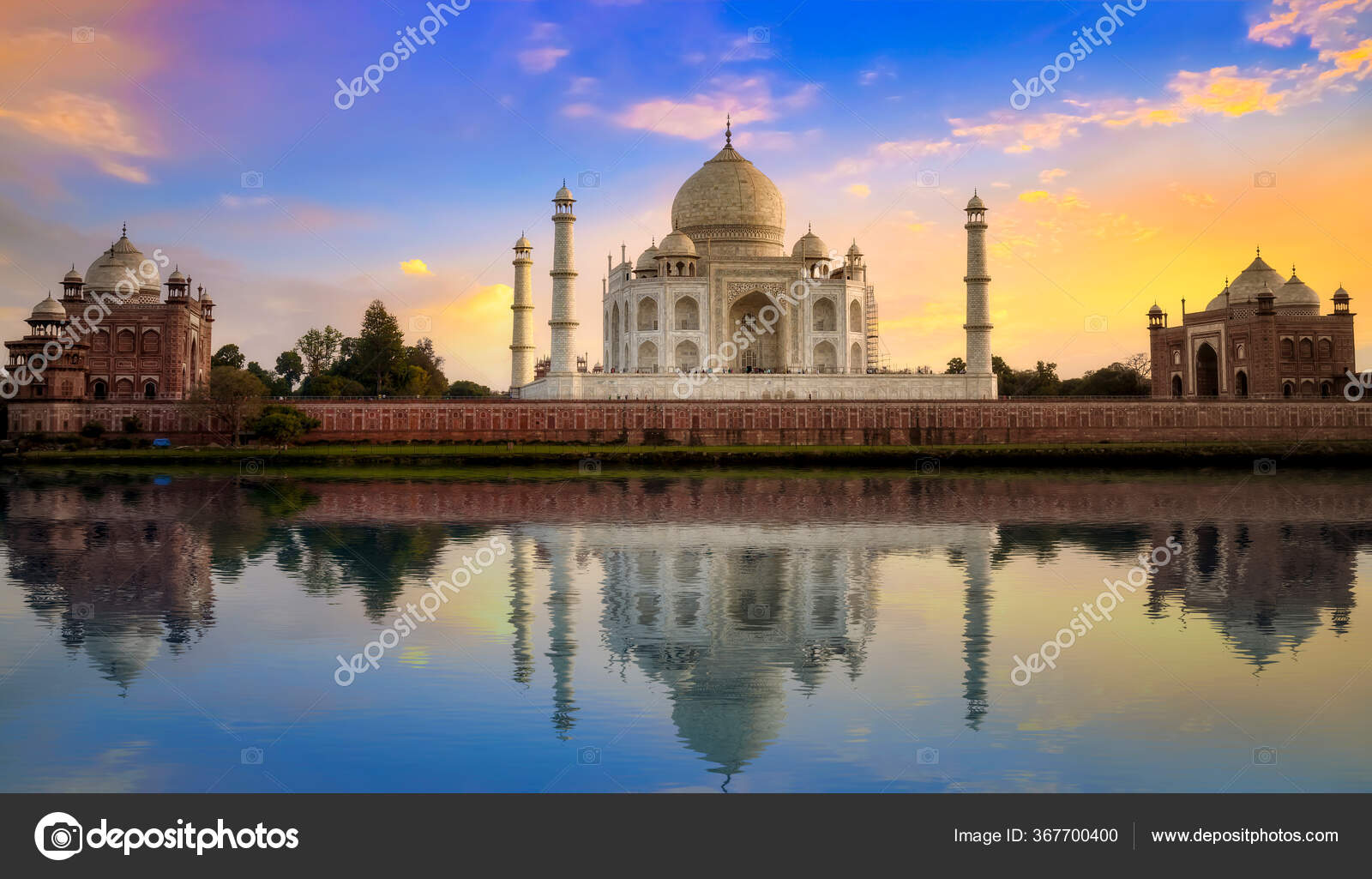
Flanking the mausoleum are two identical red sandstone buildings, a functioning mosque to the west and its mirror-image counterpart, the jawab, to the east, built purely to preserve architectural symmetry. Only the mosque side is used for prayer since it faces Mecca.
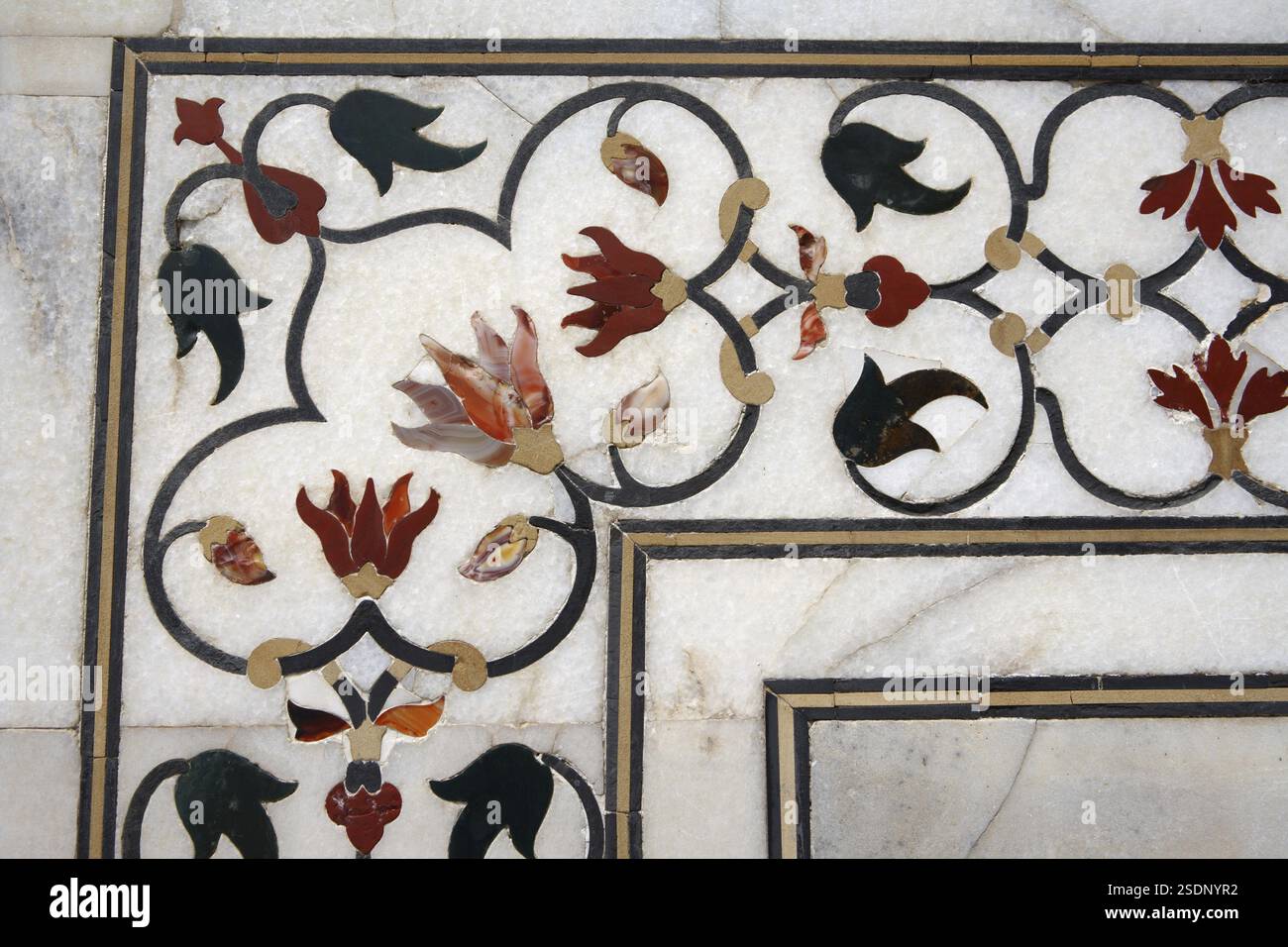
Close inspection of the exterior walls reveals thousands of semi-precious stones, including jasper, jade, and turquoise, inlaid into the marble in intricate floral patterns. This technique required stones sourced from as far as Afghanistan and Sri Lanka.
You arrive at the Tajganj gate before the light turns, ideally inside the 06:00–08:30 window, when the marble holds a soft rose tint and the forecourt is nearly empty. You pass security, cross the red-sandstone gateway, and stop where most people stop — the raised platform at the garden's head, the reflecting pool running dead straight toward the dome. This is the frame everyone knows, so you take it, then move on. You walk the length of the char bagh path, watching the tomb enlarge and the four minarets separate from the mass behind them. You step off-axis to the western mosque, where the sandstone glows warm against cool marble and the crowd thins. You crouch for the pietra dura, letting a single inlaid flower fill the frame. Your taj mahal photoshoot slows here, less hurried than the postcard shot demanded. By mid-morning the marble whitens and the platform fills. You climb to the plinth, remove your shoes or pull on the provided covers, and circle the tomb clockwise, catching the Yamuna glinting behind it. You pause in the iwan's shade, then descend before the heat settles. Walking back, you turn once for the receding reflection — the monument doing, at your back, exactly what it was built four centuries ago to do.
All the details about your upcoming adventure in one place
A taj mahal photoshoot pairs you with a local photographer who knows the white marble monument's best angles, from the reflecting pool to the framed archways of the great gate. Booked as taj mahal photoshoot tours, the session works around soft morning light on the ivory dome and the calligraphy-inlaid facade, so you leave with polished images rather than rushed phone snaps. Many guests combine the shoot with a wider Agra monument tour to include the surrounding Mughal gardens.
The Taj Mahal is not white. Its Makrana marble shifts through pink at dawn, a hard blue-white at noon, and amber under a rising moon, which is why a taj mahal photoshoot rewards patience over equipment. Commissioned by the Mughal emperor Shah Jahan in 1632 as a mausoleum for his wife Mumtaz Mahal, the monument took some twenty thousand artisans roughly two decades to complete, its central dome rising 73 metres above the Yamuna floodplain. That framing is enough; the construction saga belongs elsewhere on this page. What endures is a lesson in symmetry. The complex is built on near-perfect bilateral balance — a reflecting pool bisecting the char bagh garden, twin red-sandstone buildings flanking the tomb, four tapering minarets angled almost imperceptibly outward so that, in an earthquake, they would fall away from the dome rather than onto it. The single deliberate asymmetry is Shah Jahan's own cenotaph, added beside Mumtaz's after his death, a detail photographers learn to read before they ever raise a lens. Semantic variations abound in the visual grammar here: the descriptive agra taj mahal tour route, the broader sweep of agra landmarks, all orbit this one axis of reflection. Up close, the marble is inlaid with pietra dura — semi-precious stones cut into jasmine, tulips and vines, some flowers assembled from more than forty fragments of carnelian, lapis lazuli and jade. Calligraphic panels of black marble frame the great arched iwan, their lettering subtly enlarged toward the top so the script reads uniform from the ground. These are the LSI textures a serious frame captures: the pietra dura inlay, the Yamuna reflection, the char bagh geometry, the Mughal calligraphy, the play of iwan shadow across the plinth. The monument entered the UNESCO World Heritage list in 1983 and now draws millions of visitors a year, its marble monitored for the yellowing caused by Agra's air. Conservation crews periodically apply a mud-pack fuller's-earth treatment to draw impurities from the stone, a slow cosmetic ritual that keeps the surface photogenic. For most travellers, well-planned taj mahal photoshoot tours are less about owning the perfect shot than about standing in a space engineered, four centuries ago, to be looked at from a fixed point and to look back. A considered taj mahal photoshoot begins with understanding that geometry — the reflection, the axis, the outward-leaning minarets — long before the shutter ever moves, and everything the camera keeps is a record of that original intent.
The Taj Mahal is not white — its Makrana marble shifts through pink at dawn, a hard blue-white at noon, and amber under a rising moon.
Modest clothing is expected out of respect for the mausoleum's mosque and religious character, so cover shoulders and knees. Visitors must remove shoes or wear the disposable shoe covers provided free at the marble platform before stepping onto it. Loose, breathable layers work well for Agra's humid summer conditions.
Airport-style security screening with metal detectors and pat-downs applies at both the Eastern and Western Gates. Only small handbags are permitted inside; larger bags and backpacks must be checked at the free cloak rooms near the ticket counters. Expect queues to move slowly during peak morning hours, so arrive with bags already minimized.
Personal still photography is permitted throughout the complex, including on the marble platform, but tripods, monopods, and drones are strictly prohibited. Photography is not allowed inside the main mausoleum chamber housing the cenotaphs. Commercial or professional shoots require separate written permission from the Archaeological Survey of India in advance.
Children under 15 enter free with a valid ID, making it straightforward to bring kids of any age. Strollers are permitted in the gardens but not recommended on the marble platform itself due to the shoe-cover requirement.
Wheelchairs are available on request at the gates, and ramps lead onto the main marble platform, though the surrounding gardens have gravel paths that can be uneven. Staff at the ticket counters can assist visitors with mobility needs in arranging a smoother route to the mausoleum.
Food and beverages are not allowed inside the complex, and there are no cafes or vendors within the gates. Visitors may carry a sealed water bottle, which is checked at the security point before entry.
Good light for a taj mahal photoshoot
Quietest weekday
Weekly closure, mosque prayers only
Busiest weekend day
Hours
06:00–18:30 daily (closed Fridays)
Public transport · 20-30 min from Agra Cantt · Approx. 100-200 INR
Take an auto-rickshaw or e-rickshaw from Agra Cantt railway station or Agra Fort area to the Eastern or Western Gate; e-rickshaws are required for the final stretch since diesel vehicles are banned near the monument.
Car · 30-45 min from central Agra · Parking fees apply
Private cars and taxis can drop passengers at designated parking areas near Shilpgram or the Western Gate, from which an electric shuttle or short walk covers the remaining distance.
Taxi · 20-40 min depending on traffic · Metered or app fare
Taxis and app-based cabs run throughout the day but must park at the outer lot due to the no-vehicle buffer zone around the complex.
Walk · 5-10 min from Tajganj · Free
Visitors staying in Tajganj hotels can walk to the Western Gate in a few minutes.
Taj Mahal tickets booked through the official portal are non-refundable and non-transferable once issued, including the 1,100 INR foreign adult entry fee and the optional INR 200 mausoleum add-on. Date or slot changes are not permitted after purchase, so confirm your visit day before paying.
Recommended time
2-3 hours
Two to three hours covers the gate walk, the main platform, and a slow loop around the gardens without feeling rushed, and this is the window most taj mahal photoshoot sessions are timed around. Add thirty minutes if you plan to queue for the mausoleum interior add-on, since that line moves slowly once tour groups arrive. Arriving at opening and leaving by mid-morning keeps queue time to a few minutes rather than the longer waits that build later. Trim to under two hours only if you skip the interior and stick to platform and garden views.
Crowd levels through the day
Weather · crowds · average price — dots go green to amber to red as each metric rises.
Cool, clear mornings with temperatures around 8–22°C make this the most comfortable season and the busiest with tour groups. Haze can soften early light, but midday skies are usually clear.
Daytime heat regularly exceeds 40°C, so early morning or the last hour before closing are the only comfortable windows. Crowds thin noticeably at midday due to the heat.
Humid with frequent rain showers, but clouds often produce dramatic skies and fewer crowds than winter. July and August, the current season, see some of the lowest tourist numbers of the year.
Post-monsoon skies are clear and temperatures moderate into the 20s°C, marking the start of peak season before winter crowds build.
Reserve entry through the official portal to skip the offline ticket line, especially useful for anyone planning a tightly timed taj mahal photoshoot.
The Eastern Gate typically has shorter queues than the Western Gate, which serves most Tajganj hotels.
Security screening moves faster with only a small bag, since large backpacks must be checked at the cloak room.
A small refundable deposit may apply for cloth shoe covers at the marble platform entrance.
Full-moon night viewing needs a separate ticket booked at least 24 hours ahead and isn't offered on Fridays.
The two monuments share a combined ticket discount and are only about 20 minutes apart by road.
Never plan a taj mahal photoshoot tour for a Friday, since the site is closed to general visitors that day.
Taj East Gate Rd, Dharmapuri, Agra, Uttar Pradesh 282001
Main entry point with ticket counter and cloak room
Get directionsTaj Mahal West Gate Rd, Tajganj, Agra, Uttar Pradesh 282001
Larger gate, closer to Tajganj hotels
Get directionsIn June 1631, Arjumand Banu Begum — remembered as Mumtaz Mahal — died at Burhanpur while delivering her fourteenth child. Her husband, the Mughal emperor Shah Jahan, resolved to raise a tomb worthy of her memory. Construction began at Agra in 1632 on a bend of the Yamuna River. The chosen site belonged to Raja Jai Singh, who ceded it in exchange for a palace elsewhere. Every taj mahal photoshoot today frames a grief made permanent in white Makrana marble. The foundation came first. Labourers sank wells and packed them with rubble to anchor the plinth against the river. Ustad Ahmad Lahauri is credited as chief architect. The riverside gardens, laid out in the charbagh pattern of four quarters, were divided by water channels drawn from the Yamuna. Marble arrived from Rajasthan; jasper came from Punjab, jade and crystal from China, turquoise from Tibet, and carnelian from Arabia. Roughly twenty thousand workers and around a thousand elephants moved the stone. The pietra dura inlay — flowers cut from semi-precious stone — was set by specialists whose descendants still work in Agra. Any serious taj mahal photoshoot tour lingers over that inlay. The double-shelled dome rose over the central chamber, its finial and four flanking minarets completed as the decades passed. The calligrapher Amanat Khan signed the Quranic inscriptions framing the great arch, adjusting letter sizes so they read evenly from the ground. The complex — mosque, mirror-image guest hall, gateway, and tomb — was largely finished by 1653, after roughly twenty-one years. Among Agra landmarks it stands as the fullest expression of Mughal ambition, later recognised as UNESCO heritage. Visitors booking taj mahal photoshoot tickets step onto a plinth completed within Shah Jahan's own lifetime. The final chapter belongs to reversal. In 1658 Shah Jahan's son Aurangzeb seized power and confined his father within the Agra Fort. From there the aging emperor is said to have watched the mausoleum across the river. He died in 1666 and was buried inside the tomb beside Mumtaz Mahal, his cenotaph the single asymmetric element in an otherwise balanced design. Skip-the-line Agra tours and calmer taj mahal photoshoot tours alike now cross ground shaped entirely by that one devotion and its bitter end.
Mumtaz Mahal died at Burhanpur while giving birth to her fourteenth child.
Construction began at Agra on land ceded by Raja Jai Singh.
Foundations, plinth, charbagh gardens, and the central dome took shape under Ustad Ahmad Lahauri.
The mausoleum, mosque, gateway, and minarets were largely completed after about twenty-one years.
Aurangzeb deposed Shah Jahan and confined him within the Agra Fort.
Shah Jahan died and was buried inside the tomb beside Mumtaz Mahal.
Also called the Princess Diana Chair, this low marble seat sits on the raised platform in front of the reflecting pool. Queue for a turn to sit facing the mausoleum for the classic solo portrait; a Taj Mahal photoshoot at this exact bench is the single most requested shot in Agra.
Stand at the pool's edge along the central marble walkway between the entrance gate and the platform, framing the dome and its inverted reflection in the still water. Works best when the pool is calm and un-rippled by wind.
From the corner edges of the raised plinth beneath the dome, a wide-angle lens captures the full facade with all four minarets leaning outward in frame. This is also where guides for taj mahal photoshoot tours often stop for the establishing group shot.
Positioned at one corner of the plinth looking along the row of minarets toward the dome, this angle creates a strong converging diagonal line across the frame, popular for architectural and portrait compositions alike.
Across the Yamuna River on the northern bank, this Mughal garden faces the monument's rear facade and is the only place to photograph the Taj Mahal whole against a sunset sky, sometimes mirrored in the river during monsoon high water. A separate ticket and short taxi ride are required to reach it.
No named photo spot exists here since photography is strictly prohibited inside the marble chamber housing the actual tombs, so visitors should plan their taj mahal photoshoot tickets around the exterior platform and garden viewpoints instead.
A taj mahal photoshoot with children works best if you treat the sunrise crowd window as a strategic asset rather than an obstacle, since gates are quieter and the marble catches soft light before the heat and tour buses arrive. With under-15s admitted free, families can bring kids along without extra ticket cost, though the walk in and long queues call for some pacing.
Strollers are allowed in the gardens and complex, where paths and ramps make wheeling manageable, but leave them at the gate before the mausoleum steps, since that area is stairs-only and tight with crowds.
Toddlers and up tend to do best, since there's open lawn to run on and no entry charge for anyone under 15; babies are easiest carried in a wrap rather than pushed given the security lines and gate walk.
Restrooms and drinking water are available near the ticket counters and gates, and shoe covers are issued for the mausoleum, useful since kids often resist going barefoot on stone.
Arriving in the 06:00-08:30 window means shorter queues, so budget the first hour for photos and gate-to-monument walking before children tire, then let the middle stretch be flexible play time on the lawns.
Parking sits several hundred metres from the entrance gates, so factor in a stroller-free stretch or a golf-cart transfer if little legs or nap schedules are a concern.
Turn photo stops into a game, spotting symmetry in the garden reflecting pools or counting minarets, which keeps a taj mahal photoshoot tour moving without meltdowns during the standing-around parts.
There's no dining inside the monument itself, so most people build their taj mahal photoshoot around a rooftop breakfast or lunch in Tajganj once they've walked back out through the gates. Dharmapuri and Forest Colony lanes near the ticket counters have a handful of small cafes for a quick bite before or after the shoot.
Terrace tables face the marble directly, so it's the pick for a sit-down breakfast right after a sunrise taj mahal photoshoot; go for the palak paneer and get there before 8am, since the small terrace fills fast once tour groups arrive.
A rooftop garden and pool deck about 600 meters out, open around the clock, with a mixed Indian, Chinese, and continental menu; better suited to a relaxed lunch than an early start.
A tiny family-run kitchen popular since the late 1970s, known for banana lassi, malai kofta, and cheap omelettes; ideal for a fast, cooling stop straight after the gate.
A simple, reasonably priced vegetarian spot in Taj Ganj, good for a filling thali without the wait typical of rooftop tables.
A short auto-rickshaw ride away, this modern rooftop does wood-fired pizzas and North Indian plates alongside its Taj view, working better for a later lunch than a dawn visit.
Real experiences from real travelers
We arrived at the gate before sunrise and the marble shifted from grey to pink as the sun climbed. Our guide knew exactly where to stand for the classic reflection frame, and the taj mahal photoshoot images came out cleaner without the midday crowds. Bring socks because the marble platform gets warm fast.
The symmetry of the charbagh gardens and the long water channel is even more striking in person. We booked one of the taj mahal photoshoot tours and the local photographer used the Diana bench angle plus a few by the minarets. The mausoleum glows differently every fifteen minutes in the morning.
Go on a weekday if you can. By ten in the morning the platform near the cenotaph was shoulder to shoulder and getting a clean shot took patience. Still, the pietra dura inlay up close is worth studying, and the Yamuna views from the back terrace surprised me.
My wife wanted portraits and the taj mahal photoshoot tour we picked delivered. The guide timed our arrival so the dome caught soft light and we finished before the heat became unbearable. Seeing the four minarets lean slightly outward, built that way on purpose, was a nice detail he pointed out.
Visited in late January and a low fog wrapped the gardens at dawn, which made for moody frames of the mausoleum. The white marble against the red sandstone gateway is a contrast photos never fully capture. Our Agra Taj Mahal tour also covered the mosque on the western side.
What struck me was the scale, the whole complex is far larger than the postcards suggest. We grabbed taj mahal photoshoot tickets that included a photographer and the results were sharp, especially the calligraphy detail on the arch. The reflecting pool shot is a cliche for a reason.
The marble is genuinely luminous at first light and dull by noon, so timing matters more than gear. Among Agra landmarks this is the one to prioritise, and a UNESCO heritage site this well preserved rewards a slow walk. My only note is the long walk from the parking area.
Booked a skip-the-line Taj Mahal entry and it saved us nearly an hour in the July heat. The taj mahal photoshoot experience felt relaxed because we started at 6am with room to move. Watching the dome brighten over the Yamuna made the early start worthwhile.
The photographer knew all the classic spots and a few quieter ones near the side gardens. Our images of the mausoleum and its inlaid marble came out beautifully in the soft February light. Comfortable shoes are a must, the grounds are vast.
No doubting the artistry of the marble and the gardens, but the sheer volume of visitors tested my patience. If you want a clean taj mahal photoshoot you truly need to be first through the gate. The riverside view at the back was the calmest part of the visit.
Everything you need to know for your journey
The Taj Mahal is open 06:00–18:30 Monday through Thursday and Saturday through Sunday, making early morning the most reliable slot for a taj mahal photoshoot.
Yes, the Taj Mahal is closed to general visitors every Friday for mosque prayers, so no taj mahal photoshoot tour should be scheduled that day.
Foreign adult entry is 1,100 INR, with an optional INR 200 add-on to access the main mausoleum chamber.
No, tripods and monopods are prohibited throughout the complex, along with drones; handheld cameras and phones are fine for a taj mahal photoshoot.
Expect airport-style screening with metal detectors at both gates, and plan to check any large bag at the free cloak room since only small handbags are allowed inside.
Modest clothing covering shoulders and knees is expected, and shoes must be removed or covered before stepping onto the marble platform.
No, food and drinks are not permitted inside the complex, though a sealed water bottle is allowed through security.
The 06:00–08:30 window offers soft sunrise light on the marble and the smallest crowds, ideal for a taj mahal photoshoot.
Auto-rickshaws or e-rickshaws from Agra Cantt railway station reach the gates in about 20-30 minutes, since diesel vehicles are barred from the immediate area.
Yes, children under 15 enter free with valid ID, making family taj mahal photoshoot tours straightforward to plan.
Tickets booked through the official portal are non-refundable and non-transferable once issued, so confirm your date before purchasing taj mahal photoshoot tickets.
Agra Fort, Mehtab Bagh, and Itmad-ud-Daulah are all within a 20-minute drive and combine well with a Taj Mahal visit.
A red sandstone Mughal fortress on the Yamuna River with palaces and courtyards built by Akbar and later emperors. It offers a distant view of the Taj Mahal from its ramparts.
A riverside garden directly across the Yamuna from the Taj Mahal, laid out as a moonlight viewing garden by Shah Jahan. It is a well-known spot for symmetrical views of the mausoleum.
Known as the Baby Taj, this marble tomb built for a Mughal noble features early pietra dura inlay work that influenced the Taj Mahal's design.
A red sandstone mosque built by Shah Jahan's daughter, located near Agra Fort with a large courtyard and multiple domes.
A small museum within the Taj complex displaying Mughal manuscripts, coins, and architectural drawings related to the monument's construction.
A dense cluster of hotels and guesthouses directly facing the Western Gate, popular for rooftop views of the Taj Mahal.
A five-star hotel with unobstructed Taj Mahal views from every room, located about 600 meters from the Eastern Gate.
Several three-star properties along Taj East Gate Road offer rooftop restaurants with monument views at lower price points.
A stretch of affordable guesthouses and hostels catering to backpackers, a short auto-rickshaw ride from the gates.
Join thousands of happy travelers who have discovered this incredible experience
Book Your Experience Now