9 hr
Taj Mahal Sunrise Tour with Express Entry & Local Guide
- Entry ticket
- Mobile voucher
- Valid same day
- Free cancellation
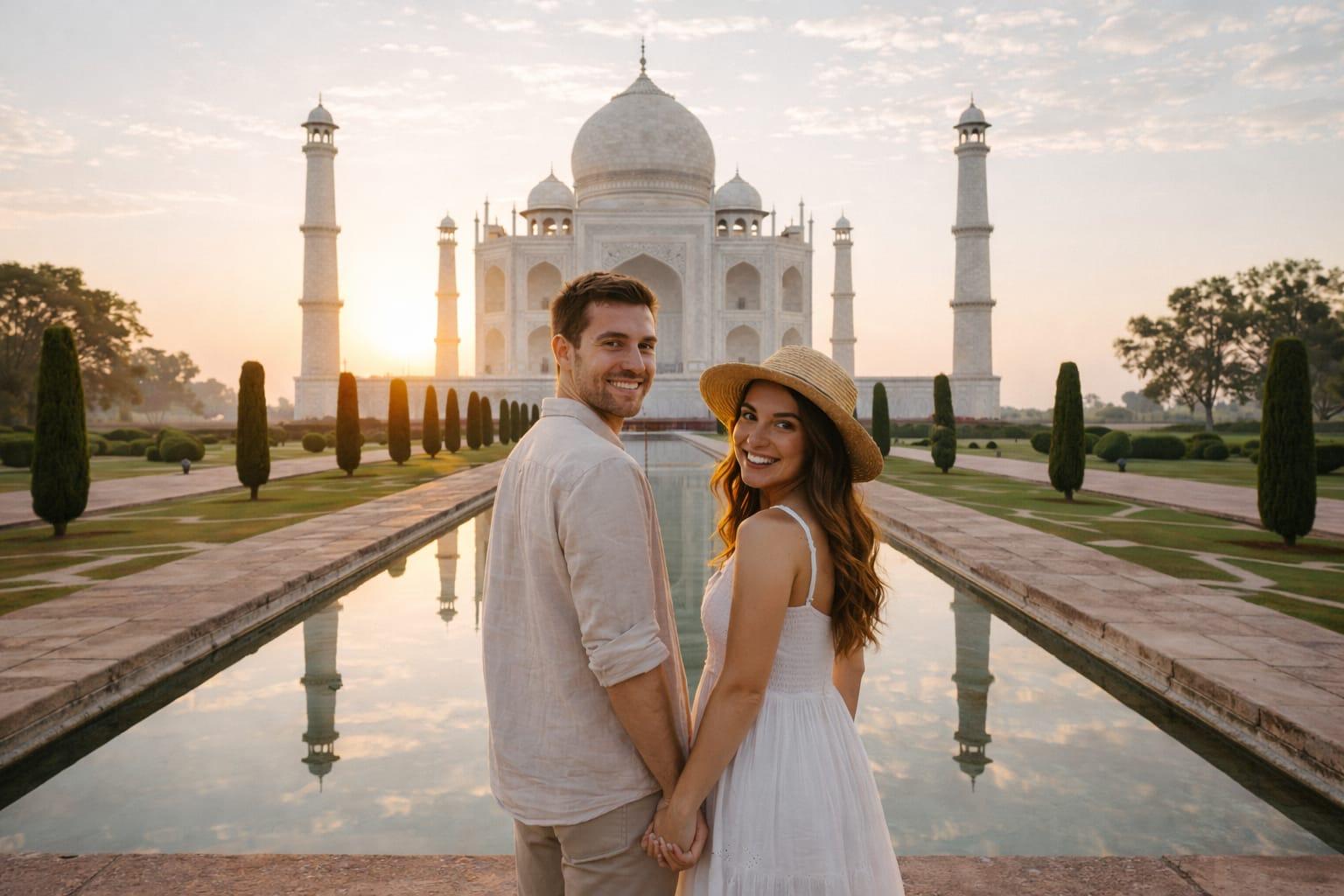
Taj Mahal Sunrise Tour — Early Main-Gate Entry & Guided Access
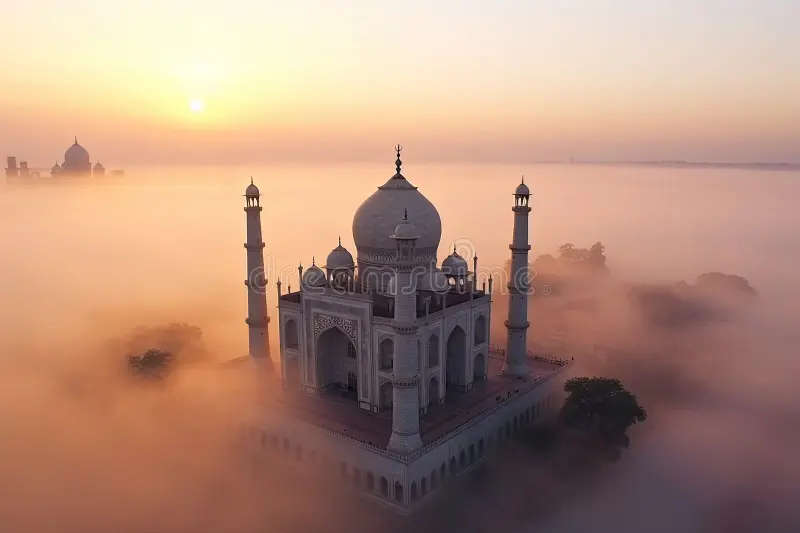
First light on white marble, quiet before the crowds.
Compare fares, pick the fit — all bookings are mobile-voucher and eligible for free cancellation where shown.
9 hr
11 hr
14 hr
Every taj mahal sunrise tour is built on a single foreigner entry fee, so the real decision is whether to add mausoleum access, not which price tier to book. This Agra Taj Mahal tour structure keeps things simple compared to skip-the-line ticketing at many other monuments.
| Entry-Only Complex + Gardens |
Top pick Entry + Mausoleum Add-On Inner Chamber Access |
|
|---|---|---|
| What it includes | Complex, gardens, reflecting pool, monument exterior | All entry-only inclusions plus the inner chamber with the cenotaphs |
| Price | 1,100 INR (foreigner entry fee, per person, main gate) | 1,100 INR entry + 200 INR mausoleum add-on = 1,300 INR |
| Who it suits | Visitors prioritizing photography and garden views only | First-time visitors wanting the complete monument experience |
| Booking urgency | Book ahead for the 06:00–08:00 window; slots fill fast | Add the 200 INR chamber ticket on arrival; sunrise slots still limited |
| Sunrise slot access | Same fee structure, no separate sunrise price tier | Same fee structure, no separate sunrise price tier |
| Time inside chamber | Not applicable | Brief — a few minutes due to queue rotation |
| Best for | Budget-conscious, quick exterior visits | First-timers wanting the full taj mahal sunrise tour tour experience |
| See tickets & prices |
Verdict: Most first-timers should pay the extra 200 INR mausoleum add-on since it's the only way to see the inner chamber, while budget travelers focused purely on sunrise photography of the exterior can rely on the entry-only taj mahal sunrise tour tickets.
Worth it for first-time visitors chasing light
A taj mahal sunrise tour costs the 1,100 INR foreigner entry fee, and for that you buy the one variable money can't otherwise fix: light and space. Arrive in the 06:00-08:00 window and the white marble takes a soft pink-gold cast off the Yamuna haze, with the forecourt near-empty before coach groups flood the gates. That combination is the whole case. By mid-morning the same 1,100 INR shows you a jostled monument under flat glare. Skeptics call sunrise overhyped, but the crowd math is real: an early Agra Taj Mahal tour trades one groggy alarm for photographs and quiet you cannot recreate later. It pays off for photographers, honeymooners, and anyone with a single Agra day. It underdelivers for late risers who resent 5am and for travelers already saturated on Mughal landmarks. UNESCO status and the marble inlay reward the effort. Skip-the-line early gate access seals the value of taj mahal sunrise tour tickets.
Bottom line: Book the taj mahal sunrise tour if you value light and quiet over sleep — the fee buys an experience midday visitors never get.
Hand-picked experiences loved by thousands of travelers
5 to 11 hours
Free Cancellation
Chase the first light over the Taj Mahal on a private day trip from Delhi, with skip-the-line entry and a local expert guide.
5–11 hours
Free Cancellation
Chase the sunrise at the Taj Mahal on a private guided tour from Delhi, covering Agra's iconic Mughal landmarks.
2.5 – 12 hours (depending on option selected)
Free Cancellation
Beat the crowds at dawn with skip-the-line access, a private guide, and stunning sunrise photos.
Join the queue at East or West Gate, pass bag scan and metal detector, collect shoe covers
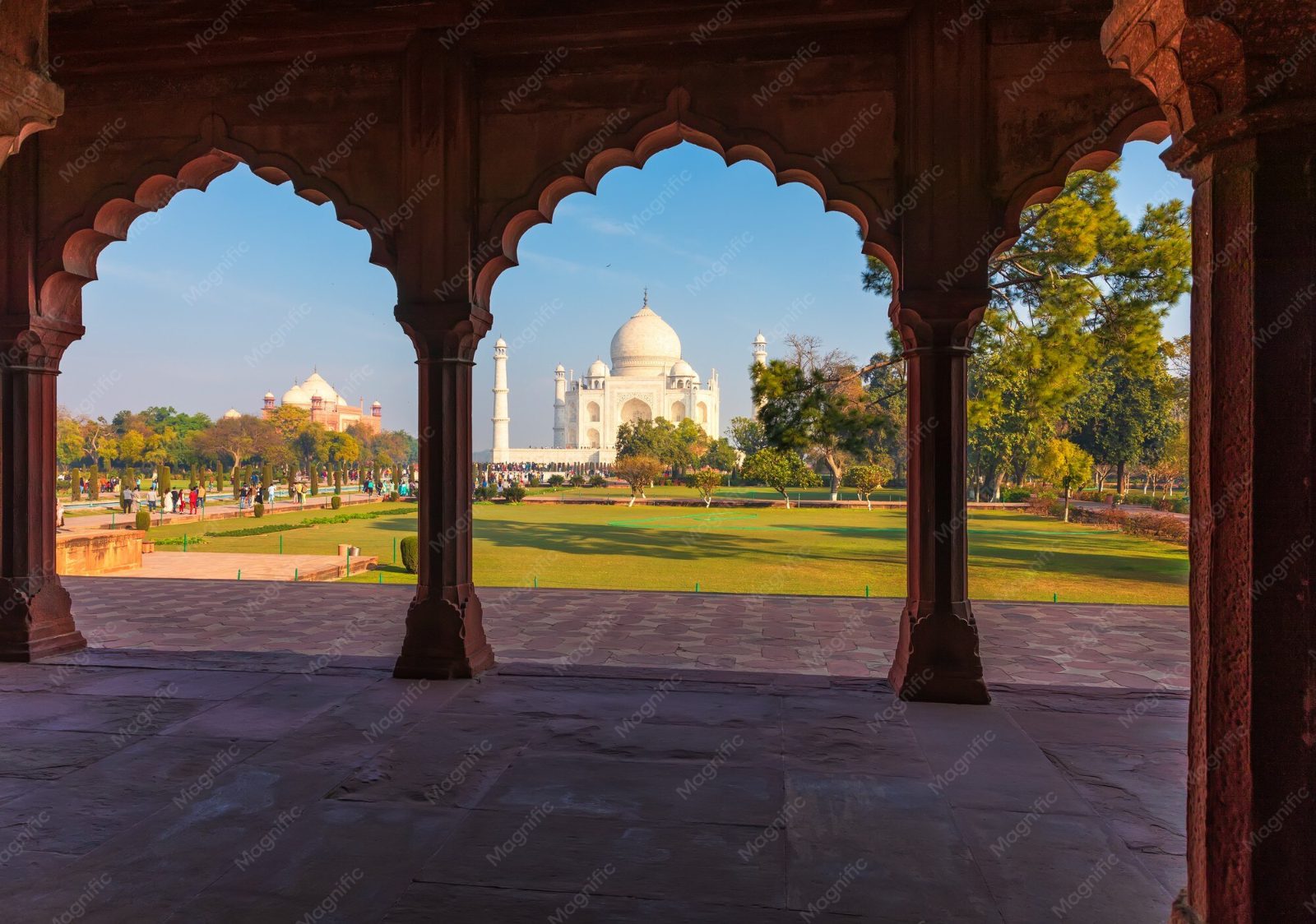
Pass beneath the Darwaza-i Rauza sandstone gateway for the first framed view of the marble dome
Walk the quadrant paths and reflecting pool toward the raised marble platform
Put on shoe covers to view the exterior of the mausoleum and the flanking mosque and Mehman Khana
Pay the separate mausoleum fee to view the cenotaphs of Shah Jahan and Mumtaz Mahal up close
Walk to the Yamuna-facing side for quieter views before leaving through the same gate
The great red-sandstone gateway stands roughly 30 meters high and frames the first symmetrical view of the mausoleum through its iwan arch. Quranic calligraphy bands around its entrance use letters that widen with height, an optical trick that keeps the script looking uniform from the ground.
This Persian-style quartered garden is divided by raised marble water channels representing the four rivers of Paradise, with a central reflecting pool used for the classic mirrored photo. Historic layouts describe as many as 300 fountains once feeding the channel system.
Raised on a 22-foot plinth, the marble tomb itself rises about 73 meters including its central dome, and requires a separate 200 INR ticket to view the cenotaphs of Shah Jahan and Mumtaz Mahal inside. Photography is banned once you step through the inner chamber's doorway.
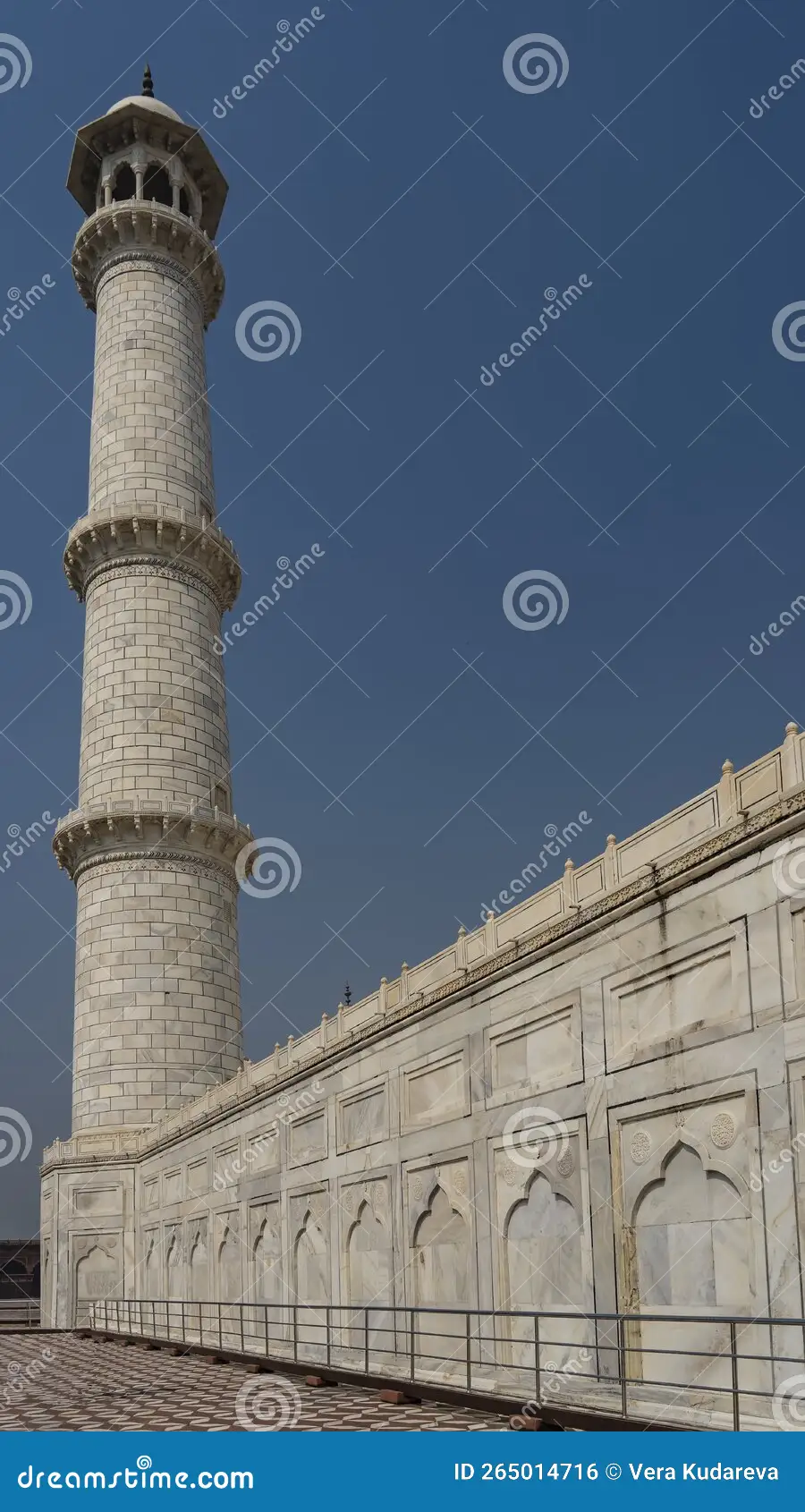
Each of the four 42-meter minarets at the plinth's corners was deliberately built to lean slightly outward, so that in the event of an earthquake they would fall away from the central dome rather than onto it.
A red sandstone mosque flanks the mausoleum's west side while an almost identical building called the Mehman Khana, or Jawab, mirrors it on the east purely for visual symmetry since it lacks a mihrab for prayer. Both share the same white marble domes as the tomb behind them.
The northern edge of the platform drops directly to the Yamuna River, where four octagonal corner towers once held staircases down to the riverbed and now offer quieter views away from the garden crowds.
You reach the main gate on Dharmapuri road while the sky is still grey, join the entry line, and pass through security with your marble entry ticket ready. The foreigner entry fee is 1,100 INR per person, and the gates open at 06:00 — the doorway you want on a taj mahal sunrise tour. You step through the great red sandstone gateway, and the tomb appears framed in its arch, reflected in the long watercourse ahead. You walk the central path slowly, pausing at the raised marble bench where the building floats above the reflecting channel. The light is doing its work now, the dome warming from pale grey toward gold as you approach. You climb the low platform, slip on the shoe covers handed to you, and circle the plinth clockwise. You run your eye along the pietra dura panels, tracing inlaid tulips and irises cut into the marble. You lean into the arched entrance and hear your own footsteps echo under the dome. Around the back you pause at the balustrade where the Yamuna curves behind the tomb, wide and quiet. You drift toward the sandstone mosque on the western side, its cool shadow a relief, then back across the garden as the first larger groups begin filtering in. By then you have already seen the site at its calmest.
All the details about your upcoming adventure in one place
A taj mahal sunrise tour brings you through the great gateway as first light warms the white marble and pietra dura inlay of Shah Jahan's Mughal mausoleum. Guided taj mahal sunrise tour tours pair a local expert with early access to the Yamuna riverfront monument, one of Agra's most treasured UNESCO landmarks. Small-group Agra Taj Mahal tours keep the pace calm so you can take in the calligraphy, minarets, and reflecting pool at their quietest hour.
The white marble of the Taj Mahal is not truly white; it shifts through pink, grey and pale gold across a single morning as the mineral surface catches and returns changing light. A taj mahal sunrise tour is built around exactly this optical behaviour, and it is the reason early visitors describe the monument as almost living. Commissioned by the Mughal emperor Shah Jahan in memory of his wife Mumtaz Mahal, the mausoleum rose on the south bank of the Yamuna over roughly two decades of the seventeenth century. It was designated a UNESCO World Heritage Site in 1983, and today it draws several million visitors a year to the Tajganj quarter of Agra. The building matters less as a single object than as a complete composition: a walled charbagh garden, a reflecting watercourse, a red sandstone mosque and its mirror-image jawab, all arranged around the domed tomb with near-perfect bilateral symmetry. The architecture rewards slow looking. The central dome, often called an onion dome, rises above a drum encircled by four smaller chattris, while four detached minarets lean almost imperceptibly outward — a precaution meant to spare the tomb should any of them fall. Up close, the marble carries pietra dura inlay: flowers and calligraphic bands cut from carnelian, jasper, lapis lazuli and other stones, set flush into the surface so the whole facade reads as a single carved skin. Passages from the Quran frame the great arched entrances, their lettering subtly enlarged with height so the script appears uniform from the ground. This is why the agra taj mahal tour endures as one of India's defining landmarks rather than a mere photograph. A well-run taj mahal sunrise tour treats the site as an ensemble, walking guests from the forecourt through the monumental gateway toward the platform where the Yamuna widens behind the tomb. Many operators bundle these taj mahal sunrise tour tours with a short orientation to the inlay work and the garden's symbolic geometry. The monument sits within a protected zone that restricts nearby traffic and polluting industry, part of a long conservation effort to slow the marble's discolouration. Understanding that context — the craft, the symmetry, the fragility — turns a quick stop into something closer to a reading of the building. A thoughtful taj mahal sunrise tour tour leaves room for that reading, and the skip-the-line taj mahal access simply protects the quiet the architecture was designed to hold.
The white marble of the Taj Mahal is not truly white; it shifts through pink, grey and pale gold as a single morning passes.
There is no strict dress code, but modest clothing that covers shoulders and knees is recommended out of respect for the mausoleum's function as a tomb. Comfortable, easily removable shoes help, since shoe covers are handed out free at the platform edge before you step onto the marble.
Every visitor passes through a metal detector and bag scan at the East or West Gate, with separate queues for men and women. Large backpacks, books, and bulky bags slow the check considerably, so most people leave them at the free cloakrooms near the ticket counters rather than carry them in.
Still cameras are permitted throughout the gardens and exterior of the mausoleum, but photography is banned entirely inside the inner mausoleum chamber where the cenotaphs sit. Tripods, drones, and video-camera rigs are prohibited across the whole complex, including during the five-night full-moon viewing sessions each month.
Children under 15 enter free with both Indian and foreign tickets, making the site workable for family groups on a budget. The marble platform gets hot and slippery by mid-morning in summer, so strollers are awkward on the garden's raised pathways and young children are better carried or walked hand-in-hand near the reflecting pools.
Ramps at the East and West Gates lead up to the chameli-farsh marble terrace, and free wheelchairs are available near the entrance against a refundable deposit. The inner mausoleum itself is reached by 22 steps and is not wheelchair accessible, and the roughly 1 km stretch from parking to the gate requires a battery bus, golf cart, or a long manual push since none of the shuttle vehicles are wheelchair-adapted.
No food is allowed anywhere inside the complex, and eating or smoking near the marble is strictly enforced by ASI staff. A single-use half-litre water bottle is included free with SAARC, BIMSTEC, and foreigner tickets, and it's the only edible or drinkable item you can carry past the security check.
Standard entry, moderate weekday flow
Busier ahead of Friday closure
Closed for prayers, no general entry
Heaviest weekend crowds
Hours
Saturday–Thursday 06:00–19:00, closed Friday
Address
Dharmapuri, Forest Colony, Tajganj, Agra, Uttar Pradesh 282001, India
Access
Ramps at East and West Gate reach the marble terrace; inner mausoleum has 22 steps
Best light
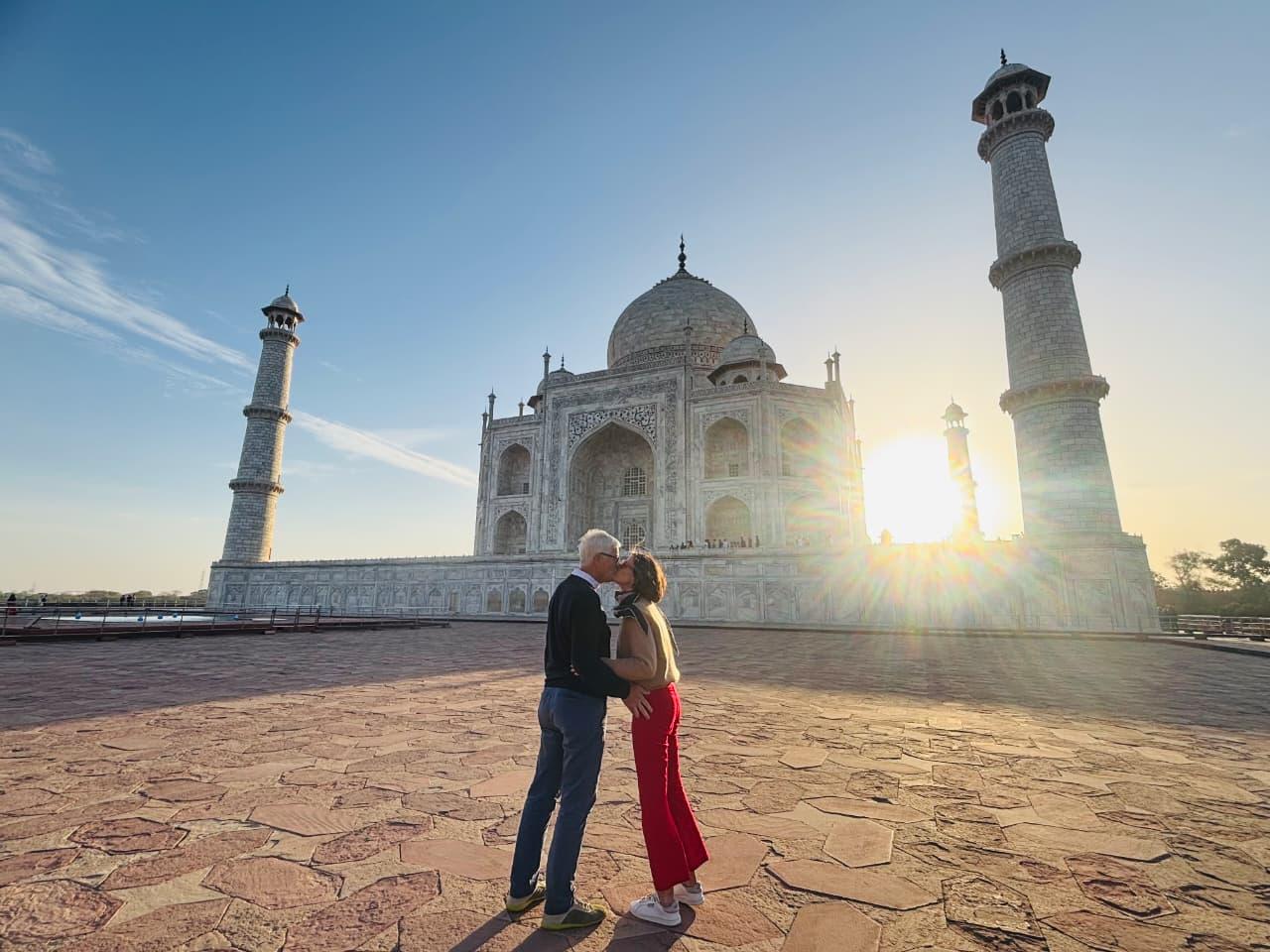
06:00–08:00 for golden morning light and thinner crowds
Storage
Free cloakrooms at Shilpgram (East Gate) and Amrood ka Teela (West Gate)
Car · 3.5–4h from Delhi · Parking fee plus battery-bus fare
Drive via the Yamuna Expressway from Delhi or NH-19 from Jaipur; park at Shilpgram (East Gate) or Amrood ka Teela (West Gate), since no vehicles are allowed within 500 meters of the monument.
Public transport · 1h45m train + 20 min transfer · Train fare varies by class
Take the Gatimaan Express or Shatabdi Express from Delhi to Agra Cantt railway station, then an auto-rickshaw or taxi to West Gate.
Taxi · 20–40 min within Agra · Metered or pre-agreed fare
Pre-booked taxis or app-based cabs drop passengers at the outer parking zones near Shilpgram or Amrood ka Teela.
Walk · 10–15 min · Free
From hotels in the Taj Ganj neighborhood immediately south of the complex, the East and West Gates are within easy walking distance.
Main-gate entry tickets purchased at the counter are non-refundable, and the 1,100 INR foreigner entry fee is not reimbursed for a missed time slot. Online ASI bookings can generally be rescheduled or cancelled up to 24 hours before the visit date, subject to the payment gateway's own refund window.
Recommended time
2-3 hours
A typical taj mahal sunrise tour runs 2-3 hours from gate entry to exit, covering the security queue, the main mausoleum, and a walk through the charbagh gardens at a relaxed pace. Arriving right at 06:00 keeps the line short, since security screening takes only minutes in the first half hour but stretches much longer once tour buses unload. Add 30-45 minutes if you want unhurried time near the reflecting pools or plan to linger for photographs; subtract time only if you're doing a quick highlights pass. By mid-morning, queue waits and foot traffic both rise sharply, so the early slot remains the most efficient window for a skip-the-line Agra landmarks visit.
Crowd levels through the day
Weather · crowds · average price — dots go green to amber to red as each metric rises.
Cool mornings between 10–20°C make this the most comfortable season, though dense fog can obscure the monument until mid-morning on the coldest January days.
Mild daytime temperatures and clearer skies give reliable sunrise visibility before the summer heat sets in.
Daytime highs often exceed 40°C with high humidity once the monsoon arrives in July, so a 06:00 arrival is the only comfortable window and afternoons are best avoided entirely.
Post-monsoon skies are clear and temperatures moderate into the low 30s°C, making this a strong shoulder-season option with fewer crowds than winter.
Purchasing ASI e-tickets ahead of arrival avoids the counter queue at either the East or West Gate ticket window.
The East Gate near Shilpgram typically clears security faster than the West Gate, which handles most tour-bus traffic.
Large backpacks, books, and bulky items slow down the mandatory metal-detector and bag-scan check considerably.
The separate 200 INR mausoleum fee is easiest to purchase at the same counter as your main gate ticket rather than queuing twice.
Free shoe covers go on and off quickly over the marble platform, so shoes without laces save time.
Mobile phones are allowed but must be on silent or switched off once inside the mausoleum chamber.
Five nights each month around the full moon, the ASI opens separate night-viewing slots that must be booked a day ahead at the ASI office on Mall Road.
Near Shilpgram, Taj East Gate Road, Agra 282001
Faster-moving queue, favored for early sunrise arrivals
Get directionsNear Saheli Burj, Agra 282001
Busiest entrance, used by most tour buses and group tours
Get directionsIn 1631, Mumtaz Mahal died in Burhanpur while delivering her fourteenth child. Her husband, the Mughal emperor Shah Jahan, ordered a mausoleum worthy of her memory. Construction of the white marble tomb began around 1632 on the right bank of the Yamuna. The principal architect is generally identified as Ustad Ahmad Lahauri. The main structure was substantially complete by 1643, though ancillary buildings and gardens continued for roughly a decade after. The monument was raised by a labour force said to number some twenty thousand artisans. Marble was quarried at Makrana in Rajasthan and hauled by ox-cart and elephant. The pietra dura inlay drew semi-precious stones from across Asia: jasper from Punjab, jade and crystal from China, turquoise from Tibet, lapis lazuli from Afghanistan, carnelian from Arabia. Calligraphers, stonecutters, and dome specialists were drawn from Persia, Central Asia, and the wider empire. A visitor on a taj mahal sunrise tour reads this global inventory in the walls themselves, where the first light catches the inlaid flowers. Understanding that provenance deepens any Agra Taj Mahal tour beyond the postcard silhouette. Shah Jahan was deposed by his son Aurangzeb in 1658 and confined at nearby Agra Fort, from which he viewed the tomb until his death in 1666. He was interred beside Mumtaz Mahal, the single asymmetry in an otherwise mirror-perfect plan. The four minarets were tilted marginally outward, a precaution so a collapse would spare the central dome. UNESCO inscribed the site as a World Heritage monument in 1983. In 2007 it was named among the New Seven Wonders of the World through a global poll. A modern taj mahal sunrise tour therefore traces four centuries of grief, imperial ambition, and conservation. Guides handling taj mahal sunrise tour tickets often begin with these dates. Serious taj mahal sunrise tour tours dwell on the craftsmen; the best taj mahal sunrise tour tour treats the Mughal landmark not as backdrop but as documented history carved in stone.
Mumtaz Mahal dies in Burhanpur, prompting Shah Jahan to commission the tomb.
Construction begins on the Yamuna's right bank under Ustad Ahmad Lahauri.
The main mausoleum structure is substantially completed.
Ancillary buildings and gardens reach broad completion.
Aurangzeb deposes and confines Shah Jahan at Agra Fort.
Shah Jahan dies and is interred beside Mumtaz Mahal.
UNESCO inscribes the site as a World Heritage monument.
Named among the New Seven Wonders of the World.
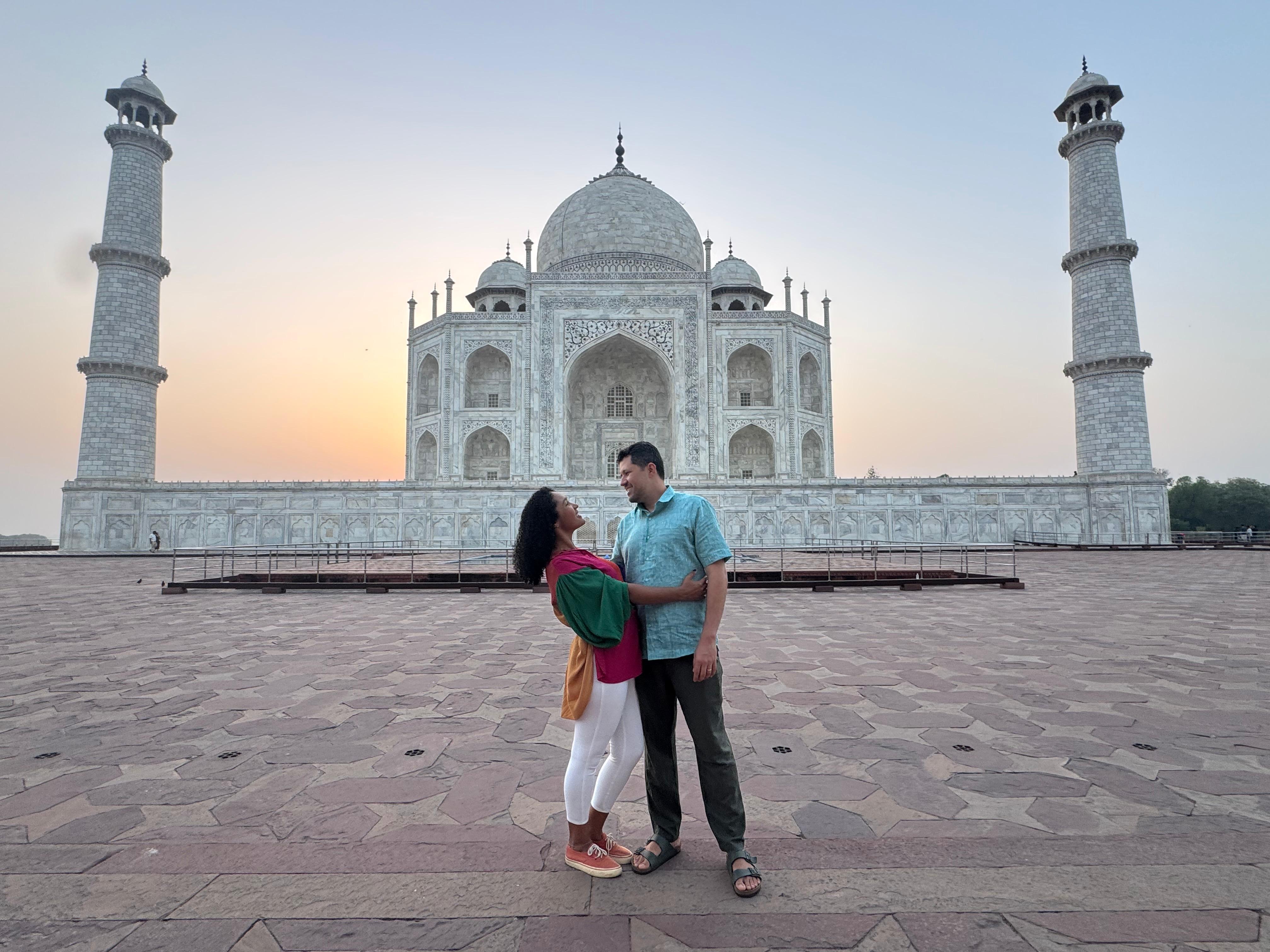
Stand at the raised marble platform at the north end of the Charbagh garden, directly in line with the long reflecting pool, and the mausoleum's dome mirrors itself perfectly on the still water. This exact axis is the classic frame most tour groups line up for, so a taj mahal sunrise tour aims to reach it in the first few minutes after the gates open. Morning haze often adds a soft glow behind the marble.
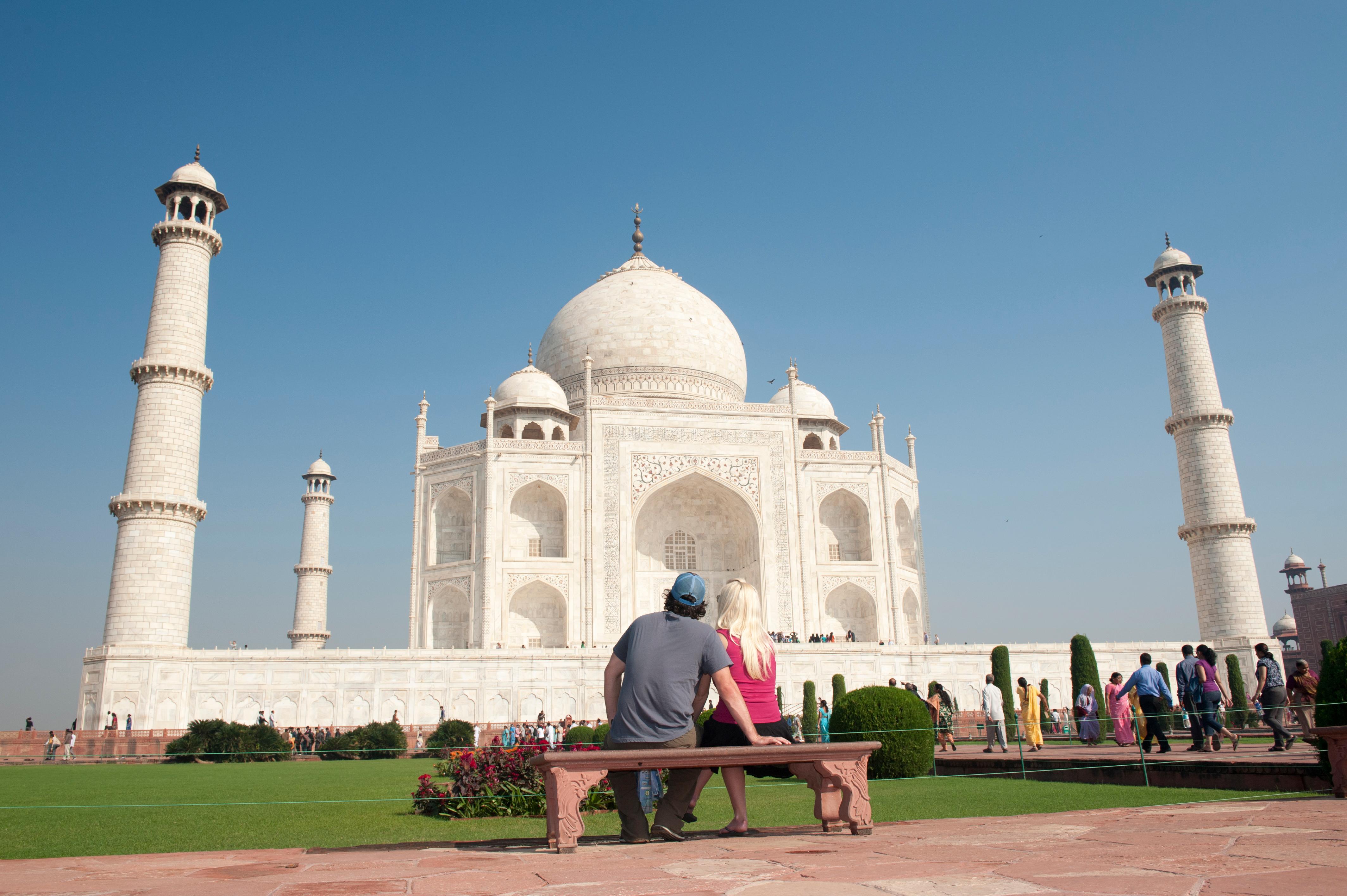
Sit or crouch beside the low white marble bench west of the reflecting pool, the same seat where Princess Diana was famously photographed alone in 1992. It gives a clean three-quarter portrait angle with the dome rising just behind the sitter's shoulder. Expect a short queue even at sunrise since it is one of the most requested poses in the gardens.
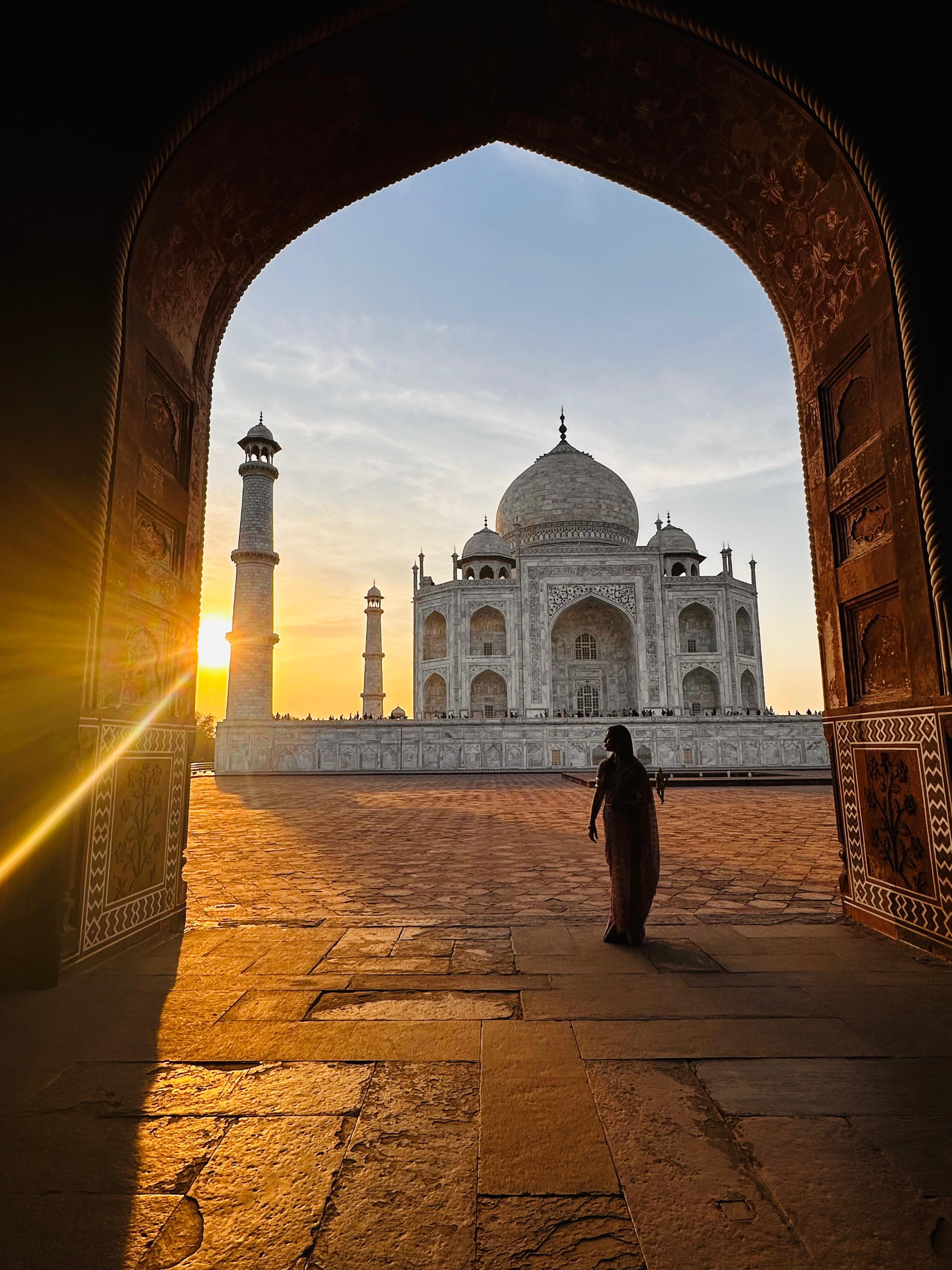
From just inside the Darwaza-i-Rauza, the red sandstone gateway, the pointed archway frames the white dome like a natural picture window, shrinking or enlarging as you step closer or farther. Photographers favor a few meters back from the threshold so the arch fully encloses the marble silhouette without clipping the finial. Works well in silhouette mode as the sky brightens behind the gate.
Across the Yamuna River, this Mughal charbagh garden's raised terrace and central octagonal pond give an unobstructed rear view of the Taj with the river and mist in the foreground. Reaching it means leaving the main complex and crossing by road or boat, which keeps the terrace largely uncrowded even during peak season. The eastern face catches direct sidelight as the sun rises over the monument.
Real experiences from real travelers
Our taj mahal sunrise tour had us at the West Gate before the crowds, and watching the marble shift from grey to warm pink was the calmest hour of our trip. Our guide knew exactly where to stand while the light was low. The Yamuna mist behind the dome made it feel almost weightless.
I have seen a lot of photos but nothing prepared me for how the Makrana marble changes color minute by minute. The pietra dura flower inlays are far finer up close than any picture shows. Being there in the quiet before the heat built up was the right call.
The Agra Taj Mahal tour was organized down to the minute, and the skip-the-line Taj Mahal entry meant we walked straight past a long queue at the East Gate. Our guide explained the symmetry of the charbagh gardens while the sun came up over the mosque. Cool morning air, soft light, hardly any noise.
The sunrise itself was quiet and the reflecting pool view was as good as promised. By the time we finished, the plinth had filled up considerably, so go with the flow and enjoy the first hour. Bring socks for the marble once you remove your shoes.
Standing at the Diana bench as the taj mahal sunrise tour began, the whole mausoleum doubled in the still water of the pool. The four minarets lean slightly outward, which our guide pointed out and I never would have noticed. A gentle, unhurried morning.
Watching the onion dome catch the first gold light from the marble platform was the highlight of our Agra landmarks trip. The red sandstone Great Gate frames the view perfectly as you walk through. Our taj mahal sunrise tour tickets were emailed the night before with clear meeting instructions.
January dawn was chilly and the light was crisp, which made the marble almost luminous. The Taj Mahal ka sooryodaya bhraman gave us plenty of time at the plinth before the coach groups arrived. Wear layers because the temperature climbs fast once the sun is up.
We compared a few taj mahal sunrise tour tours before booking and picked this one for the small group size. The guide balanced history with letting us wander and take our own photos. Mist off the Yamuna gave the dome a soft, floating quality.
Reaching the mausoleum as the gates opened, we had the reflecting pool almost to ourselves for a short while. The inlaid semi-precious stones glow differently in raking dawn light than under midday sun. A well-run taj mahal sunrise tour tour that respected our time.
Seeing this UNESCO heritage site wake up was calmer than I expected for such a famous spot. Our guide traced the story of Shah Jahan and Mumtaz Mahal as the light rose over the jawab. Soft heat, birdsong, and the marble slowly brightening.
Everything you need to know for your journey
The Taj Mahal opens at 06:00 on days it operates, and arriving in the 06:00–08:00 window gives the golden morning light and the smallest crowds before tour groups arrive.
The Taj Mahal is open Saturday through Thursday from 06:00 to 19:00 but is closed every Friday for prayers, so a taj mahal sunrise tour should never be scheduled for that day.
The foreigner entry fee is 1,100 INR per person at the main gate, with an additional 200 INR required to enter the inner mausoleum chamber.
Ramps at the East and West Gate reach the marble platform, and free wheelchairs are available near the entrance, though the inner mausoleum's 22 steps remain inaccessible.
Tripods, drones, food, tobacco, power banks, headphones, knives, and large backpacks are all barred at the security checkpoint before entering the complex.
Photography is allowed throughout the gardens and exterior platform, but it is prohibited inside the inner mausoleum chamber where the cenotaphs are housed.
Winter months from November to February offer the coolest temperatures, though a taj mahal sunrise tour in spring (March–April) often gets clearer skies with less morning fog.
There's no mandatory dress code, but modest clothing covering shoulders and knees is recommended given the site's function as a mausoleum.
No food or drink is allowed inside the complex apart from a small water bottle included with certain ticket types.
Visitors typically meet at the East Gate near Shilpgram or the West Gate near Saheli Burj, both reachable by taxi, auto-rickshaw, or a short walk from Taj Ganj hotels.
Yes, Agra Fort and Mehtab Bagh are both within a short drive and pair naturally with Agra landmarks tours that start at sunrise.
Online ASI bookings can generally be rescheduled up to 24 hours ahead, though counter tickets purchased on-site are non-refundable.
A red sandstone Mughal fortress on the Yamuna's opposite bank, built by Akbar and later used as Shah Jahan's place of imprisonment. It offers a distant view of the Taj Mahal from its Musamman Burj tower.
A charbagh-style garden directly across the Yamuna, laid out to mirror the Taj Mahal's proportions and popular for symmetrical sunset photos.
Known as the Baby Taj, this marble tomb for a Mughal noble features intricate pietra dura inlay predating the Taj Mahal's own decorative style.
A forested buffer zone near the East Gate with walking trails and a raised viewing platform toward the monument's eastern face.
A dense old-city market street near the South Gate side of Taj Ganj, known for marble handicrafts and leather goods.
A five-star property roughly 600 meters from the East Gate with rooms designed for direct Taj Mahal views from private balconies.
A large heritage-style resort with Mughal garden landscaping, popular with organized tour groups.
A budget guesthouse cluster immediately south of the complex, the closest lodging option to both East and West Gates.
A modest rooftop-view guesthouse in Taj Ganj favored by backpackers for its proximity to the South Gate side.
Join thousands of happy travelers who have discovered this incredible experience
Book Your Experience Now