Open today · 06:00 – 18:30

Taj Mahal And Agra Fort Tour

Taj Mahal And Agra Fort Tour — Reserved Morning Entry & Guided Options

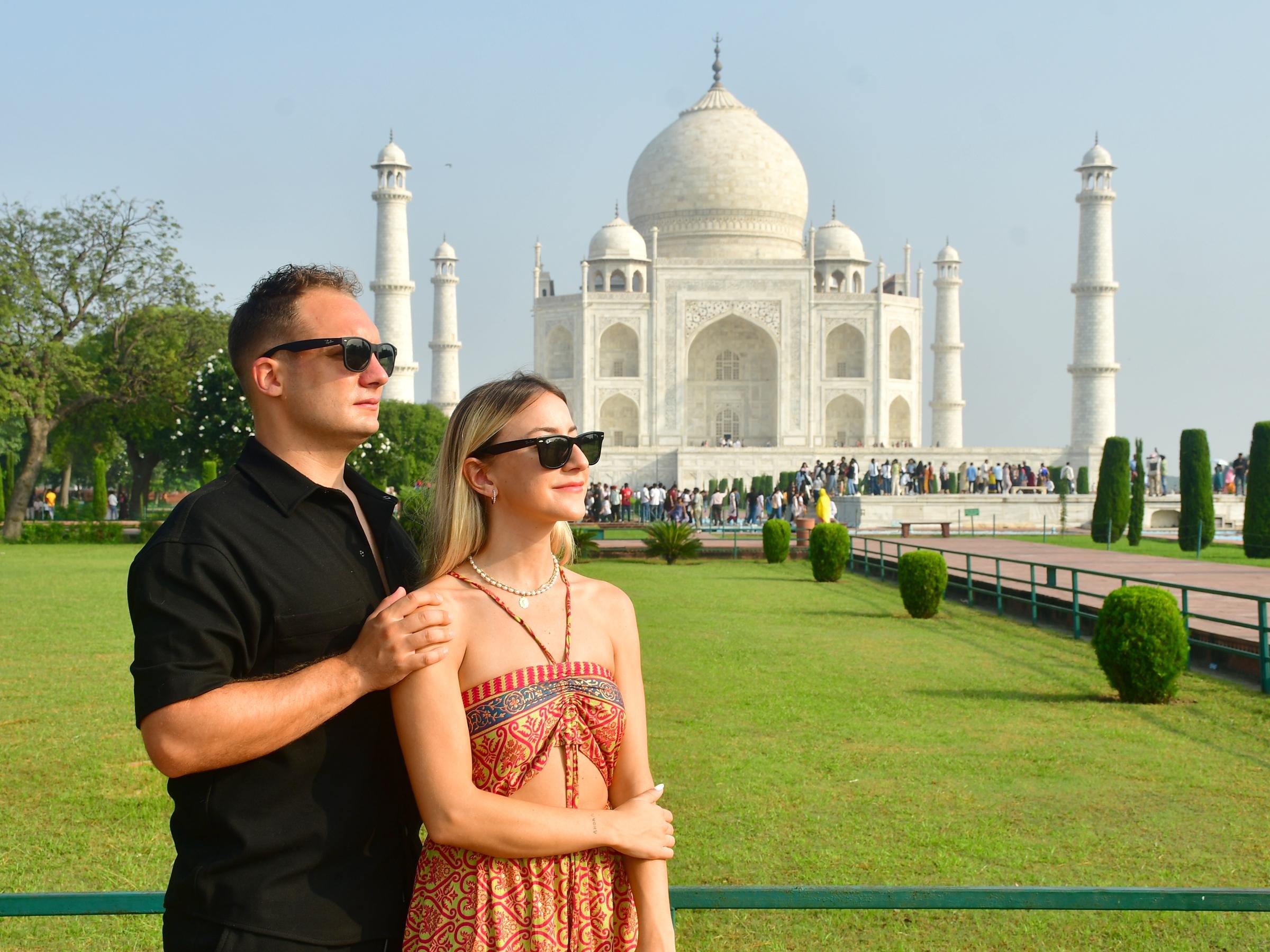
White marble at first light, red sandstone by noon.

142K+ travelers chose this
Free Cancellation
Right now: Moderate — summer weekday Midday heat is intense in July; carry water and expect brief queues at the security check
3-5 hours recommended
1 Languages
Up to 15 guests
Free Cancellation
Free cancellation Instant confirmation Mobile voucher Skip-the-line Book now, pay later
Choose your ticket

Ticket options at a glance

Compare fares, pick the fit — all bookings are mobile-voucher and eligible for free cancellation where shown.

Agra Private Skip-the-Line Tour: Taj Mahal & Agra Fort 5 hr
Luxury / Private

Agra Private Skip-the-Line Tour: Taj Mahal & Agra Fort

4.8 (187)
€5
  • Private experience
  • Personal attention
  • Premium amenities
  • Free cancellation
Book this ticket
Delhi to Taj Mahal Sunrise, Agra Fort & Baby Taj Private Day Tour 14 hr
Luxury / Private

Delhi to Taj Mahal Sunrise, Agra Fort & Baby Taj Private Day Tour

4.9 (105)
€2
  • Private experience
  • Personal attention
  • Premium amenities
  • Free cancellation
Book this ticket
Compare options

Which ticket fits your trip?

Booking a taj mahal and agra fort tour starts with understanding that the 1,100 INR base ticket covers the complex only, not the mausoleum interior. This official Taj Mahal ticket tour framework separates general grounds access from the optional inner-chamber add-on and the rare night-viewing pass.

Complex Entry Base ticket Top pick
Complex + Mausoleum Add-on (Elevator-free, on foot)
Night Viewing Full-moon pass
What's included Gardens, reflecting pool, mausoleum exterior view, museum Restricted group viewing of the illuminated marble by moonlight
Access to mausoleum interior ✓ — exterior glow only, limited vantage
Availability/booking window Daily 06:00–18:30 except Friday, online or gate counter 5 nights monthly around full moon, pre-booked a day ahead
Best suited for Budget travelers content with exterior views Repeat visitors chasing a rare atmospheric taj mahal and agra fort tour tour
Best for Quick visits or repeat guests Photographers and moonlight enthusiasts

Verdict: Most first-timers on an agra taj mahal landmarks itinerary should pair the 1,100 INR base entry with the 200 INR mausoleum add-on, reserving the separate night-viewing ticket for a dedicated return trip.

Is it worth it?

Worth it for nearly every first-time visitor

A taj mahal and agra fort tour starts at the 1,100 INR base entry for a foreign adult, and for that you get the white-marble mausoleum, the charbagh gardens, and the on-site museum inside one UNESCO heritage complex. Against what a comparable world landmark charges elsewhere, the price-to-payoff on this Agra Taj Mahal tour is generous rather than gouging. Yes, foreign visitors pay more than Indian nationals — that tiering funds conservation of the marble inlay and pietra dura you came to see, so treat it as an upkeep levy, not a rip-off. Most skip-the-line Taj Mahal tickets add a small mausoleum surcharge; budget for it. These taj mahal and agra fort tour tours pay off richest for architecture lovers and once-in-a-lifetime travelers. If you only want a photo of the dome from the gate, the value thins out considerably.

What makes it worth it

  • UNESCO marble mausoleum, gardens, museum in one fee
  • Base entry undercuts comparable world landmarks
  • Nationality tiering funds real inlay conservation
  • Payoff peaks for architecture and heritage lovers
  • Morning 06:00–08:00 arrival maximizes what you paid for

Keep in mind

  • Foreign rate far above Indian-national price
  • Mausoleum interior needs a small add-on ticket
  • Closed Fridays, so plan around it
  • Thin value if you only want gate photos

Bottom line: For a first real look at Mughal architecture, the taj mahal and agra fort tour ticket earns its 1,100 INR many times over.

Head to head

Taj Mahal vs Agra Fort — Which Comes First on Your Agra Landmarks Day?

Most travelers booking a taj mahal and agra fort tour ask which gate to walk through first, and the honest answer is the Taj: its sunrise light and thinner morning crowds are harder to recover once lost, while Agra Fort's red sandstone holds its character just as well at midday. Think of it as a skip-the-line Taj Mahal morning followed by an unhurried Fort afternoon.

Top pick
Taj Mahal
Agra Fort
Best time to arrive Just after sunrise or late afternoon
Crowd levels Lighter overall, rarely crowded
Light/photography conditions Warm red-sandstone glow late day
Distance and travel time between sites ~2.5 km, 10–15 min by car
Time needed on-site 1.5–2 hours minimum
Historical connection between the two Shah Jahan's palace and later prison

Verdict: Do the Taj Mahal and Agra Fort tour in that order — sunrise at the Taj, then the Fort once the morning haze burns off — since reversing it means trading the Taj's best light for a fort visit that looks much the same at any hour.

Featured Experiences

Popular tours & activities

Hand-picked experiences loved by thousands of travelers

Recommended Experience

Powered by GetYourGuide

Another traveler favorite

Powered by GetYourGuide
Agra Private Tour: Taj Mahal & Agra Fort with Skip-the-Line Entry 2.5 – 12 hours (varies by pickup location and options selected) Free Cancellation

Agra Private Tour: Taj Mahal & Agra Fort with Skip-the-Line Entry

Explore two UNESCO icons in Agra with a private guide, express entry, and door-to-door transfers.

5 (19)
FromFrom €4.11
See details
Agra Full-Day: Taj Mahal, Agra Fort & Fatehpur Sikri 8–12 hours Free Cancellation

Agra Full-Day: Taj Mahal, Agra Fort & Fatehpur Sikri

Explore three Mughal masterpieces in one unforgettable 8–12 hour guided day trip from Agra.

4.7 (82)
FromFrom €1.83
See details
Agra Heritage Tour: Taj Mahal, Agra Fort & Baby Taj with Entry Tickets 4 hours Free Cancellation

Agra Heritage Tour: Taj Mahal, Agra Fort & Baby Taj with Entry Tickets

Discover Agra's Mughal splendour across three iconic monuments with tickets, guide & private AC car.

5 (2)
FromFrom €36.52
See details
Your journey

Step-by-step — what your day looks like

1

East or West Gate entry

Clear security screening and collect the shoe covers and water bottle included with your ticket

2

Great Gate (Darwaza-i-Rauza)

Pass through the towering red sandstone entrance framing the first full view of the marble dome

3

Charbagh gardens and reflecting pool

Walk the symmetrical Mughal garden paths toward the raised marble platform, the classic photo corridor

4

Main mausoleum platform

Remove shoes or add covers, view the cenotaphs of Shah Jahan and Mumtaz Mahal, and note the inlaid pietra dura work

5

Mosque and Jawab

Step into the twin red sandstone buildings flanking the mausoleum for symmetry and shade

6

Transfer to Agra Fort

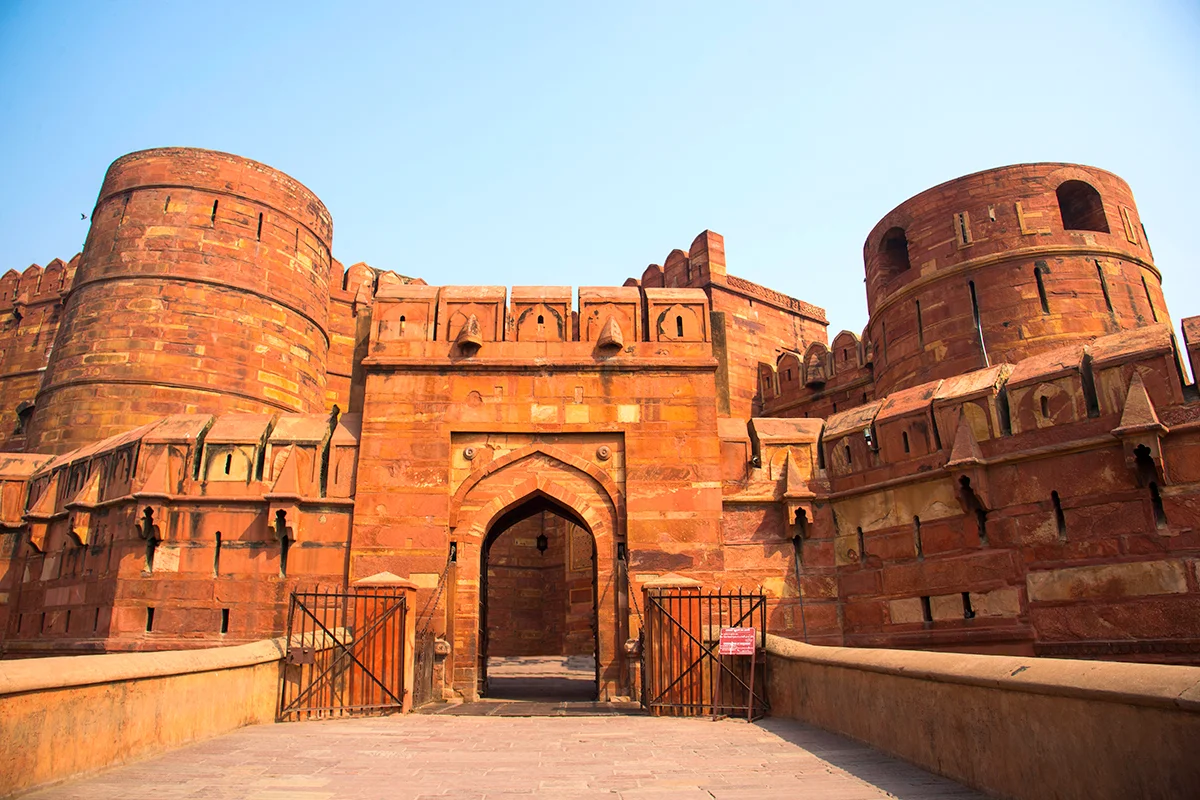
Drive or auto-rickshaw to Amar Singh Gate, the sole public entrance to Agra Fort

What you'll see

Highlights not to miss

Main Mausoleum

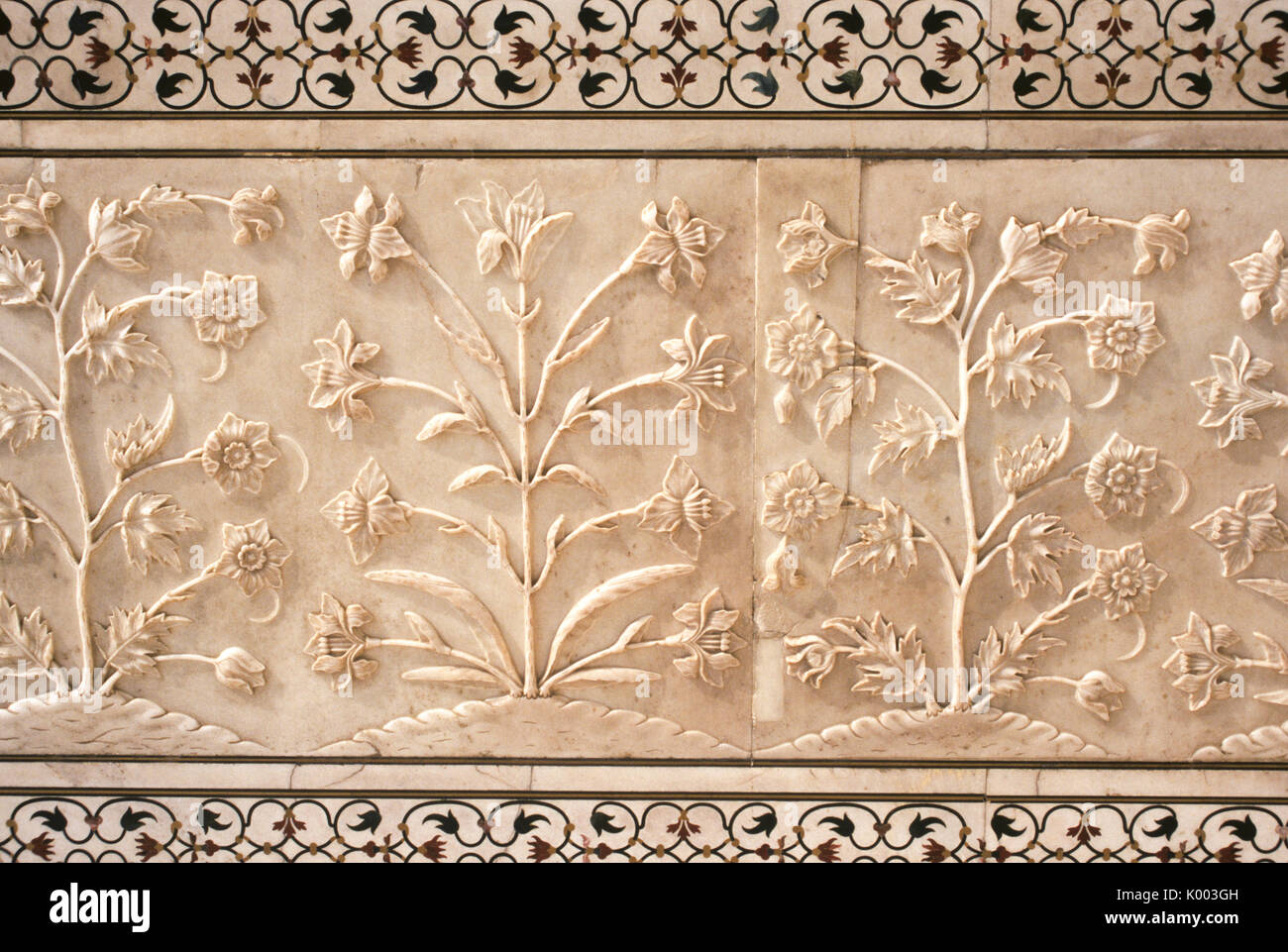
The central white marble tomb houses the cenotaphs of Shah Jahan and Mumtaz Mahal beneath a dome roughly 35 meters high, inlaid with semi-precious stones in floral pietra dura patterns. Entry to this inner chamber requires a separate ticket beyond the base admission.

Charbagh Gardens

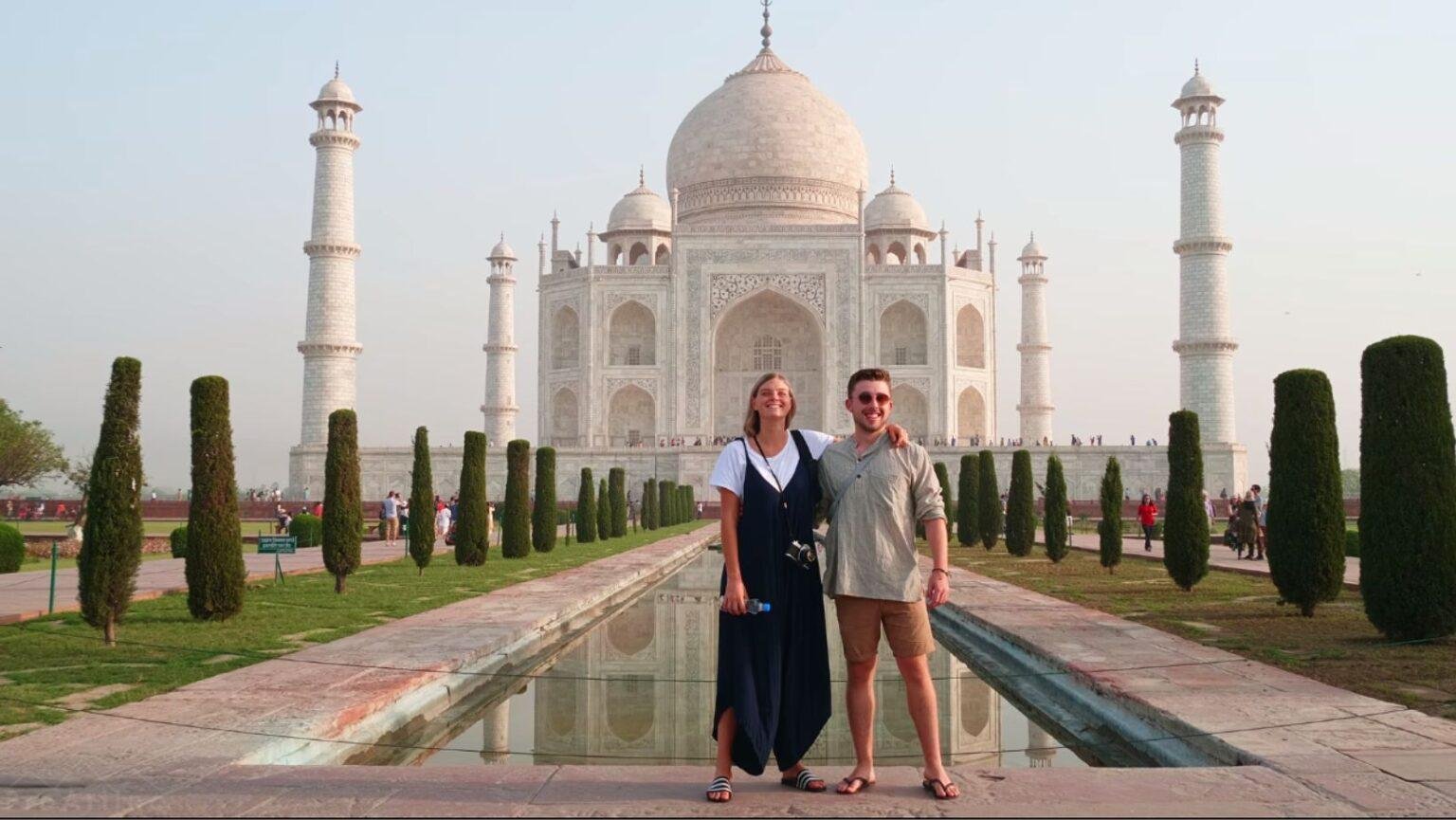
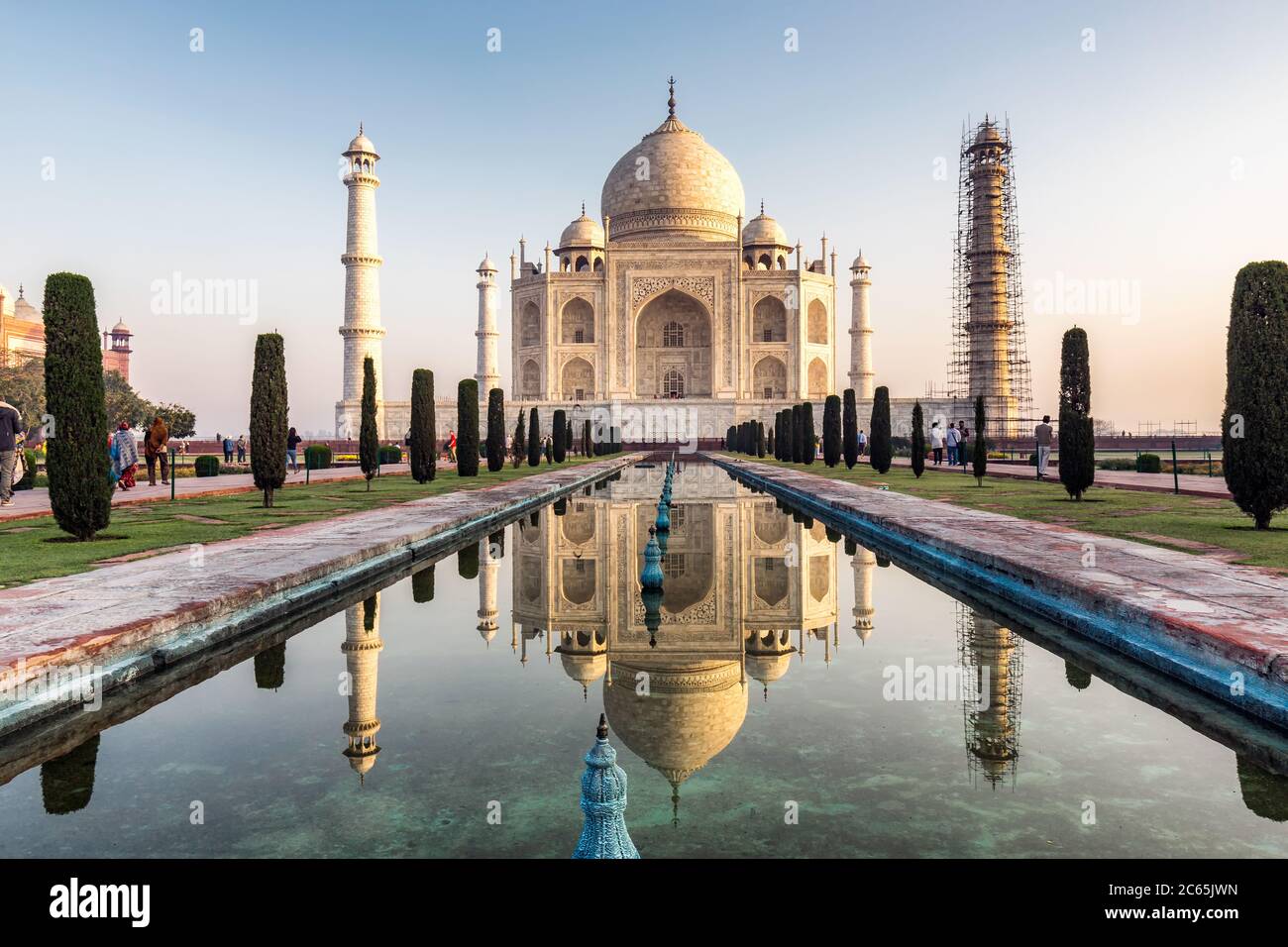
A symmetrical Mughal quadrilateral garden divides the approach into four quarters bisected by a long reflecting pool, a layout representing the four rivers of paradise in Islamic tradition. The pool creates the mirror-image photograph most visitors associate with the site.

Great Gate (Darwaza-i-Rauza)

A monumental red sandstone entrance arch inscribed with Quranic calligraphy frames the first glimpse of the marble mausoleum beyond. The arch stands over 30 meters tall and was designed to build anticipation before the main structure comes into view.

Mosque and Jawab

Two nearly identical red sandstone buildings flank the mausoleum for architectural symmetry: one functions as a working mosque facing Mecca, the other, the Jawab, exists purely to balance the composition. Only the mosque side is used for actual prayer.

Minarets

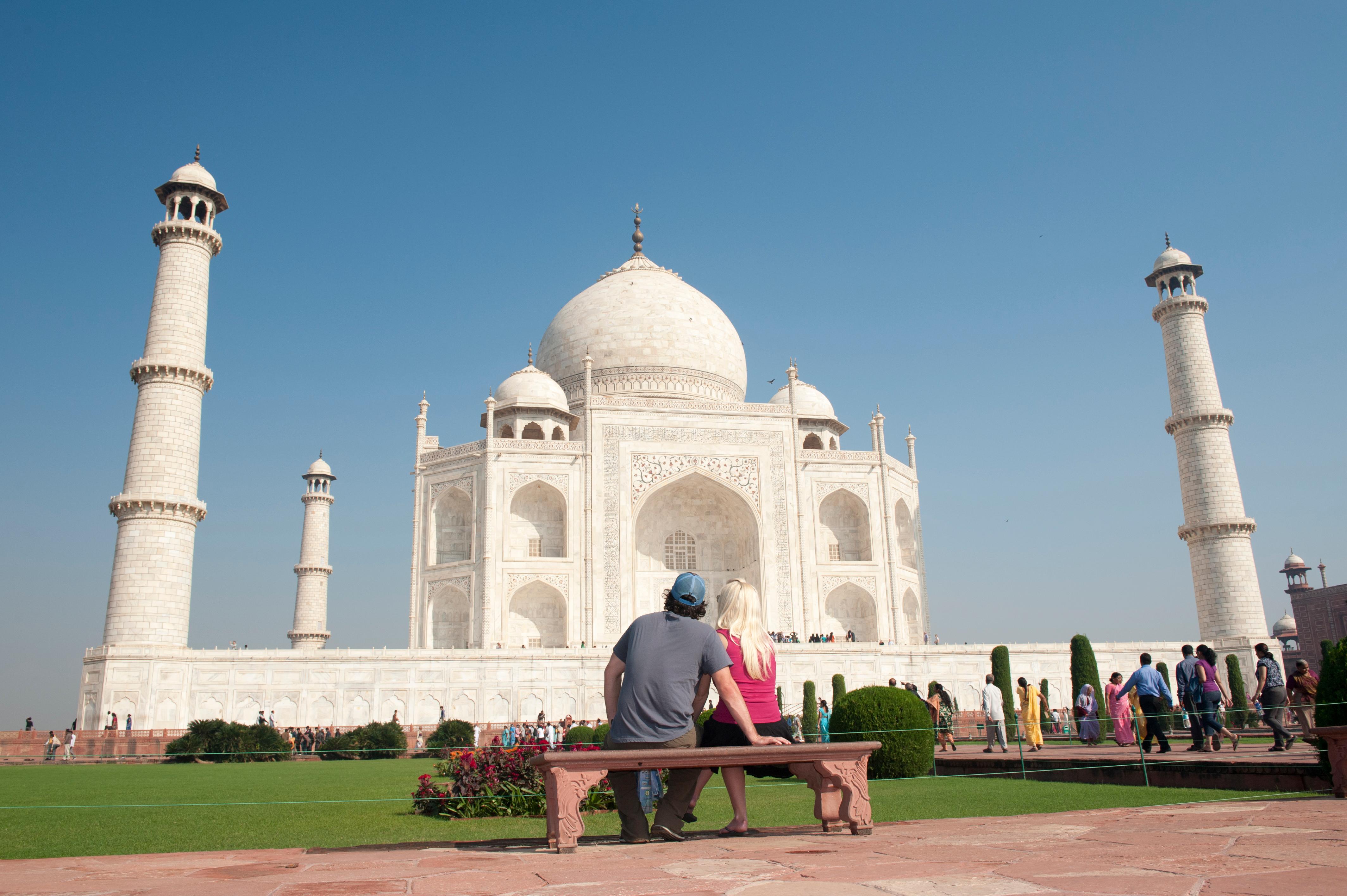
Four freestanding minarets, each about 40 meters tall, mark the corners of the marble platform and were built slightly tilted outward, an engineering choice so that in the event of collapse they would fall away from the tomb.

Yamuna River Terrace

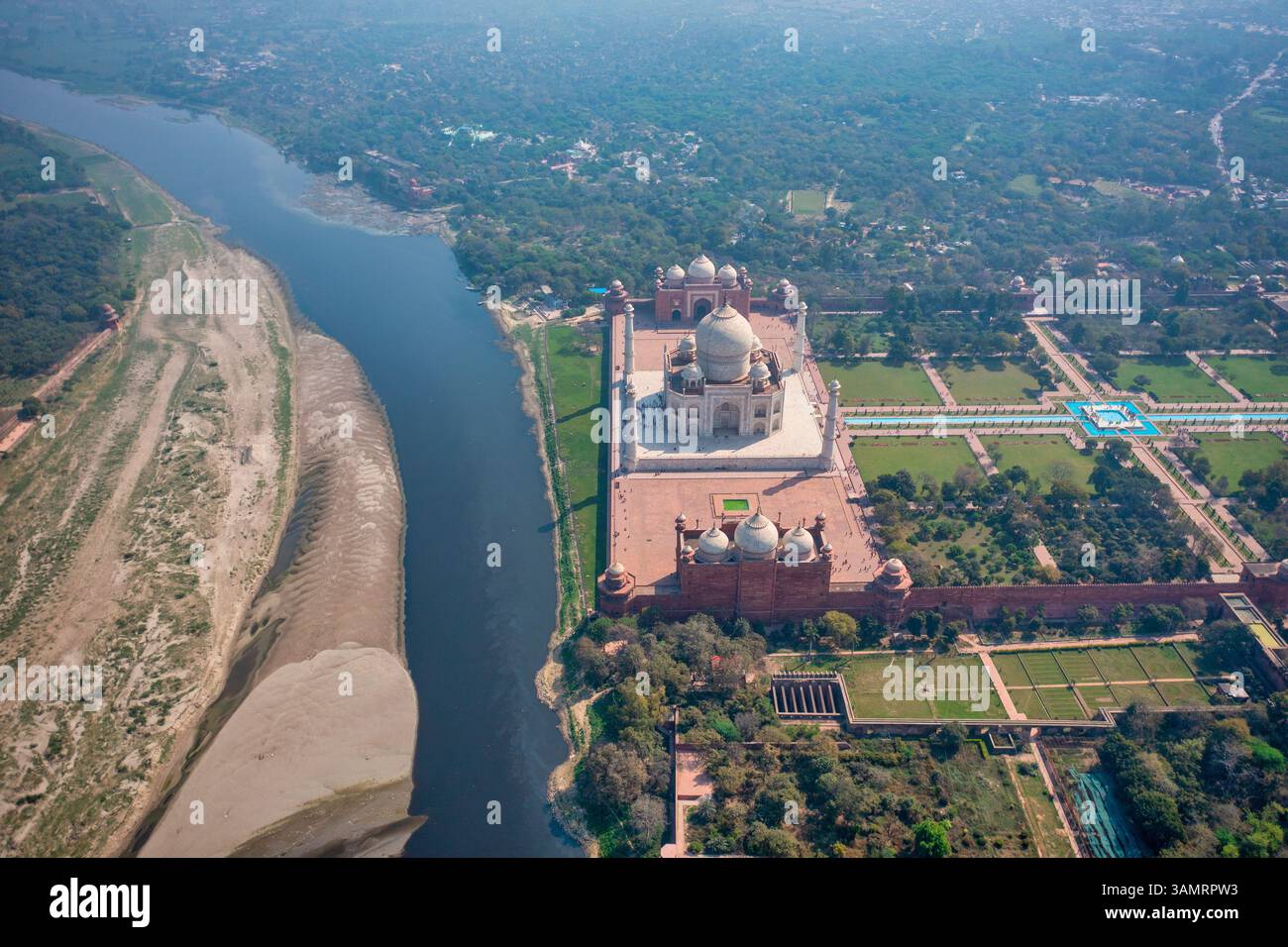
The rear platform behind the mausoleum overlooks the Yamuna River and aligns with Mehtab Bagh garden on the opposite bank, a vantage point some historians believe was intended for a planned black marble mirror-tomb that was never built.

The experience

What the visit is really like

You reach the eastern gate before the light turns hard, in the 06:00–08:00 window when the marble still holds its morning blush and the tour groups have yet to arrive. You pass through the great red gateway, and the dome resolves ahead of you across the reflecting pool, framed by cypress and the long channel of water. You slow at the plinth, slip cloth covers over your shoes, and step onto the terrace where the four minarets fan outward around the tomb. Inside, you circle the cenotaphs in the filtered gloom, tracing the pietra dura flowers by fingertip-light, then step back out to watch the sun climb the eastern face. A taj mahal and agra fort tour then carries you two and a half kilometres upriver. You cross the moat into Agra Fort, climb the ramp Akbar built for war elephants, and pause at the Musamman Burj — the octagonal marble tower where Shah Jahan spent his last years watching the tomb shimmer downstream. You end in the Diwan-i-Am, its rows of arches opening onto the courtyard, the whole Mughal century laid out behind you before midday.

Everything You Need to Know

Your complete experience guide

All the details about your upcoming adventure in one place

Your Taj Mahal and Agra Fort Tour

A taj mahal and agra fort tour pairs the white-marble Mughal mausoleum built by Shah Jahan with the red-sandstone riverside citadel a short drive away. Guided taj mahal and agra fort tour tours connect these two UNESCO World Heritage sites with an expert who brings the Yamuna riverbank, inlaid pietra dura, and imperial courtyards to life. This is a natural pairing for anyone exploring Agra landmarks in a single outing.

The Taj Mahal took roughly 22 years and some 20,000 artisans to complete, yet its white marble was quarried 400 kilometres away at Makrana and hauled to Agra by a caravan of a thousand elephants. Commissioned by the Mughal emperor Shah Jahan as a mausoleum for Mumtaz Mahal, who died in 1631, the monument crowns a riverbank terrace on the Yamuna. A well-planned taj mahal and agra fort tour pairs it with the fortress that shaped its story, and the two sit barely two and a half kilometres apart. Agra Fort, a UNESCO heritage site of red sandstone raised by Akbar from 1565, is where Shah Jahan spent his final years under house arrest, gazing at his wife's tomb across the water. The fort's Diwan-i-Am, Sheesh Mahal and Musamman Burj record three generations of imperial taste, from Akbar's muscular military walls to the delicate marble inlay of his grandson's private chambers. Together the two monuments compress the entire arc of Mughal architecture into a single stretch of the riverbank. Why the pairing endures is a matter of dialogue. The Taj is symmetry made absolute — a central dome flanked by four minarets, each canted slightly outward so that an earthquake would spare the tomb. Its pietra dura panels set carnelian, jasper and lapis into marble in floral arabesques that shift colour with the hour, blush-pink at dawn, bone-white at midday, amber at dusk. The fort answers in scale and mass rather than delicacy, its double ramparts and moat a reminder that the empire that built beauty also had to defend it. This is the quiet argument every agra taj mahal tour makes without stating it. Standing on the site today, visitors read a UNESCO World Heritage listing that dates from 1983 and a marble surface that conservators still clean with a mud-pack treatment to draw out pollution. The calligraphy framing the great arch is graded in size so the letters appear uniform from the ground — a trick of proportion Persian master Amanat Khan signed into the stone. Well-run taj mahal and agra fort tour tours thread these details into a coherent morning, moving from the tomb's charbagh gardens to the fort's audience halls before the heat settles. For travellers weighing agra mughal landmarks against a single stop, the two-monument route remains the fuller reading of the city, and one that skip-the-line taj mahal access makes considerably easier to complete before the crowds thicken.

Together the two monuments compress the entire arc of Mughal architecture into a single stretch of the riverbank.

Dress code

Modest, comfortable clothing that covers shoulders and knees is recommended, since you'll be walking on hot marble and sandstone for an hour or more. Shoe covers are provided free with the foreigner ticket for walking on the main mausoleum platform, so slip-on shoes make the process faster.

Bags & security

Airport-style security screening and metal detectors operate at all three gates (East, West, and South), and only small handbags or clear pouches are allowed through; large backpacks and suitcases must be left at cloakrooms near the ticket counters. Anyone booking a taj mahal and agra fort tour should plan for a 15–20 minute security queue before entry, longer on weekends.

Photography

Personal still photography and phone cameras are permitted throughout the complex, including on the marble platform, but tripods, professional lighting rigs, and drones are strictly prohibited. Video filming inside the main mausoleum chamber is not allowed, and commercial or professional shoots require separate ASI permission arranged in advance.

Families & strollers

Children under 15 enter free with a guardian's ticket, and shaded garden paths along the charbagh give younger kids room to rest between sections. Strollers can be pushed as far as the marble platform steps, where they generally need to be folded and carried.

Accessibility

Wheelchair access is available via ramps at the West Gate, and battery-operated golf carts can carry visitors with mobility difficulties from the parking area to the entrance. The marble platform around the mausoleum has some uneven, sloped sections, so assistance is advisable for wheelchair users navigating that final stretch.

Food & drink

No food, chewing gum, or smoking is allowed anywhere inside the complex, and eating is strictly prohibited on the marble platform. A sealed 500ml water bottle is included with the foreigner entry ticket, and additional bottled water can be bought at kiosks near the ticket counters before the security check.

Not allowed

× Tripods × Drones × Food and snacks × Chewing gum × Tobacco and cigarettes × Alcohol × Knives and sharp objects × Power banks over a certain capacity × Headphones and earphones × Electric chargers × Loose wires or cables × Large backpacks and suitcases × Selfie sticks

What to bring

✓ Passport or photo ID ✓ Printed or digital e-ticket ✓ Sunscreen and a hat ✓ Small clear bag or pouch ✓ Comfortable slip-on shoes ✓ Reusable water bottle ✓ Cash in small denominations

Opening hours

Mon 06:00 – 18:30

Standard visiting hours

Tue 06:00 – 18:30

Standard visiting hours

Wed 06:00 – 18:30

Standard visiting hours

Thu 06:00 – 18:30

Busiest before Friday closure

Fri Closed

Closed for prayers

Sat 06:00 – 18:30

Heaviest weekend crowds

Sun 06:00 – 18:30

Closures & exceptions

  • ·Every Friday — Closed for prayers at the adjoining mosque

At a glance

Hours

Open 06:00–18:30 Sat–Thu, closed Friday

Getting there

Public transport · 20-30 min · ₹20–30 per person

City buses and shared auto-rickshaws run from Idgah Bus Stand and Agra Cantt Railway Station toward Tajganj along Fatehabad Road

Car · 3-4h from Delhi · Toll and parking fees apply

Drive via Yamuna Expressway from Delhi (about 230 km) directly to designated parking at Shilpgram, since private vehicles cannot enter the no-vehicle zone around the monument

Taxi · 15-20 min from Agra Cantt · ₹400–800

Prepaid taxis and app-based cabs from Agra Cantt Railway Station take Mall Road and Fatehabad Road to the East Gate parking area

Walk · 30-40 min · Free

From Agra Fort to the Taj Mahal complex gates is roughly 2.5 km along the riverside road, doable on foot for those who prefer a leisurely approach

Cancellation policy

E-tickets for the Taj Mahal are non-transferable and generally non-refundable once issued, though the ASI booking portal allows date changes up to 24 hours before the visit slot in most cases. If your taj mahal and agra fort tour is booked through a third-party operator, refund windows depend on that operator's own terms rather than the 1,100 INR base entry fee itself.

Plan your time

How long do you need?

Recommended time

Half a day

A well-paced taj mahal and agra fort tour runs 3.5 to 5 hours combined: 2-3 hours at the Taj Mahal to cover the mausoleum, gardens, and mosque, plus 1.5-2 hours at Agra Fort for its courtyards and palace halls. Add 30-45 minutes if you're queuing at security during the mid-morning rush, or trim toward the low end if you arrive right at the 06:00-08:00 window and move briskly. Skip-the-line Taj Mahal entry helps most between 09:00 and 13:00, when tour buses stack up at the ticket counters and mausoleum steps.

Crowd levels through the day

Early morning (06:00-08:00) Light
Mid-morning (08:00-10:00) Building
Late morning (10:00-12:30) Heavy
Early afternoon (12:30-15:00) Peak
Late afternoon (15:00-17:00) Easing
Last entry window (17:00-18:30) Light
Plan ahead

When to go — year at a glance

Weather · crowds · average price — dots go green to amber to red as each metric rises.

Winter (Nov–Feb)

Cool mornings around 10-20°C make this peak season for a taj mahal and agra fort tour, with the heaviest crowds and haze that can soften early sunrise views. Book earliest entry slots to beat both fog and tour buses.

Spring (Mar–Apr)

Daytime temperatures climb to 25-35°C with clearer skies than winter haze, making March a good balance of comfort and visibility before the summer heat sets in.

Summer (May–Jul)

Daytime highs regularly exceed 40°C, so crowds thin out considerably and this stretch suits early risers willing to trade comfort for near-empty gardens; the monsoon typically arrives by late June or July, cooling afternoons but bringing humidity.

Autumn (Sep–Oct)

Post-monsoon skies clear and temperatures ease to a comfortable 20-30°C, making late September onward a good shoulder season with moderate crowds ahead of the winter peak.

Insider tips

Helpful tips for your visit

Book online in advance

Purchase e-tickets through the official ASI portal ahead of time to skip the counter queue, especially useful for any taj mahal and agra fort tour tickets bundled with Agra Fort entry.

Choose your gate wisely

The West Gate tends to have shorter lines on weekday mornings than the East Gate, which handles most group tour buses.

Carry small denomination cash

Vendors, cloakrooms, and small kiosks near the gates often can't break large notes, so keep ₹10-100 notes handy.

Pack light

Anything beyond a small clear bag or pouch will be turned away at security and must be checked at a cloakroom outside, costing you time.

Wear slip-on footwear

Shoe covers are handed out for the marble platform, and slip-on shoes make putting them on and taking them off much faster.

Hire a licensed guide at the gate

Government-licensed guides wait near the ticket counters and can add historical context that plaques inside don't provide.

Combine with Agra Fort same day

Agra Fort sits about 2.5 km away and stays open on Fridays when the Taj is closed, making it easy to sequence into one taj mahal and agra fort tour day.

Where to meet

Meeting points

Taj Mahal East Gate

Dharmapuri, Forest Colony, Tajganj, Agra, Uttar Pradesh 282001

Preferred gate for group tours, closer to parking and battery-bus drop-off

Get directions

Taj Mahal West Gate

Tajganj, Agra, Uttar Pradesh 282001

Slightly shorter security lines on weekday mornings

Get directions

Agra Fort Amar Singh Gate

Agra Fort, Rakabganj, Agra, Uttar Pradesh 282003

Only public entry point to Agra Fort

Get directions
The story

The history behind the site

In 1631, Mumtaz Mahal died in Burhanpur while delivering her fourteenth child. Her husband, the Mughal emperor Shah Jahan, resolved to raise a mausoleum in her name. Construction of the white marble tomb began around 1632 on the south bank of the Yamuna. The core structure was largely complete by 1643. Work on the surrounding complex, gardens, and gateway continued until roughly 1653. Any serious taj mahal and agra fort tour begins with these two decades of labour. The project drew craftsmen from across the empire and beyond. Ustad Ahmad Lahauri is credited as chief architect. Marble was hauled from Makrana in Rajasthan. Inlay artisans set semi-precious stone in floral pietra dura patterns, a technique known as parchin kari. Calligrapher Amanat Khan signed the Quranic inscriptions framing the great arch. Some accounts number the workforce near twenty thousand, with elephants moving stone along ramps toward the raised plinth. The monument's story does not end with its completion, which is why the best Agra heritage tours pair it with the sandstone fort upstream. In 1658, Shah Jahan's son Aurangzeh seized the throne. The aging emperor was confined within Agra Fort, roughly two kilometres away. From the marble Musamman Burj, tradition holds, he gazed toward his wife's tomb across the river until his death in 1666. He was then interred beside Mumtaz. This shared thread of grief and captivity is why a well-planned taj mahal and agra fort tour tour treats the fort not as a separate stop but as the second half of one narrative. The complex earned UNESCO World Heritage status in 1983. Later centuries brought threats: neglect under fading Mughal power, plunder of gemstones, and, by the twentieth century, corrosion from atmospheric pollution. Restoration campaigns and mud-pack cleaning have since addressed yellowing marble. Visitors booking taj mahal and agra fort tour tickets today walk a site whose survival was never assured. Skip-the-line Agra landmarks itineraries and modern taj mahal and agra fort tour tickets carry echoes of this long, contested history.

1631

Mumtaz Mahal dies in Burhanpur, prompting Shah Jahan's commission.

c.1632

Construction of the marble mausoleum begins on the Yamuna's south bank.

1643

The central tomb structure is largely completed after eleven years.

c.1653

The wider complex, gardens, and gateway reach completion.

1658

Aurangzeb deposes Shah Jahan and confines him within Agra Fort.

1666

Shah Jahan dies in captivity and is buried beside Mumtaz Mahal.

1983

The Taj Mahal is inscribed as a UNESCO World Heritage Site.

Photo spots

Best photo spots

Diana Bench

Best light · Before 08:00

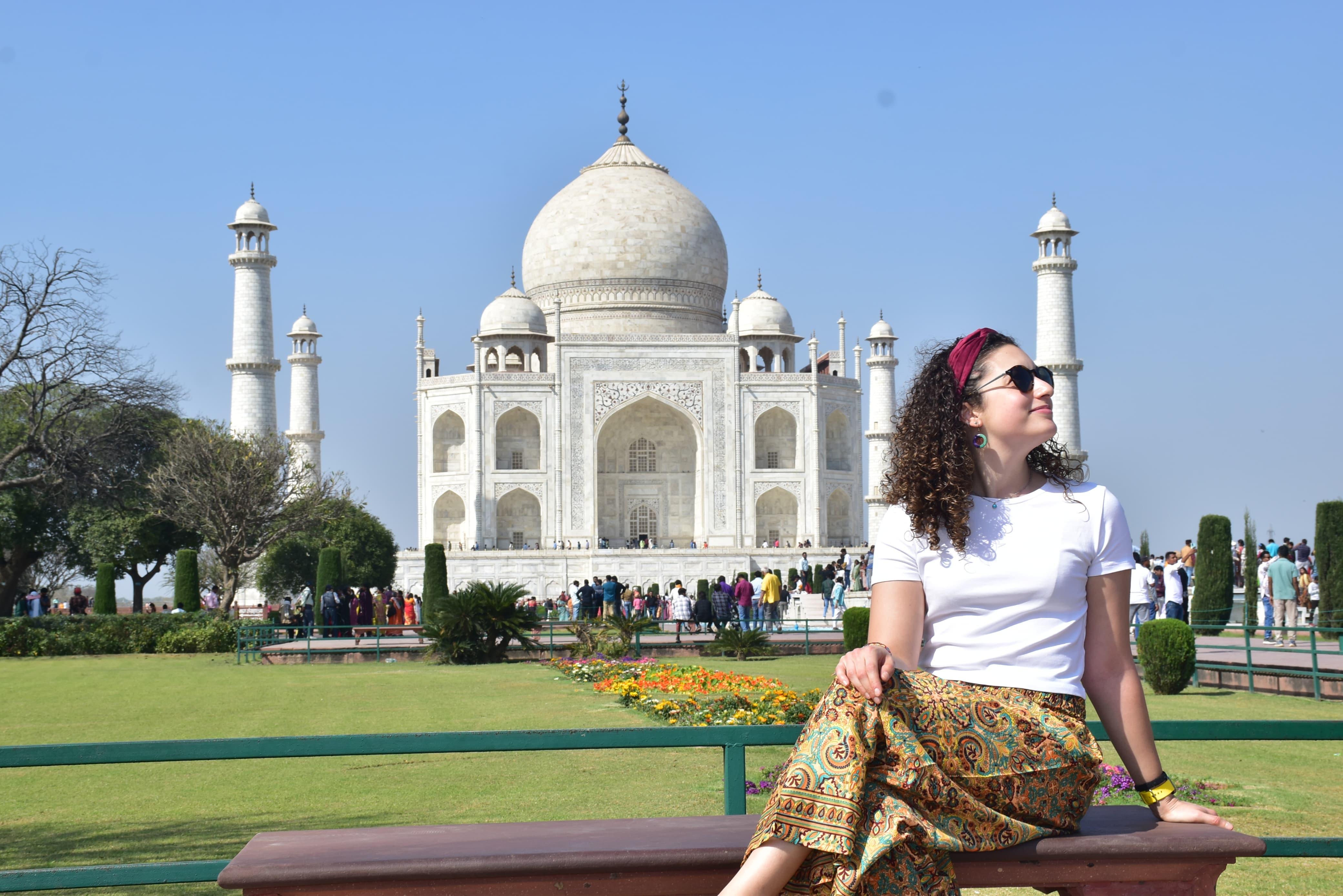
Also called the VIP Bench, this low marble seat sits on the reflecting pool's central axis and is the spot where Princess Diana and later the Duke and Duchess of Cambridge were famously photographed. Stand or sit directly behind it for the classic symmetrical shot with the dome centered above; expect a short queue as everyone on the taj mahal and agra fort tour wants this exact frame.

Reflecting Pool Centerline

Best light · Golden hour

Walk to the raised marble platform holding the long watercourse in front of the mausoleum and align yourself on the paved centerline running from the Great Gate to the tomb steps. This gives the mirrored dome-and-minaret reflection visible in nearly every postcard shot of the complex. Early morning stillness produces the cleanest water reflection before wind ripples the surface.

Great Gate Archway

Best light · Just after entry

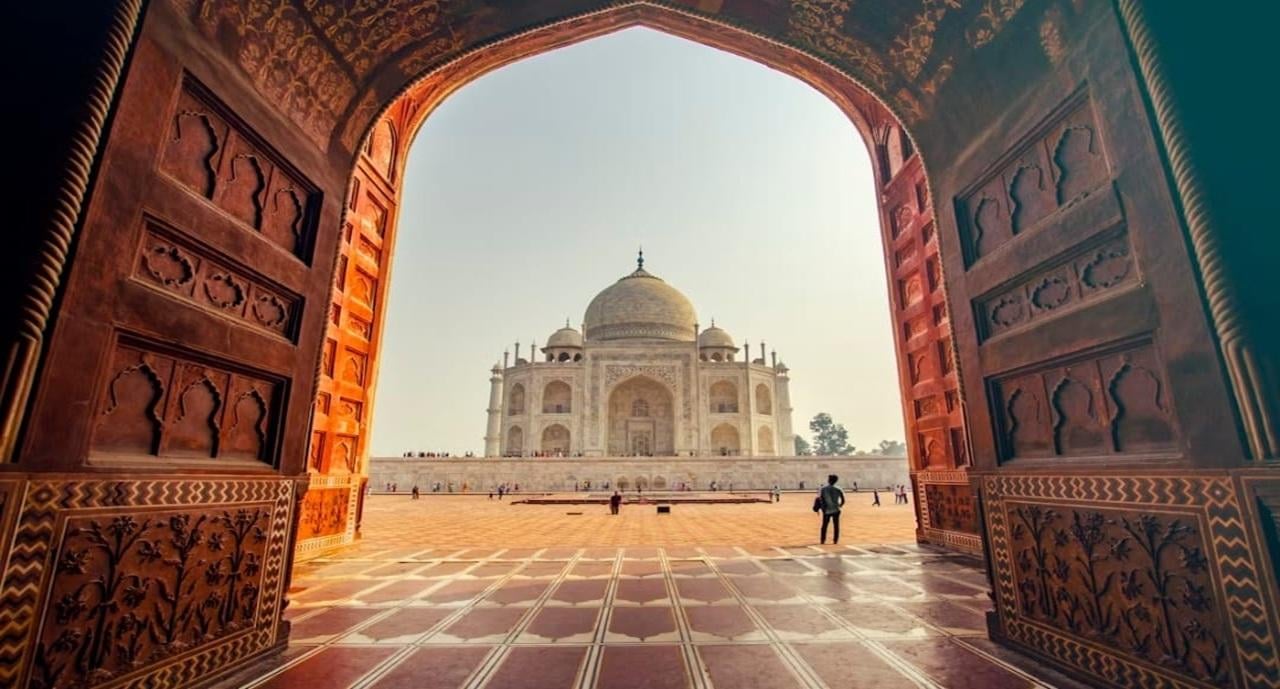
The Darwaza-i-Rauza, or Great Gate, frames the mausoleum inside its tall red sandstone pishtaq arch, creating a natural portal shot as visitors pass from the forecourt into the garden. Stand well back inside the gate's inner chamber so the white marble dome sits centered within the dark arch opening. Crowds funnel through here constantly, so a few quick frames work better than lingering.

Mehtab Bagh

Best light · Sunset

Across the Yamuna River north of the main complex, this Mughal charbagh garden offers a straight-on view of the Taj Mahal's rear facade with the river in the foreground. The octagonal viewing platform at the garden's northern end aligns with the monument's central axis, and sunset light turns the marble warm gold. It requires a separate ticket and a short ride from the main gate, so plan it as a distinct stop rather than an add-on.

Gallery

Moments from the experience

With kids

Visiting with kids

A taj mahal and agra fort tour with children means long hot walks between parking and the gates, so the trip works best when you build in shade breaks and let the free shuttles do the heavy lifting. Kids tend to enjoy the marble courtyards more than the queues, so plan around the waiting rather than the walking.

Pacing

Vehicles stop about 500 metres to 1 kilometre from the gates, so use the <cite index="7-1,9-1">free battery bus and golf cart service provided with entry tickets</cite> instead of walking that stretch with tired kids. Save energy for the walk from the gate to the mausoleum itself, which is the part with real shade and photo stops.

Queue engagement

Security lines separate men and women, so one parent may need to queue while the other watches the children; bring nothing extra since bags mean a second screening line. A simple game of counting minarets or spotting red sandstone at the fort keeps younger kids occupied while adults handle tickets.

Best ages

Children under 15 enter free, and the site works well for kids around age 6 and up who can manage uneven marble underfoot and long stretches without shade. For a taj mahal agra tour with toddlers, expect to carry them for much of the walk from the shuttle drop-off.

Facilities

A wheelchair and first aid box are kept at the ASI office near the Taj Mahal, useful if a child overheats or needs a rest stop. There is no dedicated baby-change room, so plan around gate visits for anything requiring privacy.

Heat management

Arrive in the 06:00-08:00 window, since temperatures climb fast and shade is limited once you are past the gates. This slot also means shorter queues, which matters most when small children are the ones waiting.

Customer Reviews

What travelers say

Real experiences from real travelers

4.6
Based on undefined reviews
1 ★ 520
2 ★ 410
3 ★ 940
4 ★ 2610
5 ★ 14820
P
Priya M.
India · 2026-06-18

Marble glows at dawn

We booked the taj mahal and agra fort tour for a 6am start and the marble shifted from grey to gold as the sun climbed. Our guide explained the Mughal history and the pietra dura inlay up close. Agra Fort in the late morning was quieter and the river view toward the mausoleum was a nice surprise.

D
Daniel K.
Germany · 2026-05-29

Two landmarks, one smooth day

Doing both Agra landmarks in a single day sounded rushed but the pacing worked well. The red sandstone walls of Agra Fort were massive and cool in the shade. Seeing the Yamuna views from the fort after the white marble in the morning gave a real sense of the empire.

S
Sofia R.
Spain · 2026-04-12

Great guide, hot afternoon

Our Agra Taj Mahal tour guide knew the carvings and stories in real depth. By midday it was very warm walking the fort so bring water and a hat. Still worth it for the scale of the domes and the sandstone gateways.

J
James T.
United States · 2026-07-08

Skip-the-line saved us

The skip-the-line Taj Mahal entry meant we walked past a long queue in monsoon humidity. The dome reflecting in the pool at first light is something photos undersell. Booking the taj mahal and agra fort tour tickets ahead was clearly the right call.

Y
Yuki N.
Japan · 2026-03-22

Symmetry up close

Standing under the central arch you feel how precise the symmetry is. The four minarets lean slightly outward, which our guide pointed out. Agra Fort's inner palaces were an unexpected highlight of the day.

A
Aline C.
Brazil · 2026-02-15

Worth the early alarm

Waking before dawn was hard but the cool air and soft light made the taj mahal and agra fort tour far better than a crowded midday visit. The marble inlay flowers looked almost translucent. Loved the octagonal tower at the fort where Shah Jahan was held.

M
Michael O.
United Kingdom · 2025-11-30

Solid Agra landmarks day

A well-run way to cover the main Agra landmarks without the hassle of arranging transport ourselves. Agra Fort felt underrated compared to the mausoleum. One of the better agra fort and taj mahal tours I have joined in the region.

N
Nadia H.
Egypt · 2025-09-14

Golden hour magic

The Yamuna haze behind the Taj at sunrise gave everything a warm glow. Our taj mahal and agra fort tour tour ran on time and never felt hurried. The sandstone ramparts of the fort were a strong contrast to all that white marble.

T
Thomas W.
Canada · 2026-06-02

Both sites in comfort

Air-conditioned transfers between the two sites made the summer heat bearable. The guide's stories about the Mughal builders and the UNESCO heritage status added a lot. Seeing the mausoleum framed by the fort's arches stayed with me.

I
Isabella F.
Italy · 2026-01-20

Clear morning, empty pathways

Arrived just as the gates opened and the reflecting pool was mirror-still. The pietra dura and calligraphy on the great gate rewarded a slow look. Combining it with Agra Fort gave the day a proper rhythm.

FAQ

Frequently asked questions

Everything you need to know for your journey

Around the corner

Nearby landmarks worth a detour

Agra Fort

10 min by auto

landmark

A red sandstone Mughal fortress on the Yamuna where Emperor Shah Jahan was later imprisoned, with courtyards, palaces, and a marble tower overlooking the Taj. Musamman Burj inside offers one of the best distant views of the mausoleum.

Mehtab Bagh

10 min by auto

park

A charbagh-style garden directly across the Yamuna River, known for symmetrical sunset views of the Taj Mahal's rear facade. Fewer crowds make it a quieter counterpoint to the main complex.

Itimad-ud-Daulah (Baby Taj)

15 min by auto

landmark

An early Mughal marble tomb often called the draft for the Taj Mahal's pietra dura inlay technique, built for a Mughal noble in the 1620s. Its intricate lattice screens are considered a precursor to later Mughal marble work.

Jama Masjid Agra

10 min by auto

landmark

A large red sandstone mosque built in 1648 near Agra Fort, notable for its striped marble domes and bustling surrounding bazaar. It remains an active place of worship today.

Where to stay

Where to stay nearby

Oberoi Amarvilas

10 min drive

luxury

A five-star property roughly 600 meters from the East Gate with rooftop and many rooms offering direct Taj Mahal views.

Tajganj district

5-10 min walk

district

The neighborhood immediately surrounding the South Gate, dense with budget guesthouses and rooftop cafes overlooking the monument.

ITC Mughal

10 min drive

luxury

A large heritage-style resort with Mughal garden landscaping a short drive from the complex.

Hotel Taj Resorts

10-15 min drive

mid-range

A mid-range option along Fatehabad Road popular with tour groups doing a combined taj mahal and agra fort tour itinerary.

Ready for Adventure?

Join thousands of happy travelers who have discovered this incredible experience

Book Your Experience Now