
Open today · 06:00 – 18:30

Taj Mahal Tour By Train

Taj Mahal Tour By Train — Reserved Rail Seats & Skip-the-Line Entry

Rails carry you east at dawn, marble waits in white silence.

142K+ travelers chose this
Free Cancellation
Right now: Moderate — July monsoon season Carry a light raincoat; midday humidity is high in July
Full day, 14-16 hours
1 Languages
Small groups up to 15
Free Cancellation
Free cancellation Instant confirmation Mobile voucher Skip-the-line Verified partner
1632-1653
Construction years
22 years to build
20,000+
Workforce size
Artisans and laborers
1,100 INR
Foreign entry fee
Adult ticket price
200 INR
Mausoleum add-on
Extra for inner chamber
1983
UNESCO status
World Heritage Site
Choose your ticket

Ticket options at a glance

Compare fares, pick the fit — all bookings are mobile-voucher and eligible for free cancellation where shown.

Delhi to Taj Mahal & Agra Day Trip on the Gatimaan Express 7 hr
Guided Experience

Delhi to Taj Mahal & Agra Day Trip on the Gatimaan Express

4.9 (1181)
€11
  • Expert local guide
  • Small group
  • Skip-the-line access
  • Free cancellation
Book this ticket
Delhi to Taj Mahal & Agra Day Trip by Gatimaan Express 5 hr
Guided Experience

Delhi to Taj Mahal & Agra Day Trip by Gatimaan Express

4.9 (336)
€7
  • Expert local guide
  • Small group
  • Skip-the-line access
  • Free cancellation
Book this ticket
Compare options

Which ticket fits your trip?

Anyone planning a taj mahal tour by train from Delhi has one real decision to make before boarding: the base foreign-adult ticket or the same ticket plus the mausoleum add-on. Both options use the same 1,100 INR entry, so the choice is really about whether you want to step inside the inner chamber.

Complex Entry Only Garden & grounds access Top pick
Complex + Mausoleum Inner chamber add-on
What it includes Gardens, reflecting pool, exterior views of the marble monument
Price 1,100 INR (foreign adult)
Who needs it Visitors content with exterior views and photos
Time added to visit None — standard queue only
Access point Western or Eastern Gate ticket counters
Best for Quick stops or repeat visitors

Verdict: For a one-day taj mahal tour by train, budgeting the extra 200 INR for the mausoleum add-on is the practical call, since it's the only way to see the actual marble chamber rather than just its exterior.

Is it worth it?

Worth it for first-timers, day-trippers included

A taj mahal tour by train pays off once you do the math. Foreign entry runs 1,100 INR, plus an optional 200 INR to step inside the mausoleum — roughly the price of a mid-range meal for hours at one of the world's most photographed UNESCO landmarks. If you've already covered the rail fare to Agra, that combined cost is marginal against what you get: unobstructed marble, symmetrical gardens, and the shifting light on the dome. The value peaks for first-time visitors who arrive early, between 06:00 and 08:00, when cooler air and thinner crowds make the ticket earn its keep. Well-run Agra Taj Mahal tour packages fold transfers and guiding into that price, easing the logistics. It's less compelling for repeat visitors or anyone rushing a half-day stop, since a good skip-the-line visit rewards unhurried time. For most, this taj mahal tour by train tour justifies both the effort and the fee.

What makes it worth it

  • Low entry cost versus world-famous landmark
  • Marginal add-on if rail fare already paid
  • Early arrival beats heat and crowds
  • Packages bundle transfers and guiding smoothly
  • Hours of access for a modest fee

Keep in mind

  • Optional 200 INR mausoleum fee adds up
  • Closed Fridays — plan around it
  • Rushed half-day stops undersell the visit
  • Midday crowds dilute the experience

Bottom line: For a first visit, taj mahal tour by train tickets are money and effort well spent — just go early and skip Fridays.

Featured Experiences

Popular tours & activities

Hand-picked experiences loved by thousands of travelers

Recommended Experience

Powered by GetYourGuide

Another traveler favorite

Powered by GetYourGuide
Delhi to Agra Day Trip via Gatimaan Express Train 1 day (approx. 11.5 hours door-to-door) Free Cancellation

Delhi to Agra Day Trip via Gatimaan Express Train

Ride India's fastest train from Delhi to explore the Taj Mahal, Agra Fort & Baby Taj in one epic day.

4.9 (18)
FromFrom €50.94
See details
Delhi to Taj Mahal & Agra Fort: Express Train Day Tour 12 hours Free Cancellation

Delhi to Taj Mahal & Agra Fort: Express Train Day Tour

Explore three Mughal masterpieces in a single day via express train from Delhi.

4.9 (12)
FromFrom €53.47
See details
Delhi to Taj Mahal & Agra Fort Day Trip by Express Train with Photographer 4–12 hours (depending on pickup point and selected options) Free Cancellation

Delhi to Taj Mahal & Agra Fort Day Trip by Express Train with Photographer

Zip from Delhi to Agra by express train for an unforgettable day at the Taj Mahal and Agra Fort.

5 (5)
FromFrom €6.81
See details
Your journey

Step-by-step — what your day looks like

1

Board the Gatimaan Express

Depart Hazrat Nizamuddin at 08:10 and arrive Agra Cantt at 09:50 for a same-day taj mahal tour by train.

2

Enter through West or East Gate

Clear security screening and collect an audio guide before approaching the main mausoleum.

3

Explore the Charbagh gardens

Walk the symmetrical Mughal gardens and reflecting pool that frame the classic view of the marble dome.

4

Tour the mausoleum interior

View the cenotaphs of Shah Jahan and Mumtaz Mahal and the pietra dura inlay work up close.

5

Visit the mosque and Jawab

See the red sandstone mosque on the west side and its mirror-image guesthouse, the Jawab, on the east.

6

Return to Agra Cantt for the return train

Depart Agra Cantt around 17:50 to reach Delhi by early evening, completing the same-day trip.

What you'll see

Highlights not to miss

Main Mausoleum

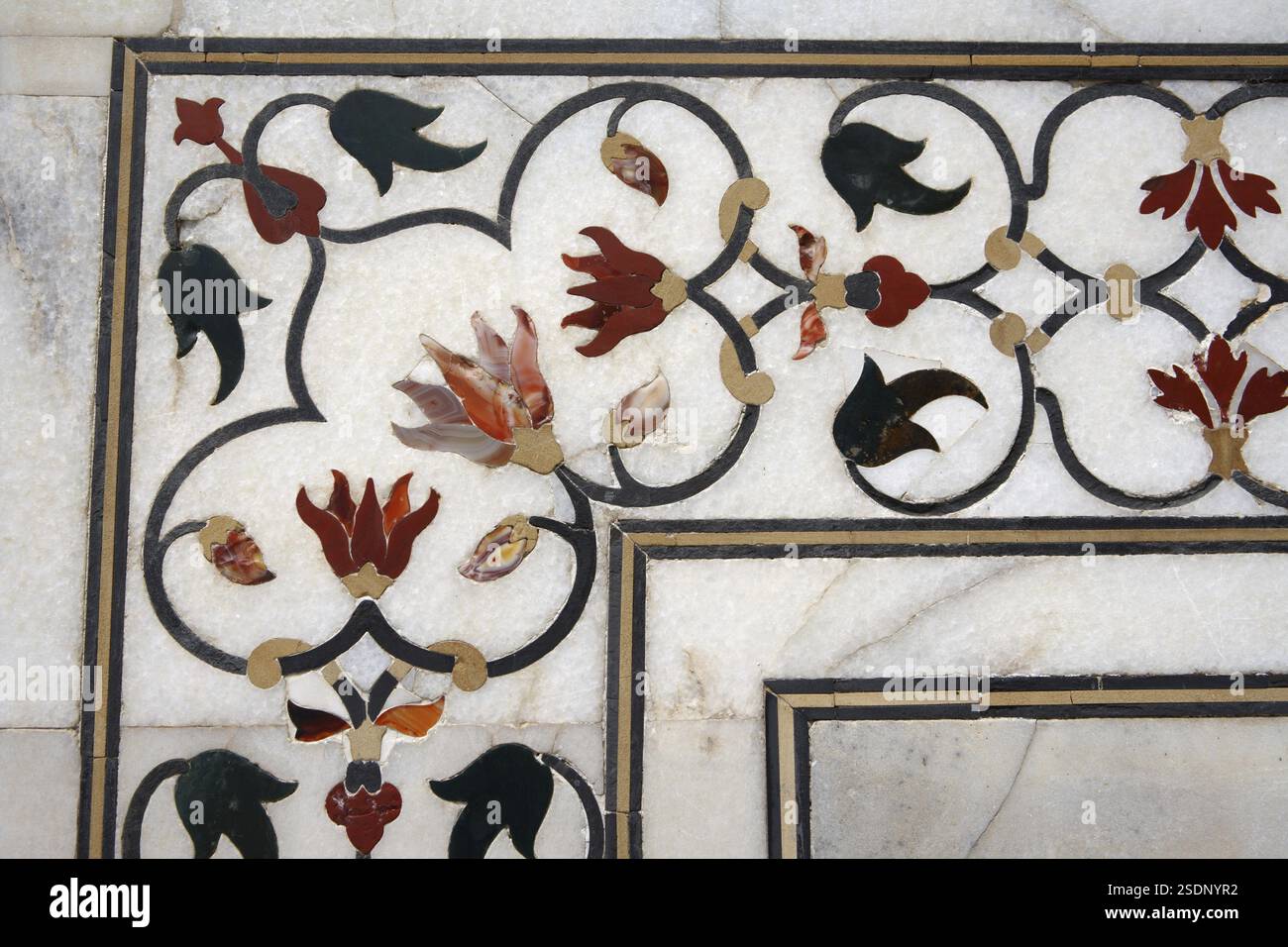
The central white marble structure houses the cenotaphs of Shah Jahan and Mumtaz Mahal beneath a dome rising roughly 73 meters, with pietra dura inlay work using semi-precious stones imported from as far as Afghanistan and Sri Lanka.

Charbagh Gardens

A quartered Mughal garden divides the approach into four quadrants with a raised marble reflecting pool at its center, designed so the monument's reflection appears perfectly symmetrical from the entrance.

Great Gate (Darwaza-i-rauza)

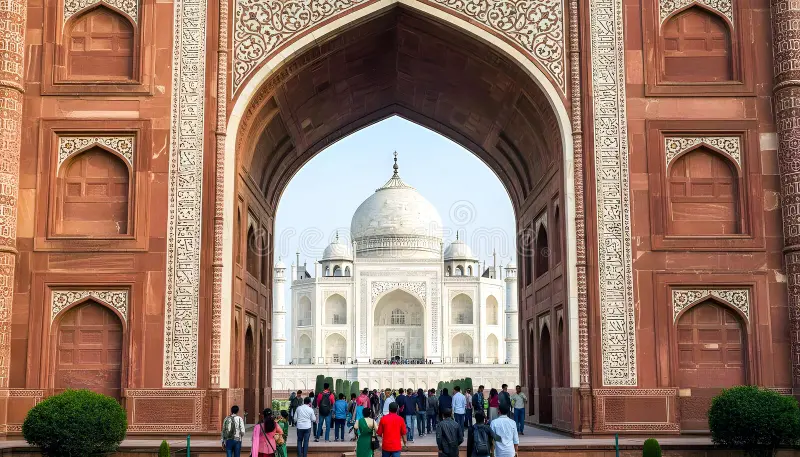
This monumental red sandstone entrance gate frames the first glimpse of the mausoleum and bears calligraphic inscriptions from the Quran along its arch.

Mosque

Built from red sandstone on the western side of the platform, this working mosque features three domes and remains in occasional use for Friday prayers, which is why the complex closes that day.

The Jawab

A mirror-image structure on the eastern side of the platform, built purely for architectural symmetry since it faces away from Mecca and cannot function as a mosque.

Minarets

Four 40-meter minarets stand at each corner of the platform, subtly tilted outward so that in the event of collapse they would fall away from the central mausoleum.

The experience

What the visit is really like

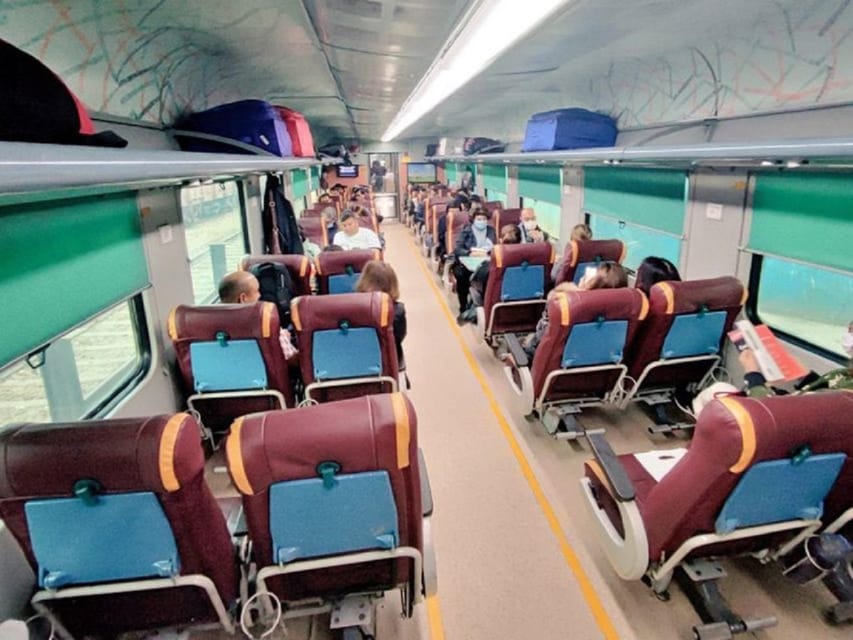
You board at Hazrat Nizamuddin before the city wakes, settle into a reserved chair car, and watch Delhi thin into farmland as breakfast is served at your seat. Around 100 minutes later you step onto the platform at Agra Cantt, where your guide meets you and folds you into a waiting vehicle for the short run to Tajganj. At the western gate you present your mobile voucher, clear the security check, and pass through the great red-sandstone forecourt. Then the archway frames it: the white dome, suddenly there, closer with every step down the central watercourse. You pause at the reflecting pool, line up the finial in the still water, and take the photograph everyone takes because it earns itself. You slip your shoes into covers, climb the marble plinth, and circle the tomb clockwise. Inside, you lower your voice under the double dome, trace the pierced marble screen around the cenotaphs, and feel how the pietra dura flowers catch the light. Back outside, you walk the garden paths, then round to the river side where the Yamuna slides past and Agra Fort sits low on the far bank. By early afternoon your taj mahal tour by train loops back: the vehicle returns you to the station, and the express carries you west into the evening, home in Delhi before dark with the whole monument behind you in a single day.

Everything You Need to Know

Your complete experience guide

All the details about your upcoming adventure in one place

Your Taj Mahal Tour by Train Explained

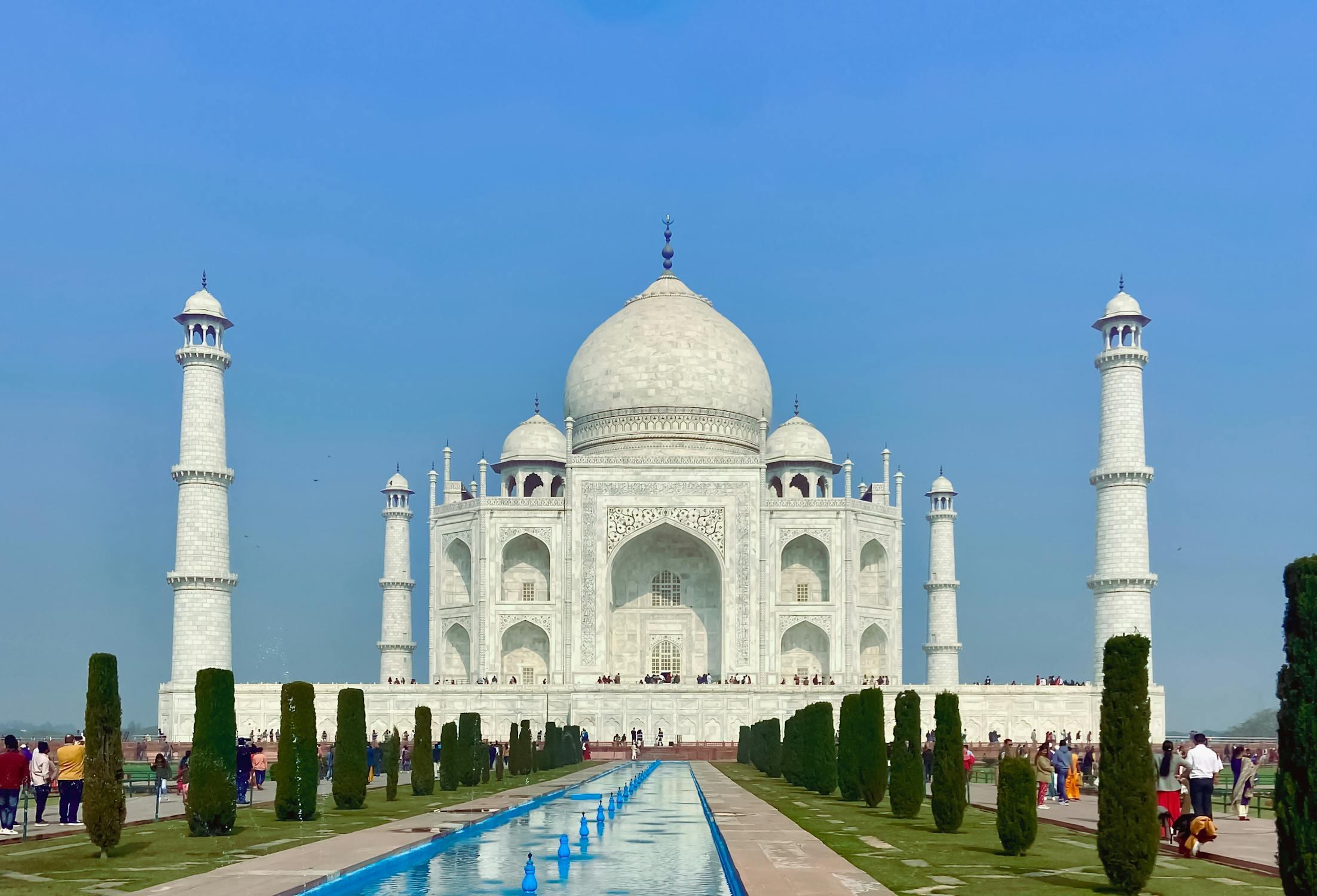
A taj mahal tour by train links Delhi to Agra along the Gatimaan Express corridor, pairing an air-conditioned rail journey with guided access to the ivory-white marble mausoleum on the Yamuna riverbank. Travelers on Agra day trips reach this UNESCO World Heritage monument commissioned by Shah Jahan without the strain of long road transfers. Our taj mahal tour by train tickets bundle round-trip rail seats, a certified guide, and entry so the whole Agra sightseeing experience stays seamless.

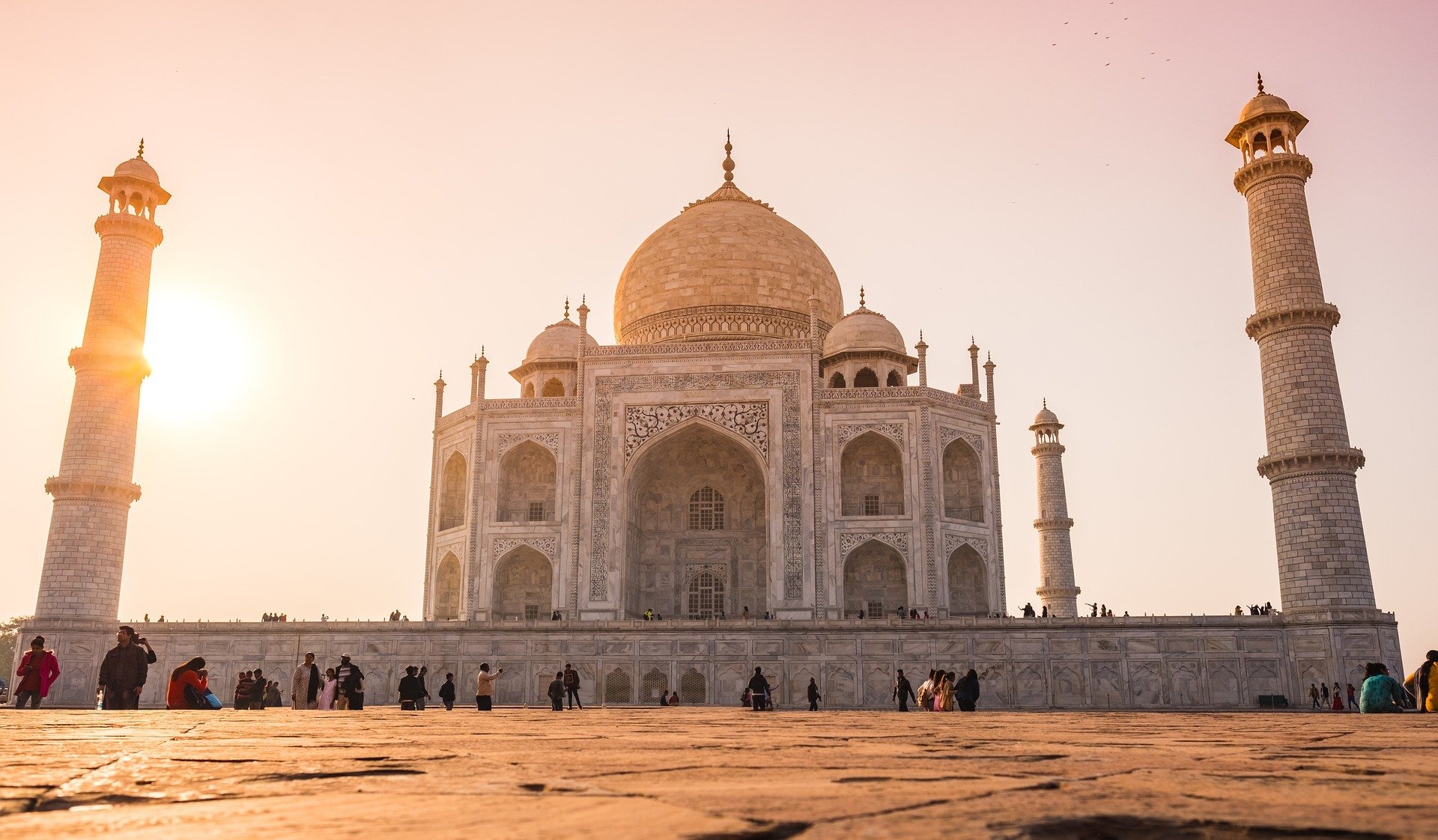
The Gatimaan Express, India's fastest train when it entered service, covers the 188 kilometres between Delhi and Agra in roughly 100 minutes, reaching 160 kilometres per hour across the plains of Uttar Pradesh. That single line of rail has reshaped how the world reaches Shah Jahan's monument, and the taj mahal tour by train has become the standard way visitors arrive at Dharmapuri, Forest Colony, Tajganj, without surrendering a day to road traffic. The mausoleum itself was raised between 1632 and 1653 as a tomb for Mumtaz Mahal, the emperor's third wife, who died in childbirth. Some twenty thousand artisans and a thousand elephants are recorded as labouring on the complex, drawing white Makrana marble from Rajasthan and inlaying it with jasper, carnelian, and lapis lazuli in the pietra dura technique. The building sits within a formal charbagh garden, its four quartered lawns bisected by watercourses that mirror the dome. UNESCO inscribed the site as a World Heritage monument in 1983, and it remains among the most recognised structures on earth. What gives the Agra Taj Mahal tour its enduring pull is the precision of the thing. The four minarets lean fractionally outward, an engineered safeguard so that, in an earthquake, they would fall away from the tomb rather than onto it. The central dome rises around 73 metres, crowned by a brass finial that once held gold. Calligraphic panels of black marble frame the great arched iwan, the Arabic script scaled larger as it climbs so it reads uniform to an eye standing below. Symmetry governs everything except the cenotaph of Shah Jahan himself, added beside his wife's and breaking the mirror-plan he had designed. The rail approach threads this history into a single day. A taj mahal tour by train places the traveller in Agra by mid-morning, in time for the marble to shift from rose to white as the sun climbs. Beyond the monument, the wider circuit of Agra landmarks includes the red-sandstone Agra Fort and the riverside tomb of Itmad-ud-Daulah, often called the Baby Taj, whose inlay work prefigured the greater tomb downstream. Many skip-the-line taj mahal tickets pair the mausoleum with these Mughal sites, and the well-run taj mahal tour by train tickets fold the return rail leg into the same reservation. The Yamuna river runs behind the plinth, and from its far bank at Mehtab Bagh the whole composition reads as a reflection, the purpose for which that garden was first planted. It is a monument built to be seen whole, and the train delivers that view intact.

The four minarets lean fractionally outward, engineered to fall away from the tomb rather than onto it.

Dress code

There is no strict dress code, but modest clothing covering shoulders and knees is recommended given the monument's religious and cultural significance. Visitors on any taj mahal tour by train should wear breathable cotton fabrics and comfortable walking shoes for the marble courtyards, which get very hot underfoot by midday.

Bags & security

Airport-style security screening with metal detectors and pat-downs is mandatory at all three entry gates (East, West, South). Only one small bag per visitor is allowed, and it will be inspected; large backpacks, duffel bags, and tripods must be left at the cloakroom near the ticket counters.

Photography

Personal still cameras and phones are permitted free of charge for exterior photography, but tripods, professional video equipment, and drones require prior written permission from the Archaeological Survey of India. Photography is prohibited inside the mausoleum's inner chamber housing the cenotaphs of Shah Jahan and Mumtaz Mahal.

Not allowed

× Tripods × Drones × Food and snacks × Chewing gum × Tobacco and cigarettes × Alcohol × Knives and sharp objects × Power banks and large batteries × Speakers or loud music devices × Playing cards × Books not related to a guide × Large backpacks × Video cameras without permit × Colored markers or paint

What to bring

✓ Passport or photo ID ✓ Printed or e-ticket ✓ Water bottle ✓ Sunscreen and hat ✓ Comfortable walking shoes ✓ Small clear pouch for phone and wallet

Opening hours

Mon 06:00 – 18:30

Gatimaan Express day-trippers arrive by mid-morning

Tue 06:00 – 18:30
Wed 06:00 – 18:30
Thu 06:00 – 18:30

Busy before Friday closure

Fri Closed

Weekly closure, no entry

Sat 06:00 – 18:30

Weekend crowds heavier

Sun 06:00 – 18:30

Closures & exceptions

  • ·Every Friday — Weekly closure, no public entry
  • ·Jan 26 — Republic Day — heightened security

At a glance

Gates 06:00–18:30 daily except Fri

location

Getting there

Public transport · 1h 40m · Chair Car and Executive Class fares apply

Gatimaan Express train 12050 departs Hazrat Nizamuddin at 08:10 and arrives Agra Cantt at 09:50, making it the fastest rail option for a taj mahal tour by train.

Car · 3.5–4h · Toll charges apply, around 400-500 INR one-way

Yamuna Expressway drive from Delhi covers roughly 233 km with tolls at multiple plazas.

Taxi · 15–20 min · Metered or pre-paid taxi stand fare

Shared or private taxis from Agra Cantt railway station to Taj Mahal's gates take a short ride through Tajganj.

Walk · 10–15 min · No cost

From nearby Tajganj hotels, several gates are within walking distance of the East and South Gate entrances.

Cancellation policy

Taj Mahal entrance tickets, including the 1,100 INR foreign adult entry plus 200 INR mausoleum fee, are non-refundable and non-transferable once booked online or at the counter. Date-change requests are not accepted, so travelers on a taj mahal tour by train should confirm their Gatimaan Express schedule before purchasing tickets.

Plan your time

How long do you need?

Recommended time

2-3 hours

For a taj mahal tour by train from Delhi, budget 2 to 3 hours on-site to cover the entry queue, gardens, main mausoleum exterior, and a short interior chamber viewing. Add 30-45 minutes if you want unrushed photography or plan to enter the mausoleum itself, and trim toward 90 minutes if your train schedule is tight. Arriving inside the 06:00-08:00 window keeps queue time near its shortest, since the security line lengthens fast once mid-morning tour buses arrive. Whichever slot you pick, work backward from your return train time so the walk back to the gate and any luggage checks are not rushed.

Crowd levels through the day

Gate opening (06:00-07:00) Light
Early morning (07:00-08:00) Light-moderate
Mid-morning (08:00-10:00) Building
Midday (10:00-14:00) Heaviest
Afternoon (14:00-16:30) Easing
Late afternoon (16:30-18:30) Lighter
Plan ahead

When to go — year at a glance

Weather · crowds · average price — dots go green to amber to red as each metric rises.

Winter (Nov–Feb)

Daytime temperatures of 10–20°C make this the most comfortable season, though morning fog can delay early photography. Peak tourist season means larger crowds, especially around Christmas and New Year.

Spring (Mar)

Mild weather in the low-to-mid 20s°C with mustard fields blooming en route from Delhi. Crowds thin out compared to peak winter months.

Summer (Apr–Jun)

Temperatures regularly exceed 40°C, making early morning or evening visits essential to avoid heat exhaustion. Crowds are noticeably lighter due to the extreme heat.

Monsoon (Jul–Sep)

Humid conditions with afternoon downpours common in July and August, but the marble dome and gardens look striking under monsoon light. Fewer international visitors travel during this period.

Autumn (Oct)

Temperatures cool to a comfortable 25–30°C and humidity drops after the monsoon, making it a good shoulder-season window before winter crowds arrive.

Insider tips

Helpful tips for your visit

Book the Gatimaan Express early

Seats on the Gatimaan Express fill up fast for a same-day taj mahal tour by train, so reserve at least a few weeks ahead via IRCTC.

Carry a printed ID

Foreign nationals must show a passport at both the ticket counter and security gate; a photocopy alone is not accepted.

Use the small-bag rule

Since large bags aren't allowed inside, pack only essentials in a small clear pouch to skip the cloakroom queue.

Wear slip-on shoes

Footwear must be removed or covered with shoe covers before stepping onto the marble platform around the mausoleum.

Hire an authorized guide

Licensed guides wait near the ticket counters and can explain the pietra dura inlay work and Mughal architectural history in depth.

Avoid plastic bottles inside

Single-use plastic is discouraged; carry a reusable bottle since only limited water refill points exist near the gates.

Plan the Agra Fort combo

Agra Fort and Fatehpur Sikri pair well with a taj mahal tour by train itinerary since both are a short drive from the Taj's gates.

Where to meet

Meeting points

West Gate

Taj Mahal West Gate, Tajganj, Agra 282001

Main entrance, closest to ticket counters and cloakroom

Get directions

East Gate

Taj Mahal East Gate, Tajganj, Agra 282001

Quieter entry, popular with tour groups

Get directions

Agra Cantt Railway Station

Agra Cantonment, Agra 282001

Arrival point for Gatimaan Express and other Delhi trains

Get directions
The story

The history behind the site

In 1631, Mumtaz Mahal died in Burhanpur while giving birth to her fourteenth child. Her husband, the Mughal emperor Shah Jahan, resolved to raise a mausoleum without equal. Construction began around 1632 on a bend of the Yamuna river at Agra. The effort would consume roughly twenty-two years. Many who take a taj mahal tour by train today arrive knowing the love story, yet the building itself is a record of imperial logistics. The chief architect is traditionally named as Ustad Ahmad Lahauri. Under his direction, an estimated twenty thousand artisans laboured on the site. Materials travelled from across the empire and beyond: white marble from Makrana in Rajasthan, jasper from Punjab, jade and crystal from China, turquoise from Tibet, and carnelian from Arabia. Some twenty-eight kinds of precious and semi-precious stone were set into the marble through pietra dura inlay. Teams of oxen and specially built ramps hauled the stone. Calligraphers inscribed Quranic verse across the great gateway in an Agra landmark of considerable technical daring. The mausoleum proper was largely complete by 1643, though work on the surrounding complex, gardens, and outbuildings continued until about 1653. Shah Jahan was later deposed by his son Aurangzeb in 1658 and confined at nearby Agra Fort, where he reportedly gazed on the tomb until his death in 1666. He was buried beside Mumtaz, the single asymmetry in an otherwise balanced plan. A visitor booking a taj mahal tour by train tour walks past that quiet interruption of symmetry. The centuries brought neglect and plunder, and by the nineteenth century restoration became necessary; a major programme ran under Lord Curzon around 1900. In 1983 UNESCO inscribed the site as a World Heritage monument. Air pollution later prompted the mud-pack treatments of recent decades. Those arranging skip-the-line Agra tickets or the wider Agra landmarks itinerary encounter a monument still under careful guardianship. Many taj mahal tour by train tours end at the gateway, where the marble first comes into view.

1631

Mumtaz Mahal dies in Burhanpur, prompting Shah Jahan's commission.

1632

Construction begins on the Yamuna riverbank at Agra.

1643

The central mausoleum is largely completed after roughly eleven years.

1653

The wider complex, gardens, and outbuildings reach completion.

1666

Shah Jahan dies at Agra Fort and is buried beside Mumtaz.

c.1900

Lord Curzon oversees a major restoration programme.

1983

UNESCO inscribes the Taj Mahal as a World Heritage Site.

Photo spots

Best photo spots

Diana Bench

Best light · Early morning before queues form

Low marble bench directly on the central axis path, facing the mausoleum with the reflecting pool in the foreground. This is the spot where Princess Diana was famously photographed in 1992, and it's inside the main ticketed complex, so no separate access is needed.

Reflecting Pool Symmetry Point

Best light · Golden hour, calm water

Standing at the raised platform beside the long marbled water channel gives the classic mirror shot, with the dome and minarets doubled in the still water. Many travelers booking a taj mahal tour by train head straight here first since the light is softest right after the gates open.

Great Gate (Darwaza-i-Rauza)

Best light · Midday for even light through the arch

The monumental red sandstone entrance arch frames the marble dome perfectly when photographed from just inside the threshold, a favorite spot for a single centered portrait. It sits within the main complex, between the forecourt and the gardens.

Mehtab Bagh

Best light · Sunset

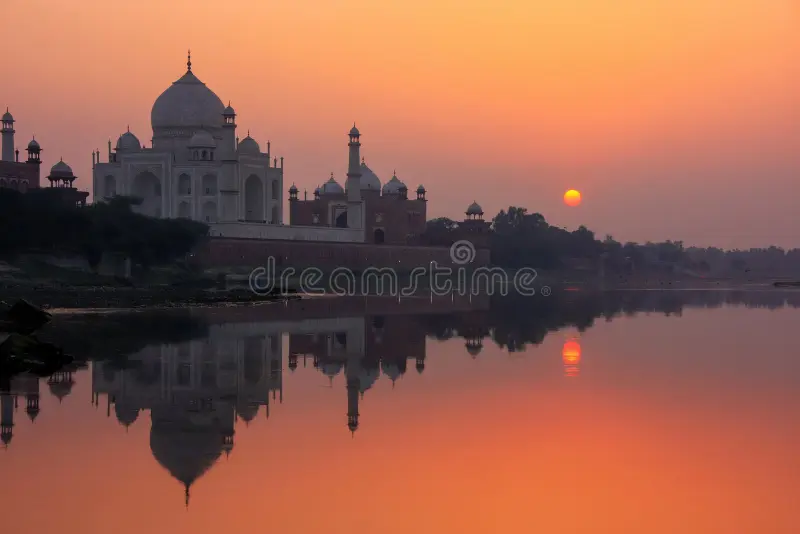
A moonlight garden directly across the Yamuna River, offering a full frontal view of the south facade without the crowds of the main complex; this requires a separate ticket and a short ride from the East Gate. The octagonal pond here mirrors the Taj on calm evenings.

Taj View Point A.D.A.

Best light · Sunrise or evening

A developed riverbank viewing platform near Mehtab Bagh on the Yamuna's edge, offering an open panorama of the monument from sunrise into the evening without garden admission. It suits visitors who want the river angle but less structure than Mehtab Bagh.

Gallery

Moments from the experience

With kids

Visiting with kids

A taj mahal tour by train works well for families since the walk from gate to mausoleum is flat and shaded by lawns, but heat and queues can wear young children down fast. With free entry for kids under 15, the main planning challenge is timing the train and the walk around naps and meals rather than the budget.

Pacing

Battery-operated carts run from the parking area to the gates, so let toddlers and tired kids ride that stretch and save their energy for the walk through the gardens to the mausoleum steps.

Best ages

Children under 15 enter free, which makes this an easy add-on for a family Agra landmarks itinerary, though kids under 5 often struggle with the security queues and midday heat more than the walking itself.

Train coordination

Match your train arrival to the site's 06:00–18:30 hours and plan the walk-in for the cooler early slot, then build in a stroller-free rest stop before returning to the station for an afternoon nap.

Facilities

Shoe covers and a water bottle are handed out with foreign-adult tickets, useful since shoes come off before the mausoleum entrance and kids get thirsty quickly in the sun.

Food with kids

Carry snacks and a refillable bottle rather than relying on vendors near the gates, since security lines move faster without extra bags to screen.

Rainy-day plan

The mausoleum interior offers brief shelter, but there's little indoor space overall, so a monsoon-season visit works best kept short with a change of dry clothes ready at the station.

Customer Reviews

What travelers say

Real experiences from real travelers

4.6
Based on undefined reviews
1 ★ 610
2 ★ 540
3 ★ 1250
4 ★ 4100
5 ★ 18400
P
Priya M.
India · 2026-06-18

Smooth rail run to Agra

The taj mahal tour by train from Delhi was the calmest part of our trip, and we reached the Agra Cantt platform before the heat set in. Watching the white marble emerge past the red sandstone gate in the early light stayed with me. The Yamuna reflection at the back was quieter than the front garden.

J
James H.
United Kingdom · 2026-05-30

Early start worth it

We booked the Agra Taj Mahal tour that pairs the Gatimaan Express with a guided walk, and the 6am departure meant cool air and thin crowds at the mausoleum. Our guide pointed out the pietra dura inlay and the calligraphy over the main arch. Bring water, the marble courtyard gets bright fast by mid-morning.

S
Sofia R.
Spain · 2026-04-12

Pietra dura up close

The inlaid flowers on the cenotaph screen were finer than any photo shows, tiny slivers of carnelian and jade set flush into the marble. Our taj mahal tour by train tickets included the guide fee, which saved a lot of hassle at the entrance. The dome looked almost translucent at golden hour.

K
Kenji T.
Japan · 2026-03-08

Great but rushed return

The onward journey was comfortable and the Agra landmarks portion covered both the mausoleum and a quick Agra Fort stop. My only note is the return train felt tight on time after lunch. Still, seeing the minarets lean slightly outward as our guide explained was a nice detail.

A
Amara O.
United States · 2026-02-21

Reflection at the back

Most people cluster at the front reflecting pool, but the riverside view behind the mausoleum was the highlight for me. Our skip-the-line Taj Mahal entry meant we walked straight past the queue. The Mughal garden layout makes more sense once you see it from the raised platform.

L
Lucas F.
Brazil · 2026-01-14

Winter light, clear skies

Doing the taj mahal tour by train in January gave us crisp air and a sharp blue sky behind the dome. The train back to Delhi ran on time and the seats were roomy. The scale of the four minarets only registers when you stand right beneath the plinth.

H
Hannah W.
Germany · 2025-11-09

Well organised day trip

The Delhi to Agra rail package handled tickets, transfers and the guide seamlessly, so we never queued in the sun. One of the better taj mahal tour by train tours we compared, and the guide knew where to catch the marble changing colour. The calligraphy framing the great arch is deliberately larger at the top to look even from below.

M
Marco B.
Italy · 2025-09-27

Golden hour glow

We reached the complex just as the marble turned honey-coloured, and the crowds thinned near closing. The taj mahal tour by train tour kept the schedule tight without feeling rushed. Standing in the archway of the red gate with the dome centred is the frame everyone wants.

N
Nadia K.
Netherlands · 2025-07-16

Hot but memorable

Summer heat was intense by 10am, so the early rail arrival really mattered. The Agra Taj Mahal tour guide kept us in shade between the main viewing stops. The inlaid semi-precious stones catch light differently as you move around the cenotaph.

D
Daniel S.
Australia · 2025-05-03

Effortless from Delhi

Skipping the road traffic by taking the express was the right call, and we were at the monument within a couple of hours of leaving the city. The wide sandstone forecourt gives you the classic symmetrical approach to the dome. Easily the smoothest of the Agra landmarks day trips we did that week.

FAQ

Frequently asked questions

Everything you need to know for your journey

Around the corner

Nearby landmarks worth a detour

Agra Fort

20 min drive

landmark

Red sandstone Mughal fortress overlooking the Yamuna River, former seat of the Mughal emperors including Shah Jahan's later imprisonment. UNESCO-listed alongside the Taj Mahal.

Mehtab Bagh

10 min drive

park

A charbagh-style garden directly across the Yamuna River offering an unobstructed view of the Taj Mahal's rear facade, especially at sunset.

Itmad-ud-Daulah's Tomb

15 min drive

landmark

Known as the Baby Taj, this marble tomb with intricate pietra dura inlay predates the Taj Mahal and is considered a design precursor.

Fatehpur Sikri

40 min drive

landmark

A red sandstone Mughal capital city built by Akbar in the 16th century, now a well-preserved ghost city.

Jama Masjid Agra

10 min walk

church

A 17th-century mosque near Agra Fort built by Shah Jahan's daughter, known for its striped marble domes.

Where to stay

Where to stay nearby

Oberoi Amarvilas

5 min walk

luxury

Upscale hotel with direct Taj Mahal views from most rooms, located just outside the East Gate.

Tajganj district

5–10 min walk

district

Budget and mid-range guesthouses cluster around the South Gate, popular with backpackers and day-trippers.

Courtyard by Marriott Agra

10 min drive

mid-range

Modern hotel near Fatehabad Road with easy access to both the Taj Mahal and Agra Fort.

ITC Mughal

15 min drive

luxury

Sprawling heritage-style resort with Mughal garden landscaping near Taj East Gate Road.

Ready for Adventure?

Join thousands of happy travelers who have discovered this incredible experience

Book Your Experience Now